
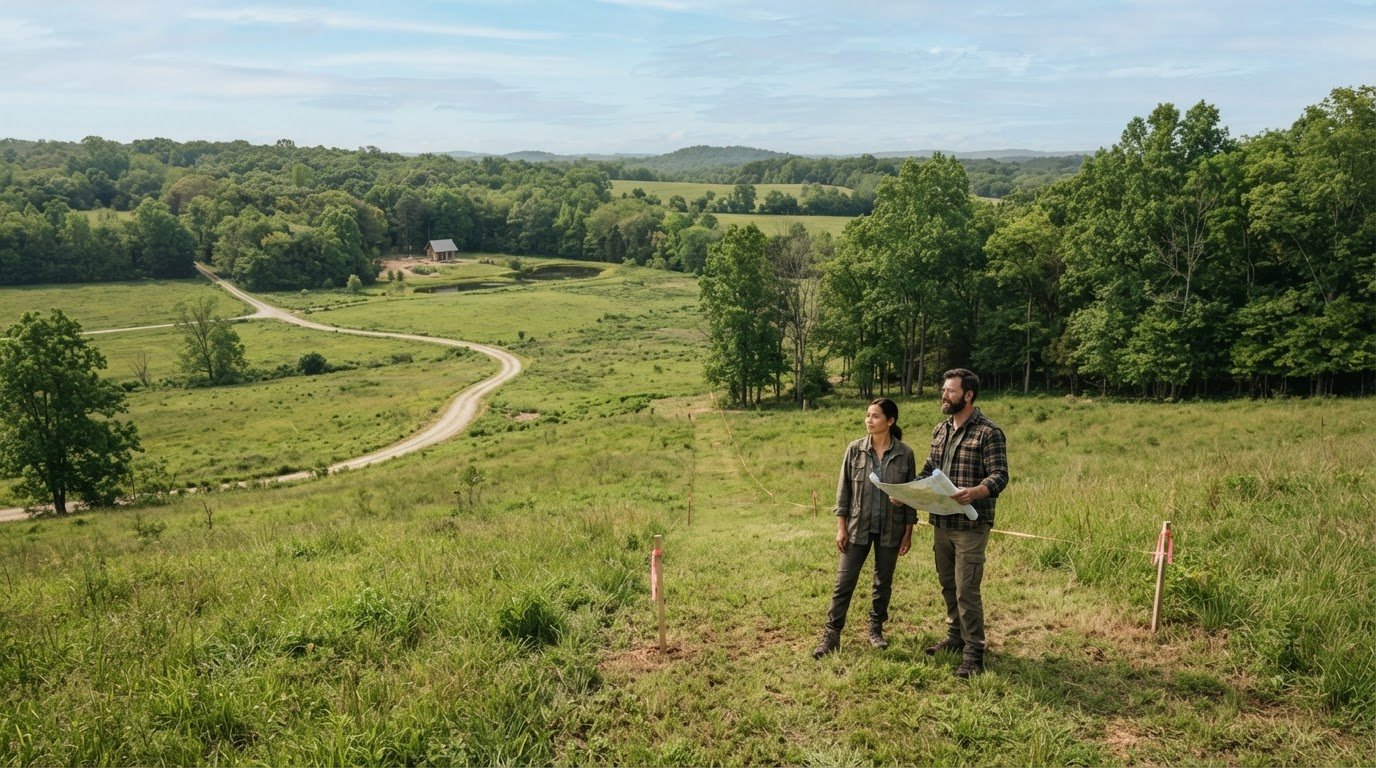
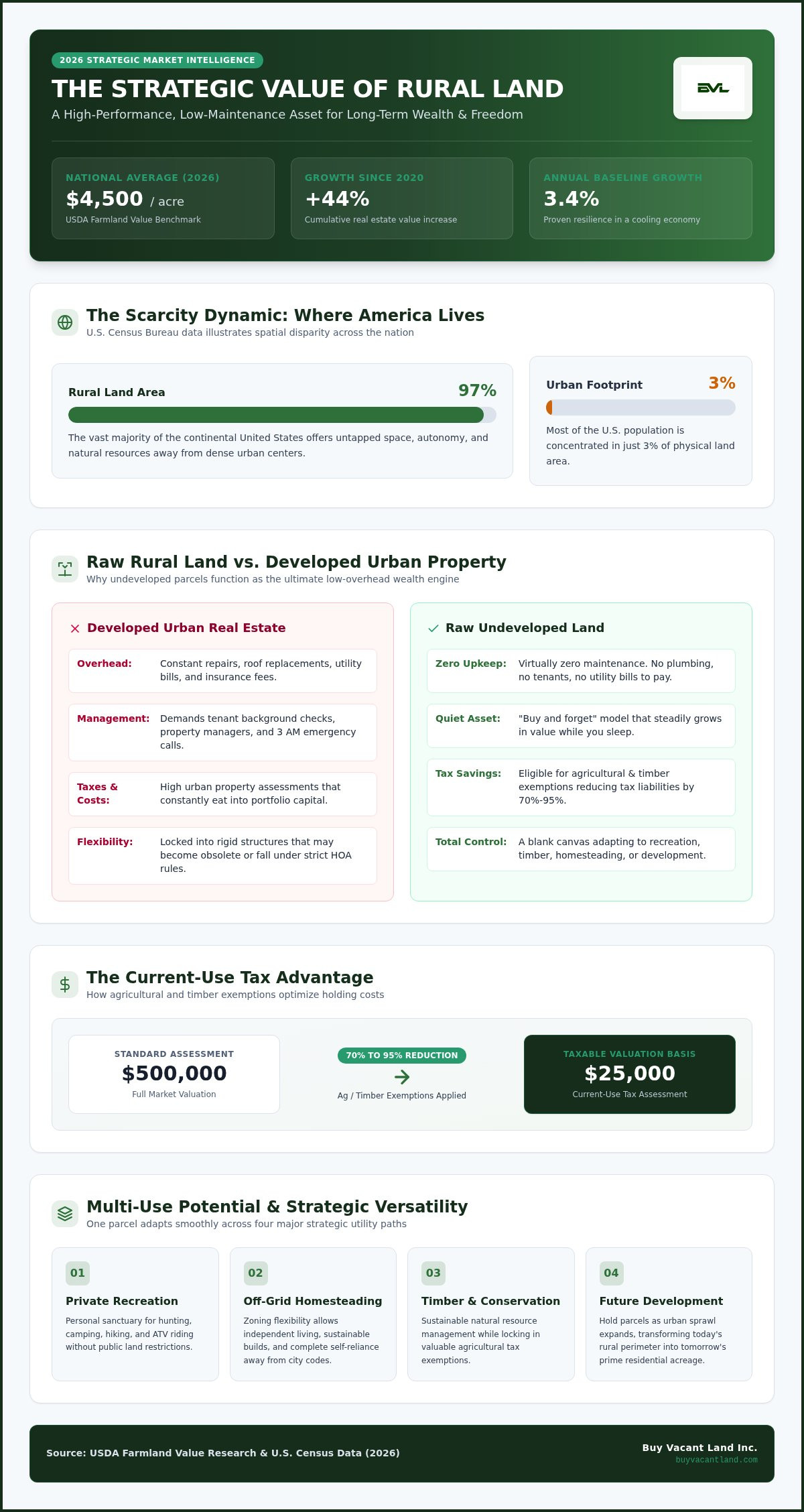
U.S. farm real estate values jumped 44% since 2020, hitting a national average of $4,500 per acre in 2026. You’re likely tired of urban real estate’s high entry costs and the constant noise of market volatility. It’s frustrating to watch your capital get eaten by high taxes and maintenance fees. One of the primary benefits of owning rural land is its status as a high-performance, low-maintenance asset. It provides a hedge against inflation that urban property cannot match.
This guide shows you why raw land is the ultimate low-overhead tool for long-term wealth and personal freedom. We’ll break down how to secure your private retreat or off-grid homestead without the traditional procedural headaches. Discover a straightforward path to financial security and the space you deserve. You want an asset that works for you, not the other way around. We simplify the search so you can focus on the lifestyle you want. This is your strategic roadmap for 2026.
Key Takeaways
- Learn how low property taxes and zero maintenance turn raw land into a powerful wealth-building tool.
- Discover the specific benefits of owning rural land as a stable hedge against urban inflation and market volatility.
- Understand how rural zoning flexibility makes off-grid living and private recreation possible without restrictive city rules.
- Compare cost-per-acre data to maximize your purchasing power and secure more space for less capital.
- Use specialized marketplaces to find cheap land and skip the complex buying processes that stall traditional real estate deals.
The Strategic Value of Rural Land in 2026
Rural land is a tangible asset with high utility. It’s a physical store of value you can see and touch. Unlike stocks or crypto, you can’t delete land. You can’t download more of it either. Our digital-heavy economy makes physical space the ultimate finite resource. Scarcity creates a natural floor for your investment. It’s a straightforward way to build wealth without the complexity of traditional markets.
Investors are turning to land banking as a primary strategy. This means buying undeveloped parcels in rural areas and holding them for the future. It’s a smart move to protect your money from a devaluing dollar. Rural land also has a much lower entry cost than houses or commercial buildings. You can start with a small parcel and grow your portfolio over time. This accessibility is one of the major benefits of owning rural land.
A Tangible Hedge Against Inflation
Land value correlates directly with the rising cost of goods and services over time. Owning a physical piece of the earth gives you a level of security that paper assets lack. Stocks can crash. Banks can fail. Your land stays right where you left it. It’s a stable asset that doesn’t require constant monitoring. You get peace of mind and financial protection in one package. It’s a rock-solid foundation for any long-term portfolio.
Versatility and Multi-Use Potential
Raw land is a blank canvas. It adapts as your goals change. You aren’t stuck with a building that might become obsolete. The “highest and best use” for your land can evolve over time. You might buy for recreation today and build a homestead tomorrow. The process of finding land for sale is fast and efficient. You can browse specialized listings and pick the right lot in minutes.
- Recreation like hunting or camping.
- Conservation and timber management.
- Future residential development.
- Off-grid living and homesteading.
This versatility is a key pillar of the benefits of owning rural land in 2026. You control the asset’s future without asking for permission from a landlord or a homeowners association. It’s true ownership in its simplest form.
Economic Advantages: Low Overhead and Growth
Raw land is the ultimate “quiet” asset. It doesn’t call you at 3 AM about a broken pipe. It doesn’t require a property manager or a tenant background check. You buy it. You hold it. It grows in value while you sleep. This simplicity is one of the core benefits of owning rural land for busy professionals. You avoid the stress of traditional real estate while securing a tangible piece of the future. It’s a “buy and forget” strategy that works.
Minimal Carrying Costs and Maintenance
Owning a rental home is a second job. You deal with tenants, insurance, and constant repairs. Raw land eliminates these burdens. There are no utility bills to pay. There are no roofs to replace. Your overhead is virtually zero. This makes cheap land for sale accessible to anyone with a small amount of capital. It is a low-risk way to park your cash and let it work without the monthly drain of maintenance fees.
Long-Term Appreciation and Tax Benefits
Rural land values follow a steady upward trajectory. According to USDA farmland value research, national farm real estate hit an average of $4,500 per acre in 2026. This represents a 44% cumulative gain since 2020. You aren’t just buying dirt. You’re buying into a market with a proven 3.4% annual growth rate even in a cooling economy. If you want to start building your portfolio, you can view current land listings today.
Tax advantages further boost your bottom line. Many states offer agricultural or timber exemptions. These “current-use” assessments can reduce your property tax bill by 70% to 95%. In some cases, a $500,000 market value assessment can drop to $25,000 for tax purposes. You get all the benefits of owning rural land without the heavy tax burden of urban real estate. It is a simple, high-performance asset that fits any long-term wealth strategy.
Urban sprawl works in your favor. As cities expand, the “rural” land of today becomes the “suburban” development of tomorrow. You can hold a parcel for decades with minimal effort. The asset is patient. It doesn’t depreciate like a car or a building. It only becomes more scarce as the population grows. This makes it a perfect legacy asset for your family. You secure the space now before the price climbs out of reach.
Lifestyle Freedom: Off-Grid and Recreational Use
Space is the new luxury. According to U.S. Census Bureau rural data, 97% of the U.S. land area is rural. Most people are crammed into the remaining 3%. Owning your own parcel breaks this cycle. One of the primary benefits of owning rural land is the absolute privacy it provides. You get a sanctuary far from city noise and restrictive ordinances. It’s about taking back control of your surroundings. You decide who enters and what happens on your property.
Your Private Recreational Retreat
Stop paying for crowded campsites. Forget about public land hunting restrictions. When you own the dirt, you make the rules. You can hike, camp, or ride ATVs on your own terms. It’s a place to unplug and reset. You can find specialized hunting land that fits your specific needs in minutes. This is your personal escape. It’s ready whenever you are. No reservations required. You get the freedom to build a permanent deer stand or a simple fire pit without asking for permission.
Off-Grid Potential and Sustainability
Independence starts with the ground beneath your feet. Raw land is the foundation for food self-sufficiency and energy autonomy. Modern tech makes this easier than ever. You can install a whole-home DIY solar system for $15,000 to $30,000. Combine this with low-power satellite terminals like Starlink Mini, which draws only 25 to 40 watts. You stay connected while living completely off-grid for as little as $50 a month. Browsing off-grid land listings allows you to find parcels with the right natural resources. You get clean air and your own water source. It’s a lifestyle of total self-reliance. You aren’t dependent on a failing power grid or rising utility costs.
Ownership brings a unique type of emotional security. You have a fallback plan. If the world gets chaotic, you have a place to go. This peace of mind is a major part of the benefits of owning rural land. You aren’t just buying an asset. You’re buying a safety net for your family. It’s a simple, pragmatic way to ensure your future freedom. The transaction is fast. The relief is permanent. You gain the freedom to live on your own terms, away from the stress of urban density.
Rural vs. Urban Land: Which is the Better Buy?
Urban real estate is a crowded, expensive game. Entry costs are high. Regulations are thick. Rural land offers a different path. You get more control for less capital. This is a primary factor in the benefits of owning rural land. You aren’t fighting for a tiny slice of the city. You’re securing a massive footprint in the country. It’s a pragmatic shift from high-cost density to low-cost opportunity. The barrier to entry for a new investor is significantly lower in rural markets. You don’t need a million-dollar loan to get started. You can buy a lot with cash and own it outright today. This provides immediate peace of mind and financial security.
Zoning and Land Use Flexibility
Urban lots come with a mountain of paperwork. You deal with setbacks, height limits, and aesthetic boards. Rural land is often “unrestricted” or has very light zoning. You can park a trailer, build a shed, or start a farm without a permit battle. It’s critical to check land for sale in Florida or other regions for specific local rules. This flexibility gives you the creative freedom to use the land as you see fit. You own the dirt. You should make the decisions. This lack of red tape saves you time and money during the development phase. You can move at your own pace without city inspectors breathing down your neck. It’s a simpler way to manage an asset.
Getting More Acreage for Your Dollar
Let’s look at the numbers. In a growing metropolitan fringe, raw land often commands high prices per acre. Compare that to usable undeveloped rural parcels across the nation. Those tracts can cost a fraction of the price found near city limits. You can buy 40 acres of rural woods for the same price as a tiny 1/4 acre city lot. That’s 160 times the space for the same investment. This “elbow room” is a massive driver of lifestyle value. Large tracts provide more utility and more options for the future. You can subdivide later or keep it all for yourself. Finding owner financed land makes these larger tracts even more affordable. You skip the bank. You get the deed. You start building equity immediately. Start your search for the perfect parcel here.
The Marketplace Advantage: How to Find the Right Parcel
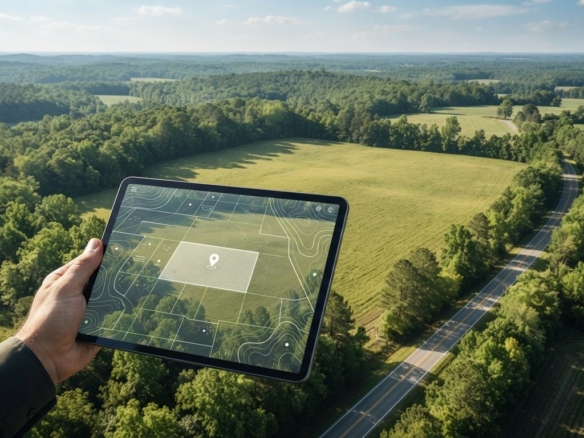
Finding the right parcel used to take months of driving and calling local brokers. Specialized marketplaces changed that forever. You get instant access to raw data. You skip the middleman. This efficiency is the key to securing a high-performance asset without the traditional stress. A focused marketplace puts every relevant detail at your fingertips. You don’t have to guess about acreage or access. Everything is laid out for a fast, informed decision. You gain a massive advantage over buyers using outdated methods.
Direct Access to Land Sellers
General real estate websites focus on houses and rentals. They bury vacant land under thousands of suburban listings. A dedicated platform focuses only on the dirt. This is the most efficient way to realize the benefits of owning rural land. You can filter for specific needs like “off-grid lots” or “hunting land” in seconds. You can even find properties similar to those on lands of america through these specialized tools. Direct communication with the seller removes the “telephone game” of traditional agents. You get answers about soil quality or easements immediately. This transparency builds trust. It speeds up the transaction and protects your time. You deal directly with the person who owns the deed.
Streamlining the Transaction
The land-buying process is far simpler than a home purchase. You don’t deal with home inspections or mold reports. You verify the zoning, check the boundaries, and sign the deed. Using a dedicated tool makes this even faster. You can compare dozens of parcels side-by-side. You see the topography and tax history in one place. This efficiency is a core part of the strategic buyer’s toolkit. It allows you to move when a deal appears. You don’t need a complicated legal team to buy a simple parcel of land. You just need the right information and a clear path to completion. This simplicity is one of the greatest benefits of owning rural land in 2026.
Don’t wait for the perfect deal to find you. The market is active and moving fast. Browsing current listings helps you gauge the market in your target area. It gives you the confidence to act when the right price appears. You can browse vacant land listings now to start your search. The sooner you begin, the sooner you secure your financial security and lifestyle freedom. Your private retreat is only a few clicks away. Take the first step today. Secure your piece of the earth before someone else does.
Secure Your Private Asset for 2026
The path to financial security and lifestyle freedom is clear. Raw land is one of the few tangible assets that requires zero maintenance while providing a rock-solid hedge against inflation. You’ve seen how low overhead and zoning flexibility outperform the high entry costs of urban real estate. One of the greatest benefits of owning rural land is the immediate peace of mind it offers in an unpredictable economy. You aren’t just buying dirt. You’re securing a safety net for your family’s future.
Our specialized marketplace simplifies the discovery process. You get direct access to national listings for raw land only. There are no middlemen and no hidden procedural hurdles. Use our specialized filters to find hunting land, off-grid lots, or cheap parcels that fit your budget. You connect directly with land sellers for a transparent transaction. Don’t overpay for urban density when you can invest in your own space.
Start your search for rural land on our marketplace today. Take control of your assets and your lifestyle. Your piece of the earth is waiting for you. The process is simple. The result is permanent.
Frequently Asked Questions
Is rural land a good investment for beginners?
Yes, rural land is an excellent entry point for new investors. It requires very little capital compared to houses or commercial buildings. You don’t have to deal with tenants, repairs, or complex management. One of the main benefits of owning rural land is the simplicity of the asset. You can buy a lot, hold it for years, and watch it appreciate. It’s a low-risk way to start building a tangible real estate portfolio today.
What are the hidden costs of owning rural land?
Property taxes and survey fees are the most common costs. Taxes are usually minimal, especially if the land has an agricultural exemption. You might also pay for brush clearing or fence repairs to keep the property secure. Some buyers choose to pay for a professional appraisal or a soil perc test before closing. These costs are predictable and much lower than the maintenance bills associated with developed urban properties or rental homes.
How do I check zoning laws on a rural parcel?
Call the county planning department or check their official website. Most counties use a GIS mapping system to display zoning codes and property boundaries. You need to know if the land is zoned for residential, agricultural, or recreational use. Ask about any building restrictions or minimum acreage requirements for construction. This step is fast and prevents you from buying a parcel that doesn’t fit your long-term goals or specific project needs.
Can I build a house on any rural land I buy?
Building depends on zoning and environmental factors. Some parcels are restricted to agricultural use or lack the necessary soil quality for a septic system. You must perform a perc test to ensure the ground can handle waste management. Check for legal road access and utility proximity as well. While rural land offers more freedom than the city, you still need to follow local health and safety codes. Always verify buildability before you finalize your purchase.
What is the difference between raw land and developed land?
Raw land is completely undeveloped. It has no utilities, no buildings, and no cleared sites. Developed land includes improvements like power, water, or a driveway. Raw land is the most cost-effective option for long-term investors. One of the benefits of owning rural land in its raw state is the lack of ongoing maintenance. You aren’t paying for things you don’t use yet. It’s a blank slate that you can shape according to your own timeline.
How do I find out if a rural lot has water or power access?
Look for utility poles along the property line for power access. If they aren’t visible, call the local electric cooperative to get an estimate for running a line. For water, check if a municipal main is nearby or if you’ll need a well. You can research state well reports to see the average depth of wells on neighboring lots. This data helps you estimate the cost of bringing essential services to your new rural parcel.
Why is rural land cheaper than urban land?
Rural land prices are lower because there is less competition and fewer services. Urban land is expensive because it’s near jobs and infrastructure. In the country, you aren’t paying for city sewers or paved sidewalks. This allows you to get 160 times more space for the same price as a city lot. It’s a straightforward trade-off. You give up urban convenience to gain massive acreage and total privacy for a fraction of the cost.
What should I look for when buying land for off-grid living?
Focus on natural resources and zoning flexibility. You need a reliable water source and plenty of sun for solar panels. Check for “unrestricted” zoning that permits tiny homes or off-grid power systems. Year-round road access is also a priority so you don’t get stranded during bad weather. Look for parcels that offer enough space for a garden or livestock. This autonomy is the foundation of a successful and sustainable off-grid lifestyle in 2026.

Join The Discussion