
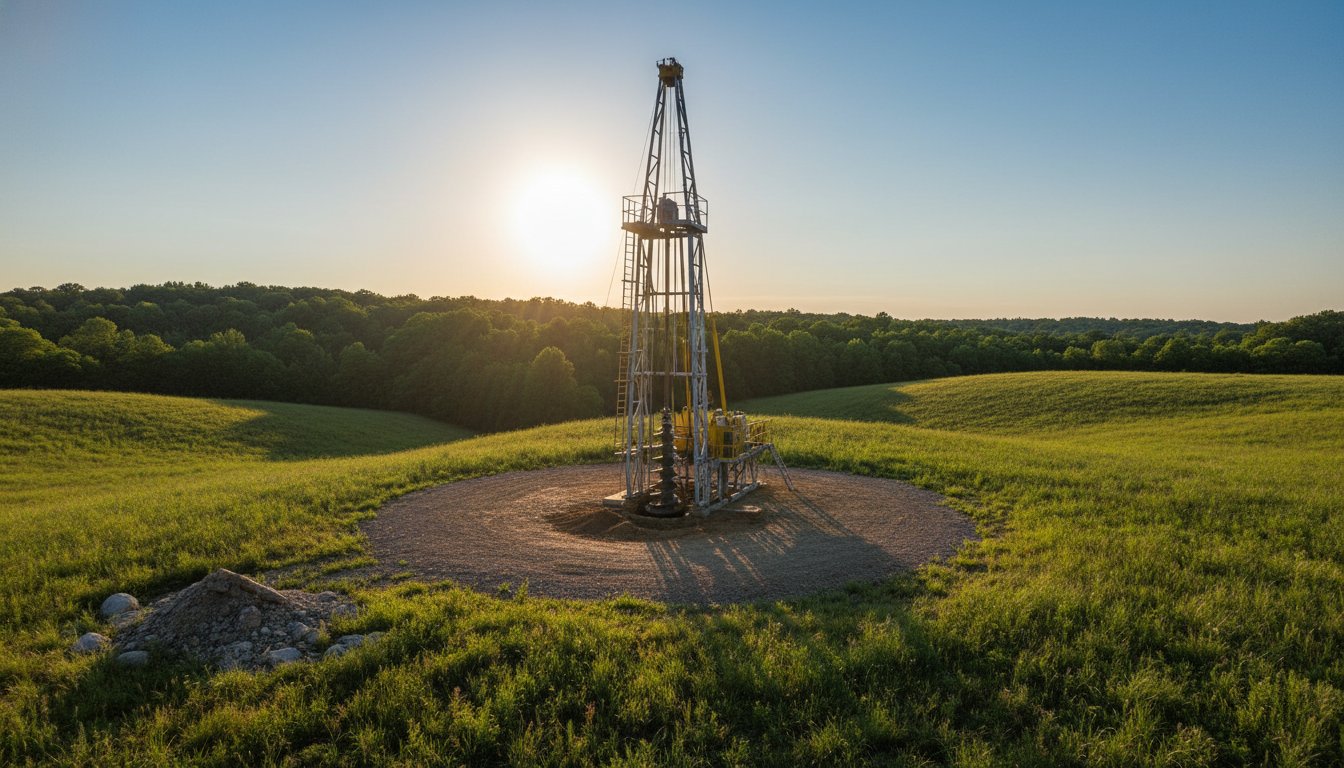
The cost of drilling a residential well has surged by 28.4% since 2020. Most land buyers still rely on outdated, lowball estimates that don’t reflect the current market. If you are looking at off-grid land or a residential lot, you know that national averages are often misleading and frustrating. You need a budget that accounts for your specific soil type and local permits. Miscalculating your well and septic installation cost can turn a bargain property into a financial burden overnight.
Stop guessing. Start planning with precision. This guide provides a direct, no-nonsense breakdown of what it actually costs to install these systems on vacant land in 2026. You will learn how to identify the geological red flags that drive prices up. You will also understand the specific permit requirements that catch most buyers off guard. We walk through current price ranges for everything from standard anaerobic setups to complex engineered systems. This information helps you evaluate a parcel of land like a pro and avoid the money pits that drain your bank account.
Key Takeaways
- Understand the critical link between your water source and waste disposal system for rural independence.
- Identify why drilling depth remains the most significant variable in your total well and septic installation cost.
- Compare the pros and cons of concrete, plastic, and fiberglass septic tanks for different soil environments.
- Discover how professional perc tests and site engineering prevent unforeseen budget overruns during development.
- Learn to spot geological red flags like steep slopes and swampy terrain before you commit to a land purchase.
Understanding Well and Septic Systems for Vacant Land
Owning a piece of undeveloped vacant land feels like true freedom until you realize you need water and a place for waste to go. A private well and a septic system are the two pillars of rural land independence. Think of them as a closed loop. The well pulls fresh water from an underground aquifer into your home. The septic system processes that water once it leaves your drain and returns it safely to the earth. Without these two components, your land is just a scenic view rather than a functional homesite.
This infrastructure is often the single largest expense you will face after the initial land purchase. For many buyers, the total well and septic installation cost represents a significant portion of their development budget. Raw land requires extensive preparation that developed lots do not. You must clear trees, level the site, and build access roads for heavy drilling rigs before a single pipe is laid. These logistical hurdles are why you must plan your utilities before you even close on the property.
The Necessity of Private Utilities
Rural parcels are often miles from city pipes. Running municipal lines to a remote ranch or hunting land is usually impossible or financially ruinous. Private utilities solve this problem immediately. You gain total control over your water supply and waste management. There are no monthly utility bills and no reliance on aging city infrastructure.
The financial stakes are high. The cost of well drilling has increased by 28.4% between 2020 and 2026. This makes the existing utility potential of a lot one of its most valuable features. Utility readiness drastically increases the resale value of your property. Buyers pay a premium for land that is already “build-ready.” When you research how do you buy land, you must include these utility assessments in your initial due diligence. Investing in your own infrastructure is a one-time capital expense that pays dividends for decades.
Standard vs. Engineered Systems
Your land’s geology dictates the technology you must use. A standard system is the baseline for ideal soil conditions. If your land has heavy clay, steep slopes, or a high water table, you will likely need an engineered design. So, what is a septic system? In its simplest form, it is an underground treatment unit. However, 2026 regulations now favor complex, environmentally conscious designs.
Recent updates to local regulations, such as Colorado’s Regulation 43, now require more thorough soil testing and engineered designs for challenging soils. These systems use advanced filtration and pumps to protect groundwater. They are becoming the new normal as development moves into more difficult terrain. While the well and septic installation cost for an engineered system is higher, it ensures your property remains compliant with modern environmental standards. You cannot force a standard system onto land that won’t support it; the soil always wins.
Well Drilling and Installation Cost Factors
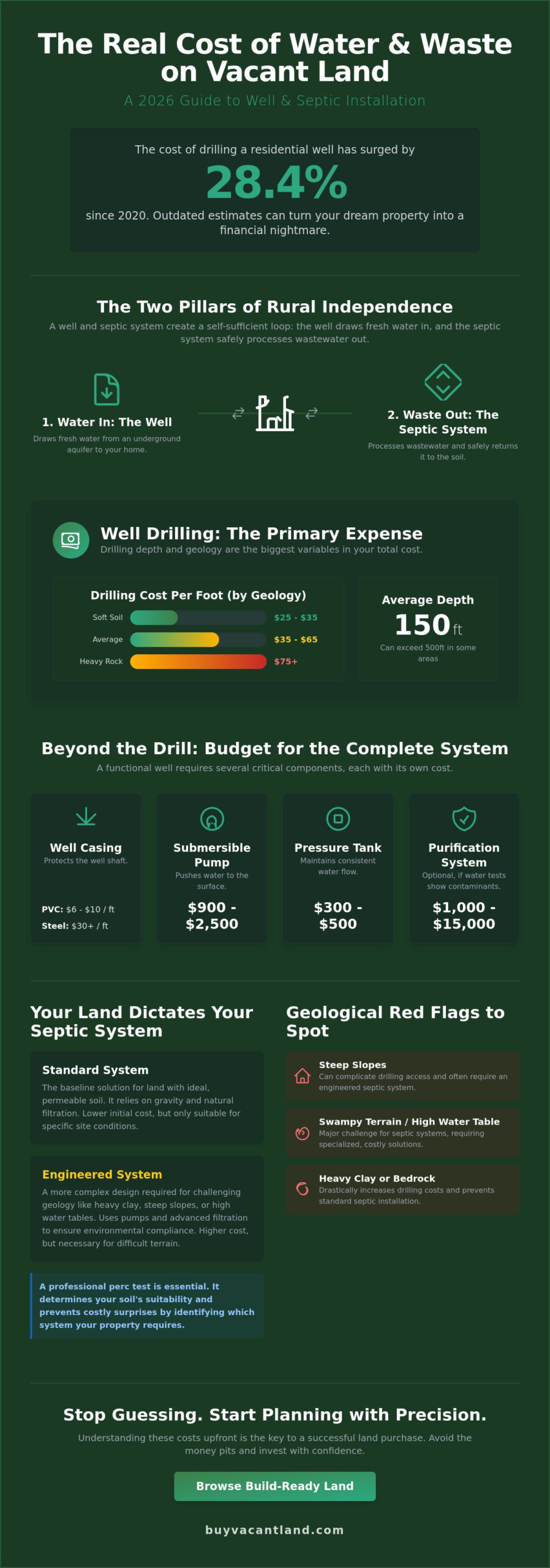
Drilling depth is the primary variable driving your well and septic installation cost. Most national drilling contractors operate on a price-per-foot model. As of April 2026, standard rates typically range from $25 to $65 per foot. Soft soil conditions usually keep costs at the lower end, around $25 to $35. However, hitting heavy rock can quickly push those rates to $75 per foot or higher. You cannot control what is beneath the surface, but you can plan for the equipment required to bring water to your tap.
A functional well requires more than just a hole in the ground. You must budget for high-quality components to ensure long-term reliability. PVC casing pipe averages $6 to $10 per foot, while steel casing can exceed $30 per foot. A submersible pump typically costs between $900 and $2,500. You also need a pressure tank, which adds another $300 to $500 to the total. Before the system is considered complete, you must perform water quality testing to check for bacteria and minerals. If contaminants are present, a purification system may add $1,000 to $15,000 to your final bill.
Drilling Depth and Geological Hurdles
The average residential well depth in the U.S. is 150 feet. Your specific parcel may require drilling 500 feet or deeper to hit a reliable aquifer. Geological hurdles like bedrock significantly slow down the drilling rig and increase labor expenses. The most expensive outcome is a “dry hole,” where no water is found despite the depth. Mitigate this risk by researching local well logs or talking to neighbors before you commit. If you are still searching for the perfect site, you can browse residential lots that already have documented water success in the area.
Pump Systems and Storage Tanks
Your pump must be sized correctly for your household’s Gallons Per Minute (GPM) needs. An undersized pump will cycle too frequently and burn out prematurely. The pressure tank is equally vital. It maintains consistent water flow and protects the pump from unnecessary wear. High-quality components reduce the burden of future repairs. While you focus on the water coming in, it is helpful to understand how septic systems function to ensure your entire utility footprint is balanced. Investing in professional-grade hardware now prevents the stress of a dry tap later.
Septic System Types and Installation Pricing
A septic system is a two-part investment consisting of the storage tank and the drain field. Your choice of tank material—concrete, plastic, or fiberglass—impacts both the upfront price and the long-term durability of the system. Concrete remains the industry standard for its weight and longevity, though it requires heavy machinery to set. Plastic and fiberglass tanks offer a lightweight alternative for remote off grid land where access for large cranes is limited. These material choices, combined with labor, dictate your total well and septic installation cost. In 2026, labor typically accounts for 50% to 70% of the total project expense.
The national average for a septic system installation currently sits at $8,032. However, this figure is a baseline. Depending on your land’s specific needs, you might pay anywhere from $3,599 for a simple setup to over $30,000 for complex sites. The drain field is often the most expensive component, with installation costs ranging from $5,000 to $12,000 on its own. You aren’t just buying hardware; you are buying a system that must function perfectly with your land’s natural drainage capacity.
The Traditional Gravity Septic System
The gravity system is the most cost-effective and reliable option available. It relies on the natural slope of your land to move waste from the tank to the leach field. This system requires deep, permeable soil that can naturally filter effluent. A conventional anaerobic system typically costs between $3,000 and $8,000. It consists of an inlet pipe, a septic tank, a distribution box, and a series of perforated pipes in the leach field. Because it has no moving parts or pumps, it is the preferred choice for land owners looking for simplicity and low maintenance.
Advanced and Engineered Solutions
When your land has “bad” soil or a high water table, a standard gravity system will fail. In these cases, you must use an engineered solution. Sand mound systems are a common fix for thin soil, costing between $10,000 and $20,000. These systems involve building an artificial hill of sand and gravel to treat waste before it hits the natural ground.
If you are working with a tight footprint on a residential lot, an Aerobic Treatment Unit (ATU) might be required. These act like mini-treatment plants by injecting oxygen into the tank to accelerate waste breakdown. ATUs also range from $10,000 to $20,000 and often require ongoing maintenance contracts. For the most challenging topographies, drip irrigation septic systems provide precision waste distribution. While these advanced systems increase your well and septic installation cost, they make otherwise “unbuildable” land functional and compliant with 2026 environmental standards.
Critical Variables: Soil Tests, Permits, and Site Prep
Physical installation is only half the battle. Before any shovel hits the dirt, you must navigate a gauntlet of soft costs and physical site preparation. These variables often swing your well and septic installation cost by several thousand dollars. You aren’t just paying for hardware. You are paying for the legal right to use your land. Planning for these hurdles early prevents your project from stalling at the health department. Efficiency in the permit phase saves time and money later.
Why the Perc Test is Non-Negotiable
A percolation (perc) test is the most critical step in your due diligence. A professional digs a hole, fills it with water, and measures how fast the soil absorbs it. This rate determines if your land can handle a standard septic system. In 2026, a perc test typically costs between $700 and $2,000. If the soil drains too slowly or too quickly, you fail. A failed perc test means you cannot build a traditional home without an expensive engineered system. Use a “contingent on perc” clause in your purchase agreement. This allows you to walk away or renegotiate the price if the soil is poor.
Engineering and Administrative Overhead
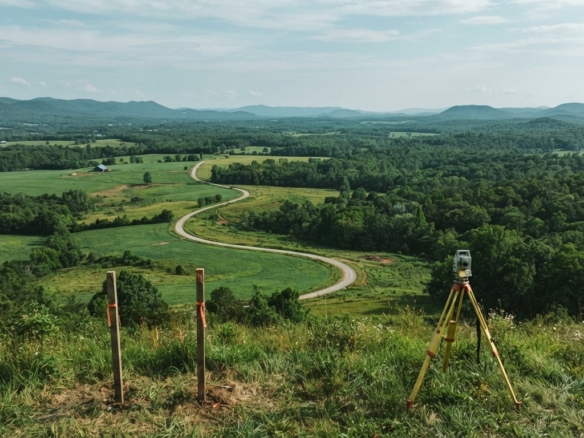
Modern regulations are stricter than ever. In 2026, many counties require professional blueprints from a licensed engineer before issuing permits. These designs ensure your system won’t contaminate local groundwater. Expect to pay between $450 and $2,300 for septic permits alone. Well permits add another $200 to $500. You must also budget for a land survey, which typically costs between $350 and $900. These administrative fees are a mandatory part of your total well and septic installation cost. They provide the legal certainty you need to proceed with confidence.
Physical Site Preparation
Raw land is rarely ready for a drilling rig. You must clear a path. This involves removing trees, boulders, and brush to allow heavy machinery access. If your site is on a steep slope, you will need professional grading to create a level pad for the well and septic tank. Site prep is a labor-heavy expense that national averages often ignore. Don’t underestimate the cost of moving dirt. If you want to avoid these headaches, focus your search on undeveloped vacant land that has already been cleared or surveyed for utility access. Preparation is the key to a predictable budget.
Maximizing Value: Evaluating Land Before You Buy
A low purchase price is often a smoke screen for high development fees. You must calculate the potential well and septic installation cost before finalizing any offer. If you ignore the land’s physical limits, you risk buying a property that costs more to develop than it is worth. High-performing land buyers treat utility readiness as a core part of their financial model. This pragmatic approach ensures you don’t dump capital into a parcel that remains unbuildable due to geological constraints.
Visual inspections are your first line of defense against unforeseen expenses. Look for signs of trouble like heavy saturation or large rock outcroppings that interfere with drilling rigs. Slopes over 15% often require specialized pumping systems or extensive grading to meet health department codes. Reviewing local logs for neighboring properties helps you predict aquifer depth and soil composition. This research turns a speculative purchase into a calculated business decision that protects your bottom line.
Due Diligence Checklist for Utility Planning
Success in rural development requires a systematic approach to the acquisition phase. Follow these steps to verify a parcel’s viability before closing:
- Confirm that your how do you buy land process includes verifying minimum acreage for septic setbacks.
- Search for historical records or expired permits on land for sale in florida to see what the county previously allowed on the site.
- Contact local contractors to verify equipment access and typical drilling conditions in the immediate area.
Leveraging BuyVacantLand.com for Smart Acquisitions
Our marketplace simplifies the search for buildable acreage by removing traditional procedural hurdles. BuyVacantLand.com connects you with sellers who often provide critical utility disclosures upfront. This transparency helps you avoid the trap where a high well and septic installation cost erases your profit margin. We focus on residential lots and off grid land that offer a clear path to ownership and construction.
Don’t let hidden infrastructure fees stall your project. By identifying geological red flags and using a specialized listing platform, you ensure a swift and assured transaction. Efficiency in the search phase leads to peace of mind during the build phase. Browse buildable vacant land listings today and secure a parcel that is ready for your vision.
Secure Your Build-Ready Land Today
Mastering your well and septic installation cost is the difference between a successful development and a financial disaster. You now understand that drilling depth and soil permeability dictate your final budget. You know how to spot geological red flags like steep slopes or high water tables before they become expensive problems. This knowledge gives you a competitive edge in a market where drilling costs have risen by 28.4% since 2020. You are now ready to move from research to action.
BuyVacantLand.com is a specialized marketplace built to simplify this process. We offer a transparent platform with a national reach, connecting you directly with sellers of raw, undeveloped land. Our focus is exclusively on parcels that offer real potential for residential or off-grid use. Don’t settle for land that drains your bank account with unforeseen engineering hurdles. Browse building-ready vacant land listings now and find a property that fits your vision and your budget. Your path to land ownership is clear and achievable.
Frequently Asked Questions
Can I install my own well or septic system to save money?
You cannot legally install these systems yourself in most jurisdictions. Most counties require licensed professionals to perform well drilling and septic installation to ensure compliance with health codes. Specialized heavy machinery is mandatory for reaching proper drilling depths. Attempting a DIY installation often leads to permit rejections and expensive legal fines. Hiring a professional is the only way to guarantee your water supply is safe and compliant.
How long does it take to install a well and septic system on raw land?
Physical installation typically takes two to four weeks. However, the total timeline is much longer due to administrative requirements. You must account for the time it takes to complete a perc test, wait for permit approvals, and hire a licensed engineer. Site preparation like clearing trees or grading slopes can add another week to the schedule. Start your applications early to avoid delaying your building project.
What happens if my land fails a perc test?
A failed perc test means you cannot install a standard gravity system. You must pivot to an engineered solution like a sand mound or aerobic treatment unit. These alternatives significantly increase your well and septic installation cost but allow for development on poor soil. Consult with a licensed engineer to design a custom system that meets local environmental standards. This allows you to build on land that would otherwise be unusable.
How far apart must a well and septic tank be located?
Standard regulations usually require a minimum distance of 100 feet between a private well and a septic drain field. This setback prevents cross-contamination of your drinking water supply. Distances between the well and the septic tank itself are often shorter, usually around 50 feet. Always check your local health department’s specific requirements, as soil type and land slope can increase these mandatory separation distances.
Does a septic system require electricity to operate?
Traditional gravity systems do not require electricity because they rely on natural slopes to move waste. However, advanced systems like aerobic treatment units or those requiring lift pumps do need a power source. If you are developing off-grid land, you must factor in the energy requirements for these pumps. Aerobic systems use oxygen injectors that run on a constant electrical cycle to process waste effectively.
Are there annual maintenance costs for wells and septic systems?
Maintenance is mandatory for long-term reliability. Plan to pump your septic tank every three to five years to prevent drain field failure. Some states, like Texas, require annual maintenance contracts for aerobic systems costing between $450 and $650. You should also budget for periodic water quality testing and pump inspections. These small, recurring expenses protect your initial well and septic installation cost investment from total system failure.
Will a well and septic system increase my property taxes?
Improving vacant land with utilities generally increases its assessed value. Local tax assessors view a build-ready lot as more valuable than raw acreage. This often leads to a rise in your annual property tax bill. However, the added value to your homesite usually outweighs the incremental tax increase. You are transforming a vacant parcel into a functional asset, which is a smart move for long-term equity.
Is it possible to install a well and septic on a small 0.25-acre lot?
It is difficult but possible with an engineered design. Most counties have minimum lot size requirements for standard systems to ensure proper setback distances between wells and drain fields. A 0.25-acre lot often requires a compact aerobic system or a connection to a shared community well to stay within legal boundaries. Check local zoning laws before buying small parcels to ensure they can legally support private utilities.



Join The Discussion