
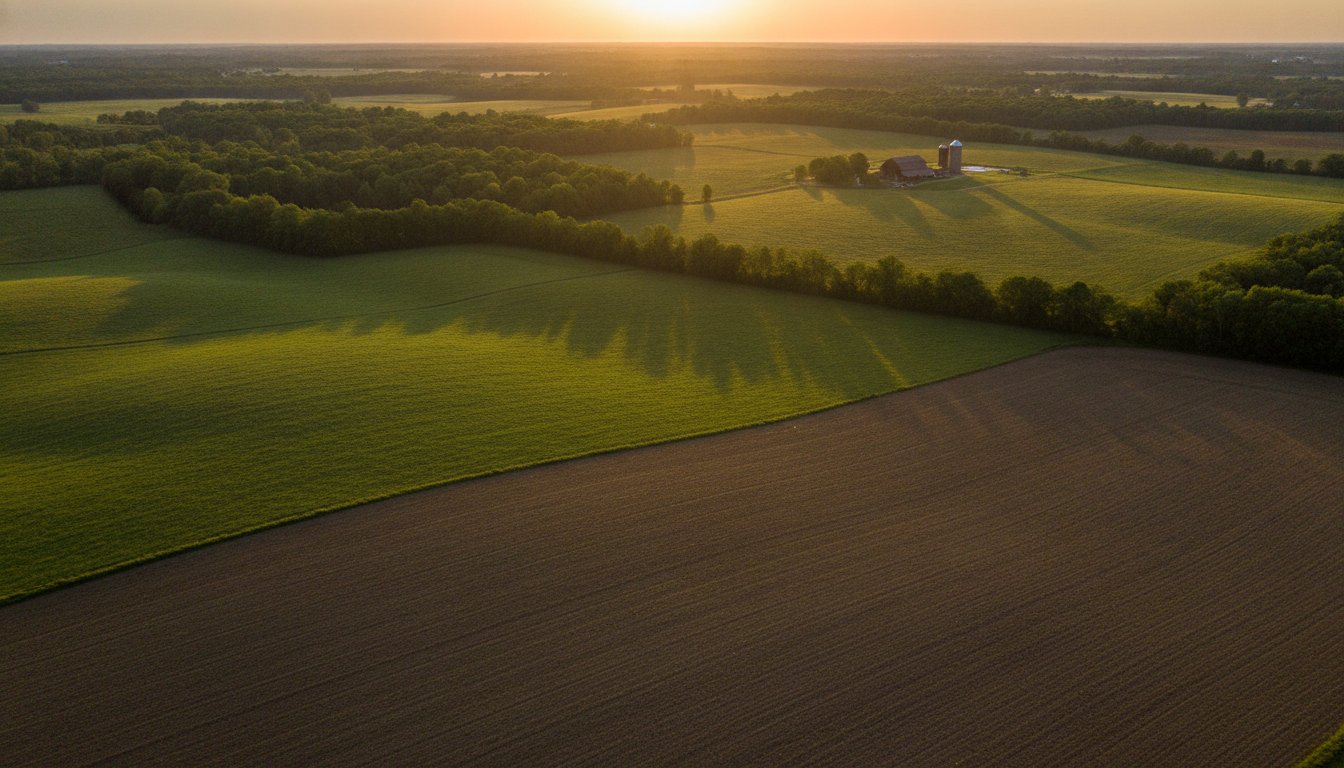
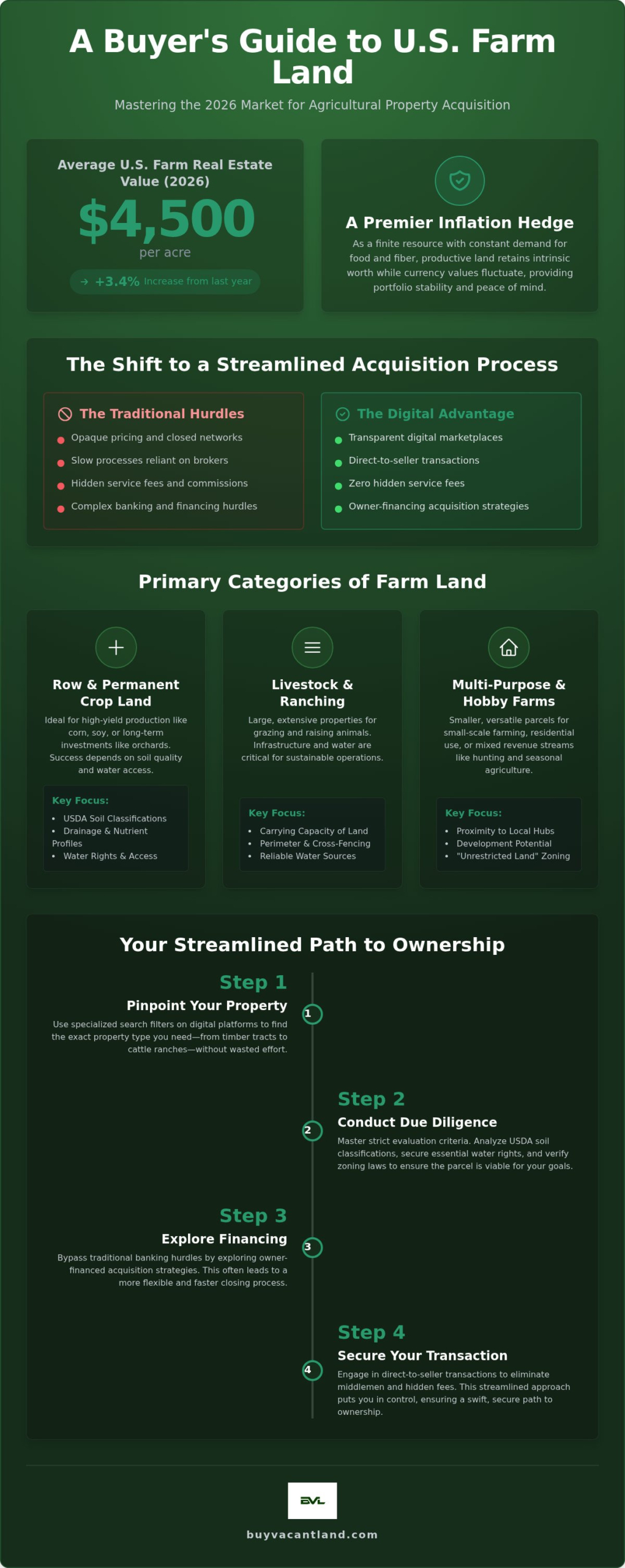
The average U.S. farm real estate value hit $4,500 per acre in 2026, marking a 3.4% increase from last year. Despite these record highs, finding farm land for sale shouldn’t feel like an impossible task reserved for insiders. You’ve likely struggled with opaque pricing, complex soil requirements, and the difficulty of locating smaller, affordable parcels. It’s a burden that costs you time and money.
We hear you. This guide provides a pragmatic framework to find, evaluate, and acquire productive agricultural property across the United States. You’ll master the process of identifying viable parcels and understanding strict evaluation criteria without the stress of hidden service fees. We’ll walk you through soil quality analysis, zoning laws, and direct purchase strategies. This streamlined approach eliminates traditional procedural hurdles and puts you in control of your transaction. Follow this step-by-step sequence to secure your land with speed and total peace of mind.
Key Takeaways
- Learn why agricultural land remains a premier inflation hedge and stable asset class in the 2026 market.
- Identify high-yield farm land for sale by mastering USDA soil classifications and securing essential water rights.
- Bypass traditional banking hurdles by exploring owner-financed acquisition strategies for a faster closing.
- Use specialized search filters to pinpoint exact property types, from cattle ranches to timber tracts, without wasted effort.
- Secure direct-to-seller transactions to eliminate hidden service fees and streamline your path to ownership.
Understanding the 2026 Farm Land Market
Agricultural land is a diverse and powerful asset class. It encompasses intensive crop land, expansive pasture land, and valuable timber tracts. In 2026, these properties remain a primary hedge against inflation. Land is a finite resource. While currency values fluctuate, the demand for food and fiber ensures that productive soil retains its intrinsic worth. Traditional agricultural real estate often relies on closed networks and slow, opaque processes. We are seeing a massive shift toward digital marketplaces that prioritize transparency. This change allows you to bypass traditional gatekeepers and find farm land for sale directly from sellers.
This digital evolution reduces the stress of asset acquisition. You don’t need to navigate a maze of brokers to start your search. Efficiency is the new industry standard. Modern buyers value speed and reliability. Online platforms provide a clear, multi-step path to ownership with zero hidden service fees. It’s about cutting through procedural hurdles to reach a swift, assured transaction. This streamlined approach mirrors the simplicity you need to build your portfolio.
Current Trends in National Agricultural Real Estate
The “hobby farm” has moved into the mainstream. Decentralized food production is a major motivator for today’s buyers. People want direct control over their food sources and land use. Technology now makes small-scale farming viable for those without a traditional agricultural background. You can monitor soil health and manage irrigation systems from a smartphone. This tech-driven efficiency lowers the barrier to entry for everyone. Many new owners are researching how do you buy land for sustainable or off-grid use. Starting with undeveloped vacant land is the most pragmatic entry point. It lets you develop the property to your exact specifications without paying for existing, unwanted structures.
The Economic Benefits of Owning Productive Soil
Owning land offers a dual financial advantage. You gain from long-term capital appreciation while potentially earning short-term yields from leasing or production. It is a tangible asset you can see and touch. Unlike volatile digital assets, land provides a sense of security and permanent value. There are also significant tax advantages to consider. Many jurisdictions offer lower property tax rates for land with an active agricultural classification. This status protects your cash flow and improves your overall return on investment. Diversifying your portfolio with farm land for sale balances your risk. It provides the peace of mind that comes from owning a reliable, productive resource that will serve you for generations.
Primary Categories of Farm Land for Sale
Identifying the right type of soil is your first step toward a successful acquisition. You must differentiate between intensive crop land and extensive pasture land. Intensive tracts focus on high-output production where every acre counts. Extensive properties are larger and better suited for grazing or lower-density use. You should also consider specialty land types like orchards, vineyards, and timber tracts. These require specific climates and higher upfront capital but often yield higher long-term returns. Look for “unrestricted land” to maintain maximum versatility. This classification allows you to pivot your agricultural strategy as market demands change. If you’re starting with a smaller budget, focus your search on cheap land for sale to build your operation from the ground up.
Row Crop vs. Permanent Crop Land
Row crop land is the backbone of the American agricultural market. These properties support high-yield corn, soy, and wheat production. You’ll need to verify soil drainage and nutrient profiles before making an offer. Permanent crop land involves a longer commitment. Investing in nut trees or fruit orchards means you won’t see a harvest for several years. You’ll need enough liquidity to sustain the property during the growth phase. Always check the USDA soil classifications for your specific parcel. High-quality soil is a non-negotiable requirement for consistent output. It protects your investment from poor yields and reduces the need for expensive soil amendments.
Livestock and Ranching Properties
Carrying capacity is the most critical metric for any ranching property. It tells you exactly how many animals the land can sustain without damaging the ecosystem. You must evaluate existing infrastructure like perimeter fencing and cross-fencing. Robust infrastructure saves you thousands in immediate development costs. Reliable water sources are equally vital. Many modern operators now seek “off-grid” land for ranching. These parcels offer lower tax burdens and greater privacy while remaining fully productive. You can find farm land for sale that already includes established wells or pond sites to simplify your startup process.
Multi-Purpose and Hobby Farm Parcels
Small-scale “hobby farms” often begin as residential lots. These parcels are easier to manage and usually sit closer to local distribution hubs. You can also combine hunting land with seasonal agricultural use to create multiple revenue streams. This strategy maximizes the utility of your acreage throughout the year. Look for parcels with high development potential. Land that you can subdivide or repurpose later offers a built-in exit strategy. This flexibility ensures your asset remains liquid even if your production goals shift. Diversifying your land use is a pragmatic way to build long-term wealth while enjoying the benefits of rural ownership.
Critical Evaluation Factors for Productive Land
Evaluation is the stage where you win or lose your investment. Finding farm land for sale is just the beginning of the process. You must verify every claim regarding soil health, water access, and legal status before signing a contract. A pragmatic approach saves you from acquiring a beautiful parcel that can’t produce a viable crop. Efficiency in due diligence is your primary tool for securing a profitable asset. Don’t rely on verbal promises from sellers; demand documentation and conduct independent tests.
Analyzing Soil Productivity and Arability
Soil quality is the foundation of agricultural value. You should use the USDA NRCS Web Soil Survey to analyze your specific acreage. This tool provides detailed maps that predict crop success based on historical data. Look specifically for drainage patterns. Poor drainage leads to root rot and wasted inputs. You must also test for chemical history and organic matter levels. High organic matter reduces your reliance on expensive fertilizers. According to the USDA, Prime Farmland is land that has the best combination of physical and chemical characteristics for producing food, feed, forage, fiber, and oilseed crops and is also available for these uses. Securing this classification ensures your land remains productive for decades.
Securing and Verifying Water Assets
Water is the most critical factor for long-term viability. Without reliable water, your soil is just dirt. You must understand the difference between surface water and groundwater rights. Surface rights involve rivers or ponds, while groundwater rights concern the aquifer beneath your feet. Local regulations can restrict your irrigation schedule or volume. It’s a burden you need to identify early. Evaluate existing infrastructure by checking well depths and pumping capacity. A dry well is a catastrophic failure for a working farm. Verify that all water rights transfer with the deed to avoid legal disputes after the sale.
Legal and Regulatory Due Diligence
Confirm the land allows for your intended use before you commit funds. Check for agricultural tax exemptions immediately. These programs significantly lower your annual carrying costs but often require specific production levels. You must also identify conservation easements. These legal agreements can stop development or certain farming practices cold. They are permanent encumbrances on the title. Finally, confirm legal access to the property via public roads. Never purchase a landlocked parcel based on a “handshake” agreement with a neighbor. You need a recorded easement or direct road frontage to ensure your equipment can reach the fields without interference.
Financing and Acquisition Strategies for New Owners
Traditional financing often kills the momentum of a land deal. Banks demand years of tax returns and exhaustive business plans before they even consider an application. As of August 2026, USDA Farm Ownership Direct Loans carry a 6.000% interest rate, but the approval process remains slow and bureaucratic. This delay is a significant burden when you’ve found the perfect farm land for sale. You need a faster, more pragmatic path to ownership. Specialized marketplaces allow you to bypass traditional lenders by facilitating direct-to-seller transactions. This approach eliminates the stress of bank approvals and moves you toward a swift, assured closing.
Efficiency defines the modern land acquisition process. Dealing directly with sellers removes the layers of communication that typically slow down agricultural real estate. You get clear answers and equitable financial proposals without the interference of a middleman. This transparency ensures you know exactly what you’re buying and how much it costs. By cutting through traditional procedural hurdles, you secure your asset with total peace of mind.
The Advantages of Owner Financing in 2026
Owner financing is the most effective tool for bank-free buying. It allows you to negotiate terms that fit your specific cash flow needs. Many sellers offer lower down payment requirements than institutional lenders. You also avoid the rigorous credit checks that often disqualify new or beginning farmers. Choosing owner financed land simplifies the entire transaction. You’ll benefit from:
- Flexible repayment schedules tailored to harvest cycles.
- Reduced closing costs by eliminating bank-origination fees.
- A direct line of communication with the person who knows the land best.
Navigating the Direct Purchase Process
Bypassing brokers saves you thousands in commission fees. Most traditional brokers charge 6% to 10% for agricultural transactions. On a productive farm, that’s a massive expense that adds zero value to the soil. A direct purchase on a specialized platform follows a simplified, numbered sequence:
- Identify a viable parcel using specific search filters.
- Review the seller’s documentation and verify the evaluation criteria discussed in previous sections.
- Agree on an equitable price and terms directly with the seller.
- Open escrow with a professional title company to handle the deed transfer and title insurance.
This streamlined path pushes you toward the final goal without distraction. It’s the most reliable way to secure productive soil while maintaining your liquidity. You can view current farm and ranch listings to start your search today and experience the total absence of common transactional costs.
Streamlining Your Search on a Specialized Land Marketplace
General real estate websites don’t understand the nuances of agricultural property. They prioritize suburban homes and rental listings; this forces you to sift through irrelevant data. BuyVacantLand.com eliminates this friction. It’s a specialized marketplace designed exclusively for vacant land. This focus allows you to find farm land for sale without the distraction of residential clutter. You gain immediate access to a direct-to-seller environment that prioritizes speed and transparency. Just as media agencies check out SoJobs for industry-specific job engagement solutions, using a niche platform is the most efficient way to identify a viable parcel and secure a direct purchase without hidden fees.
Leveraging Specialized Search Filters
Traditional broker models add unnecessary layers of cost and communication. BuyVacantLand.com removes these hurdles by facilitating direct connections. You speak directly with the landowner to get answers fast. This straight-shooter approach ensures you receive accurate information about the property’s soil and water history without a middleman’s spin. You’ll experience the relief that comes from a clear, multi-step path to completion.
Use this direct line to ask about the USDA soil classifications and water rights we analyzed in previous sections. You can negotiate an equitable financial proposal without paying for a broker’s commission. It’s a pragmatic way to save thousands while ensuring both parties reach a fair agreement. You can verify seller information and property details online through linked county records and digital maps. This transparency builds the trust needed for a swift, assured transaction. By following this simplified sequence, you move from discovery to ownership with total peace of mind.
Secure Your Agricultural Future Today
Acquiring productive soil in 2026 requires a shift from slow, traditional methods to an efficient, digital-first strategy. You now have a pragmatic framework for evaluating soil health and verifying critical water rights. You understand how to bypass bank bureaucracy by leveraging owner financing and direct negotiations. These steps eliminate the stress of hidden fees and opaque pricing that often stall agricultural deals. Direct communication with sellers ensures you receive equitable financial proposals and clear answers fast.
Finding the right farm land for sale is about using specialized tools to your advantage. General real estate sites add friction; a focused marketplace delivers results. You can browse the latest farm land for sale on BuyVacantLand.com to start your search immediately. We specialize in vacant and agricultural parcels with zero hidden buyer fees. Our direct-to-seller environment cuts through procedural hurdles to ensure a swift, assured transaction. This streamlined process moves you toward ownership with total peace of mind. Take control of your investment and secure your land with confidence.
Frequently Asked Questions
How much is an acre of farm land for sale in 2026?
The average U.S. farm real estate value is $4,500 per acre in 2026. This is a 3.4% increase from 2025 according to the USDA. Cropland averages $6,020 per acre, while pastureland sits at $2,000 per acre. These figures include the land and any existing buildings. Regional variations are significant, so you must research local market conditions before searching for farm land for sale. Prices in the Corn Belt often exceed national averages.
Can I buy farm land with owner financing?
You can buy farm land with owner financing by dealing directly with the seller. This method bypasses traditional bank bureaucracy and rigorous credit checks. It allows for flexible repayment terms and lower down payments. You negotiate the interest rate and payment schedule with the landowner. This streamlined approach is a pragmatic way to secure productive soil without the delay of institutional lending. It provides a swift path to ownership for new farmers.
What is the difference between raw land and developed farm land?
Raw land is undeveloped property without utilities, fencing, or structures. It offers a lower entry price and total flexibility for your specific agricultural goals. Developed farm land includes existing infrastructure like wells, irrigation systems, and barns. While developed parcels cost more upfront, they allow for immediate production. Choosing raw land is a strategic move if you want to build an operation from scratch without paying for unwanted, legacy improvements.
How do I check the soil quality of a property before buying?
Use the USDA NRCS Web Soil Survey to analyze soil productivity before you commit. This digital tool provides maps showing soil classifications, drainage patterns, and historical crop yields. You should also conduct a physical soil test to check organic matter and chemical history. High-quality soil reduces your long-term fertilizer costs. Verifying these details ensures the property can actually sustain your intended crops or livestock without expensive amendments.
Is buying farm land a good investment for beginners?
Farm land is a stable, tangible asset that serves as a powerful hedge against inflation. For beginners, it offers long-term capital appreciation and potential lease income. However, the entry barrier is high due to record-level prices. You should start with smaller parcels or undeveloped vacant land to manage risk. Focus on properties with reliable water rights and high soil quality to ensure the asset retains its intrinsic value through market cycles.
What are water rights and why do they matter for farm land?
Water rights are the legal permissions to use surface water or groundwater on your property. They are the most critical factor for long-term agricultural viability. Without verified rights, you cannot legally irrigate your crops or water your livestock. Local regulations can restrict your usage volume or timing. You must confirm that these rights transfer with the deed during the purchase. A property without secure water is a high-risk investment with limited production potential.
Do I need a special permit to farm on vacant land?
Local zoning laws determine if agricultural use is permitted on a specific parcel. Most vacant land in rural areas is zoned for farming, but specific activities like intensive livestock operations may require additional permits. Some jurisdictions offer tax exemptions for active agricultural production. Contact the county planning department to verify requirements before you close. Ensuring compliance prevents legal hurdles and protects your right to operate a productive farm on the property.
How can I find farm land for sale by owner?
Finding farm land for sale by owner is easiest on a specialized marketplace like BuyVacantLand.com. General real estate sites often bury these listings under residential homes. A focused platform allows you to connect directly with sellers and bypass broker commissions. This transparency leads to equitable financial proposals and faster transactions. You can use search filters to target specific land types, such as cattle ranches or timber tracts, to find a parcel that fits your budget.


Join The Discussion