

Most investors chase buildings, but the smartest money in 2026 is moving toward what hasn’t been built yet. You likely see the appeal of a low-maintenance asset that doesn’t involve leaky faucets or difficult tenants. However, the fear of hidden development costs and zoning nightmares often stalls a good deal. Mastering the pros and cons of buying vacant land is the only way to turn raw dirt into a reliable financial win instead of a permanent tax burden.
We’ve built this guide to give you a direct, no-nonsense framework for land ownership. You’ll learn how to navigate a disciplined market where raw land interest rates now average around 8.250% for many borrowers. This article delivers a clear understanding of your potential ROI and a comprehensive checklist for due diligence. We’ll show you exactly how to spot affordable plots and bypass the traditional procedural hurdles that slow most people down. Stop guessing and start building your portfolio with certainty.
Key Takeaways
- Distinguish between raw and improved land to find the most profitable entry point for your budget.
- Evaluate the pros and cons of buying vacant land to balance zero-maintenance benefits against utility costs.
- Use our pragmatic due diligence checklist to verify titles and establish exact boundaries before you buy.
- Leverage 2026 zoning reforms to identify parcels with high potential for affordable or multi-family housing.
- Access a streamlined marketplace that connects you directly with sellers and eliminates unnecessary service fees.
What is Vacant Land? Defining the Opportunity in 2026
Vacant land is a parcel of real estate without permanent structures or active utility connections. It is the most basic form of asset ownership. In 2026, the investment landscape has shifted. Many buyers are moving away from the volatility of digital assets and high-density urban rentals. They want tangible property that doesn’t require constant management. Understanding the pros and cons of buying vacant land is the first step toward securing a stable, low-maintenance portfolio. You can choose from several distinct categories, including residential lots, off-grid acreage, and recreational hunting land. Each type serves a specific financial goal.
The 2026 market favors disciplined investors who prioritize land with clear access and documented boundaries. National averages for rural land currently sit between $1,500 and $2,500 per acre, though prices vary wildly by state. This price point makes land the most accessible entry level for real estate. Whether you are looking at industrial land or a quiet farm, the value lies in the potential for future use. You aren’t just buying dirt. You’re buying the right to develop, preserve, or resell a finite resource.
Raw Land vs. Improved Lots
Raw land is completely untouched. It has no paved roads, no power lines, and no water access. This lack of infrastructure results in the lowest possible entry price. It’s the preferred choice for those who want a total blank slate. Improved land is different. It might already have a cleared building site, a septic permit, or a utility hookup at the property line. The immediate utility of an improved lot saves you months of administrative work. However, you will pay a premium for that convenience. Buying raw land allows you to control the entire development process from scratch. It’s a cost-benefit trade-off. You either pay more upfront for a ready-to-use lot or spend your time managing the transformation of raw dirt into a functional site, where a platform like GoBuid can help you streamline documentation and project tracking.
Common Uses for Vacant Land Parcels
Investors use several strategies to build wealth with these assets. Some engage in the practice of land banking. They buy parcels in the path of projected urban growth and hold them until development demand spikes. Others focus on the rising demand for sustainable homesteads and off-grid living. This niche has exploded as more people seek privacy and self-sufficiency away from major cities. You might also target recreational land for hunting or seasonal camping. These parcels provide personal enjoyment while the asset appreciates. Success in this industry starts with a clear objective. Knowing how do you buy land depends entirely on your intended outcome. Define your exit strategy before you commit to a purchase.
The Pros: Why Vacant Land is a Strategic Financial Move
Investing in raw dirt is the most cost-effective way to enter the real estate market. You avoid the massive capital requirements of buying a developed home or commercial building. This lower entry price point allows you to diversify your portfolio without liquidating your entire savings. When weighing the pros and cons of buying vacant land, the absence of ongoing maintenance is a clear winner. You won’t face “middle of the night” repair calls. There are no tenants to manage and no leaking roofs to patch. It is a truly passive asset that stays exactly as you left it, though if you decide to build later, you can find a wide range of flooring solutions at Frankly Flooring.
Undeveloped parcels also carry significantly lower property tax rates than improved properties. This reduces your annual carry costs while you wait for the right time to sell or build. You also gain ultimate creative freedom. You can design a custom home or a specific commercial space from scratch without working around existing structures. For a deeper look at these strategies, consult A Real Estate Investor’s Guide to turning raw land into a high-value asset. This flexibility allows you to pivot your strategy as market conditions change.
Appreciation and Long-Term Value
Land is a finite resource. They aren’t making any more of it. As urban sprawl continues, land that feels remote today often becomes a high-value suburb within a decade. This makes land appreciation a powerful hedge against inflation in 2026. You can secure a parcel now at a rural price and watch its value climb as infrastructure moves closer to your boundaries. If you are ready to find a deal, you can browse available land listings to see where the growth is happening.
Flexible Financing Options
Traditional banks often make raw land purchases difficult. They require high down payments and charge higher interest rates, which averaged around 8.250% for raw land in June 2026. You can bypass these hurdles by looking for owner financed land. Sellers often offer better terms than banks to move their inventory quickly. This bank-free buying process allows for a much faster closing. You deal directly with the owner and avoid the red tape of traditional mortgage requirements. This flexibility is one of the strongest pros and cons of buying vacant land considerations for modern investors who value speed and efficiency.
The Cons: Navigating Infrastructure and Zoning Hurdles
Owning raw land isn’t without its logistical challenges. You must account for the physical and legal limitations of the property before you sign. When analyzing the pros and cons of buying vacant land, the lack of infrastructure is the most common hurdle. Bringing utilities to a remote site is expensive. You might also face zoning restrictions that prohibit your specific plans. Some parcels are designated as protected wetlands or sit in flood zones, rendering them undevelopable. Additionally, land is a less liquid asset than a residential home. It often takes longer to find a buyer if you need to exit your position quickly.
Environmental risks can stall a project before it begins. Soil quality determines whether you can build a stable foundation or install a septic system. If the land has been used for industrial purposes, you might face “brownfield” regulations. For example, the Florida Infill and Redevelopment Act of March 2026 now requires specific permitting for residential development on these sites. You must verify these details during your inspection period to avoid a permanent financial drain. Do not assume a plot is buildable just because it looks clear.
The Hidden Costs of Development
Budgeting for the purchase price is only the beginning. You must prepare for the “big three” expenses: well drilling, septic installation, and road access. If the property lacks municipal water, you’ll need a private well. Septic systems require soil percolation tests to ensure the ground can handle waste. Access is equally critical. If the land isn’t adjacent to a public road, you’ll need to build a private driveway or secure legal easements. An accurate lot survey price is a necessary upfront investment to confirm these boundaries. You should also check for local impact fees and permit costs. These vary by county and can add thousands to your total development bill.
Financing Barriers and Solutions
Securing a traditional bank loan for raw land is difficult. Lenders view undeveloped property as a high-risk investment. As of June 2026, raw land interest rates at institutions like Country Bank sit at 8.250% with a 40% down payment requirement. Most banks demand 30% to 50% down because there is no structure to serve as collateral. They often refuse to issue a “land only” loan unless you have an immediate construction plan. This creates a significant barrier for investors who want to buy and hold. Fortunately, owner financing offers a pragmatic way around these hurdles. Dealing directly with a seller allows you to negotiate flexible terms and skip the strict bank criteria. This solution balances the pros and cons of buying vacant land by making acquisition fast and accessible for every investor.
Due Diligence: A Pragmatic Checklist for Land Buyers
Due diligence is the process of verifying every claim made about a property. It is the only way to protect your capital from the hidden risks mentioned in the pros and cons of buying vacant land. You cannot skip these steps. A beautiful plot of dirt is worthless if you cannot legally build on it or access it. Start by verifying the legal title. Ensure there are no hidden liens, back taxes, or encumbrances that will become your financial burden after closing. Many investors ignore this step and end up paying for the previous owner’s mistakes.
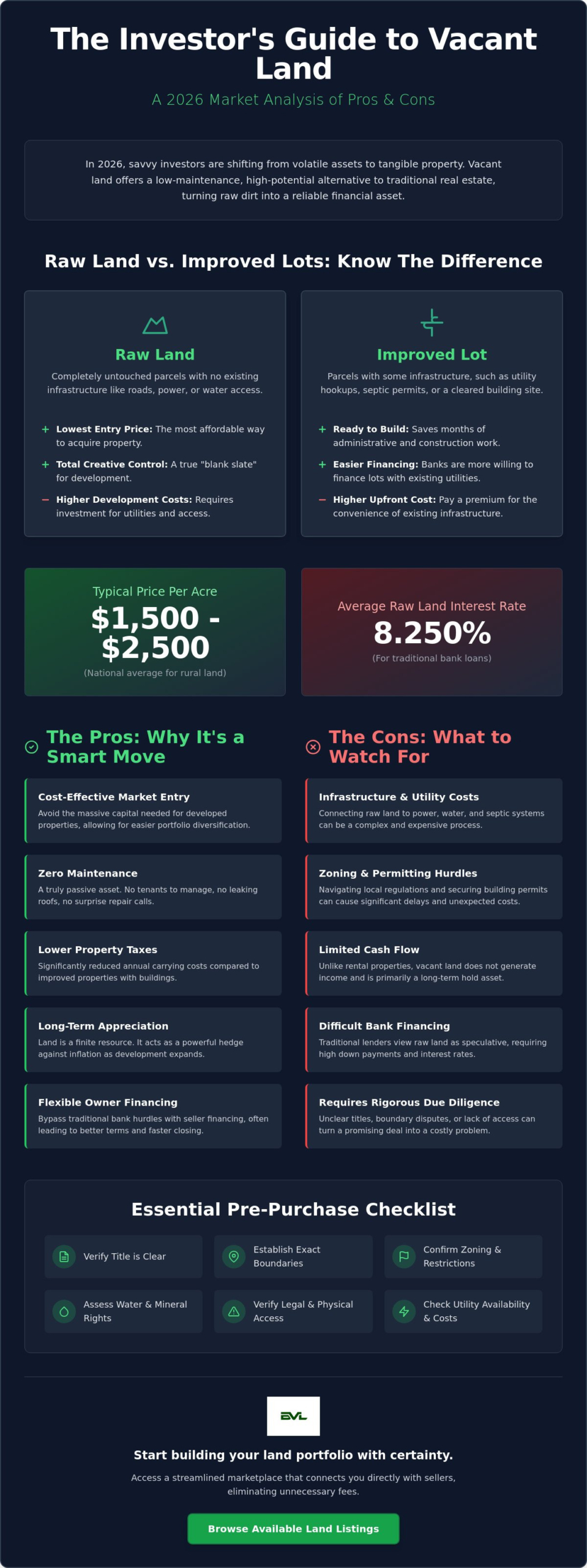
Next, hire a professional to conduct a land survey. This establishes exact boundaries and prevents expensive neighbor disputes. Do not rely on old fence lines or verbal agreements. You must also check specific zoning laws. If you plan to build a tiny house, park an RV, or start a farm, confirm those uses are permitted. In 2026, many states like California, Massachusetts, and Washington have passed laws requiring municipalities to allow Accessory Dwelling Units (ADUs). However, local ordinances still vary. Verify that your intended use aligns with current regulations before moving forward.
Title and Legal Verification
A title search is non-negotiable. It reveals the history of the property and any legal claims against it. You must also distinguish between legal and physical access. Physical access means you can see a road. Legal access means you have a documented right to use that road to reach your property. Avoid landlocked parcels at all costs. It is much safer to look for cheap land for sale that already has a verified, clean title history. This reduces your risk and speeds up the transaction.
Environmental and Soil Testing
If you plan to build, you need a percolation test, or “perc test.” This measures how quickly water drains through the soil. It determines if the ground can support a septic system. Without a passing perc test, you cannot build a residence on land without municipal sewer access. You should also consult flood zone maps. Properties in high-risk areas face expensive insurance premiums and strict construction requirements. Due diligence is the bridge between a risky bet and a secure investment. Once you have your checklist ready, you can find your next land parcel on our marketplace and start the verification process immediately.
Finding Your Plot: How BuyVacantLand.com Simplifies the Search
You’ve analyzed the pros and cons of buying vacant land and verified your due diligence checklist. The final step is finding a parcel that fits your specific financial criteria. Most traditional real estate websites are built for home buyers. They clutter your search results with thousands of residential properties you don’t want. BuyVacantLand.com is a specialized marketplace designed exclusively for empty land. We eliminate the noise so you can focus on the dirt. You connect directly with land owners and sellers, ensuring a transparent transaction from start to finish.
Efficiency is our priority. Our platform hosts a wide range of inventory, including residential lots, off-grid acreage, and recreational hunting land. If you need industrial land or a specific farm, you can find it here without filtering through suburban rentals. One of our most powerful tools is the owner financing filter. As traditional bank rates for raw land remain high in 2026, this tool allows you to target sellers who offer flexible, bank-free terms. It’s the fastest way to secure an asset without the red tape of a traditional mortgage.
The Marketplace Advantage
Generic platforms often lack the granular details that land investors need. While sites like lands of america provide high volume, our marketplace focuses on ease of use for the pragmatic buyer. You don’t have to spend hours filtering out “homes with land.” Every listing on our site is a blank slate. You get direct access to motivated sellers who understand the pros and cons of buying vacant land and the specific needs of land buyers. This transparency saves you time and reduces the stress of asset acquisition. You see the property, review the details, and contact the seller immediately.
Secure Your Asset Today
The land market in 2026 moves fast. Disciplined investors are already securing parcels in high-growth states like Texas and Florida. You can capitalize on current prices by taking action now. Browse our national listings by category to find exactly what you need. Whether you want a sustainable homestead or a strategic commercial lot, the path to ownership is simple. Don’t let procedural hurdles stop your progress. Browse our current vacant land listings and find your perfect plot today.
Secure Your Financial Future with Raw Land
Success in land investing requires a balance of speed and strategy. You’ve learned that low entry costs and zero maintenance make this asset class a powerful wealth-builder. However, you must remain vigilant about zoning and infrastructure. Understanding the pros and cons of buying vacant land allows you to move with confidence while others hesitate. You now have a pragmatic checklist to verify titles, soil quality, and legal access. Use this framework to turn raw dirt into a high-performing asset.
Stop wasting time on cluttered real estate sites that prioritize homes over land. Our marketplace is exclusively focused on vacant parcels. You get a direct connection to motivated sellers and national coverage. Use our specialized filters to find owner-financed lots or off-grid acreage that fits your specific goals. There are no distractions and no unnecessary service fees. Take the next step toward a secure portfolio today. Find your next investment on our vacant land marketplace. You’re ready to build your legacy on a solid foundation.
Frequently Asked Questions
Is buying vacant land a good investment in 2026?
Yes, provided you prioritize due diligence over speculation. In 2026, land remains a finite resource and a reliable hedge against inflation. Market normalization has replaced rapid appreciation with a focus on fundamental qualities like utility access and clear boundaries. It is a stable, low-maintenance asset for those who understand the pros and cons of buying vacant land and act on verified facts rather than guesses.
How much of a down payment do I need for vacant land?
Expect to pay between 30% and 50% down if you use a traditional bank. Lenders view raw land as a high-risk investment since there is no structure to serve as collateral. Some institutions, like Country Bank in June 2026, require 40% down for raw land. You can avoid these high upfront costs by seeking owner-financed deals where terms are more flexible and the closing process is significantly faster.
What are the main risks of buying raw land?
The primary risks include zoning restrictions, environmental hazards, and hidden development costs. You might buy a parcel only to discover the soil fails a perc test or the county prohibits your intended use. Flood zones and protected wetlands can also render a property undevelopable. Thorough due diligence is your only protection against these financial pitfalls. Analyzing the pros and cons of buying vacant land before you sign is essential.
Can I live in an RV on my vacant land while I build?
It depends entirely on local county ordinances and zoning laws. Many municipalities prohibit long-term RV living even on land you own. Some areas allow it temporarily if you have an active building permit and a professional plan for waste disposal. Always check with the local planning department before you assume you can camp on your site during construction. Don’t risk fines or legal action by ignoring local rules.
How do I know if a piece of land is buildable?
A parcel is buildable if it passes a percolation test and meets all local zoning and environmental requirements. You must also verify that it has both legal and physical access to a public road. Consult with the local county planning office and hire a professional to conduct a land survey. These steps confirm that no legal or physical barriers prevent you from starting construction on your new property.
What is the difference between raw land and an improved lot?
Raw land is completely untouched with no utilities, cleared sites, or road access. Improved lots have some infrastructure already in place; such as power at the property line, a cleared building site, or a septic permit. While raw land has a lower entry price, improved lots save you the time and administrative burden of managing early-stage development. Choose raw land if you want a total blank slate for your project.
Do I need a real estate agent to buy vacant land?
No, you don’t need a real estate agent to purchase land. Many buyers deal directly with owners and sellers to save on commission fees and speed up the transaction. Using a specialized marketplace allows you to browse listings and negotiate terms without a middleman. However, you should still hire a title company or attorney to ensure the transaction is legally sound and the property title is completely clear.
How do I find out who owns a vacant lot next to me?
Visit the local county tax assessor’s website or office to look up public property records. You can search by parcel number or address to find the owner’s name and mailing address. This information is public record and accessible to anyone. Many investors use these records to contact owners directly with an equitable financial proposal. This is an efficient way to find off-market deals in your specific area.


Join The Discussion