
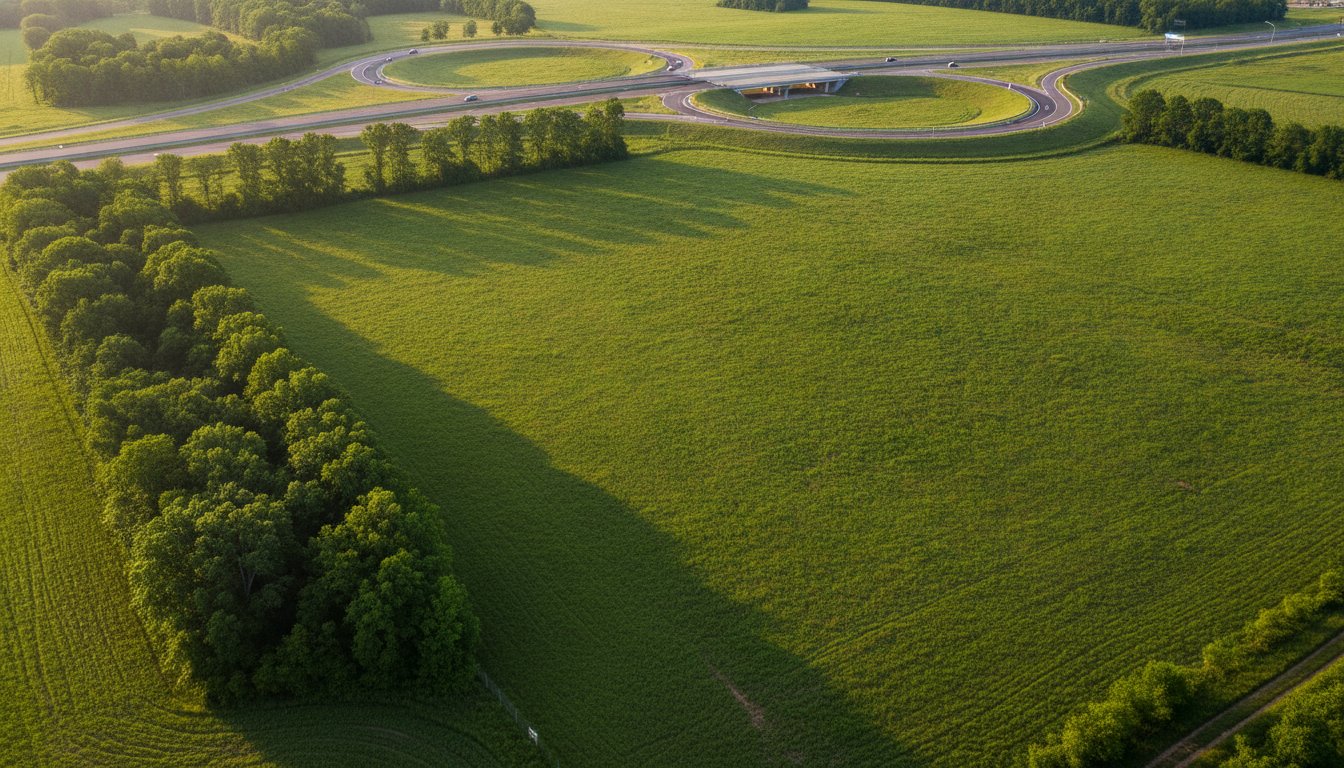
Commercial real estate investment activity is projected to climb by 16% in 2026, reaching a total of $562 billion. Most of that capital will flow into land, yet many investors struggle to find raw commercial lots for sale that don’t come with a mountain of hidden zoning issues. You know the frustration of scouting a perfect location only to discover it lacks basic utility readiness or faces restrictive local covenants. It’s a waste of your time and your resources.
We’re here to change that. This guide provides the exact steps to find, evaluate, and acquire commercial vacant land for maximum ROI in the current market. You’ll learn how to navigate 2026’s specific regulatory shifts, including new building codes and transit-oriented development laws. We’ll show you how to identify high-traffic lots, verify utility requirements, and use a streamlined marketplace to bypass the clutter of residential listings. Get the facts you need to close your next deal with total confidence and zero wasted effort.
Key Takeaways
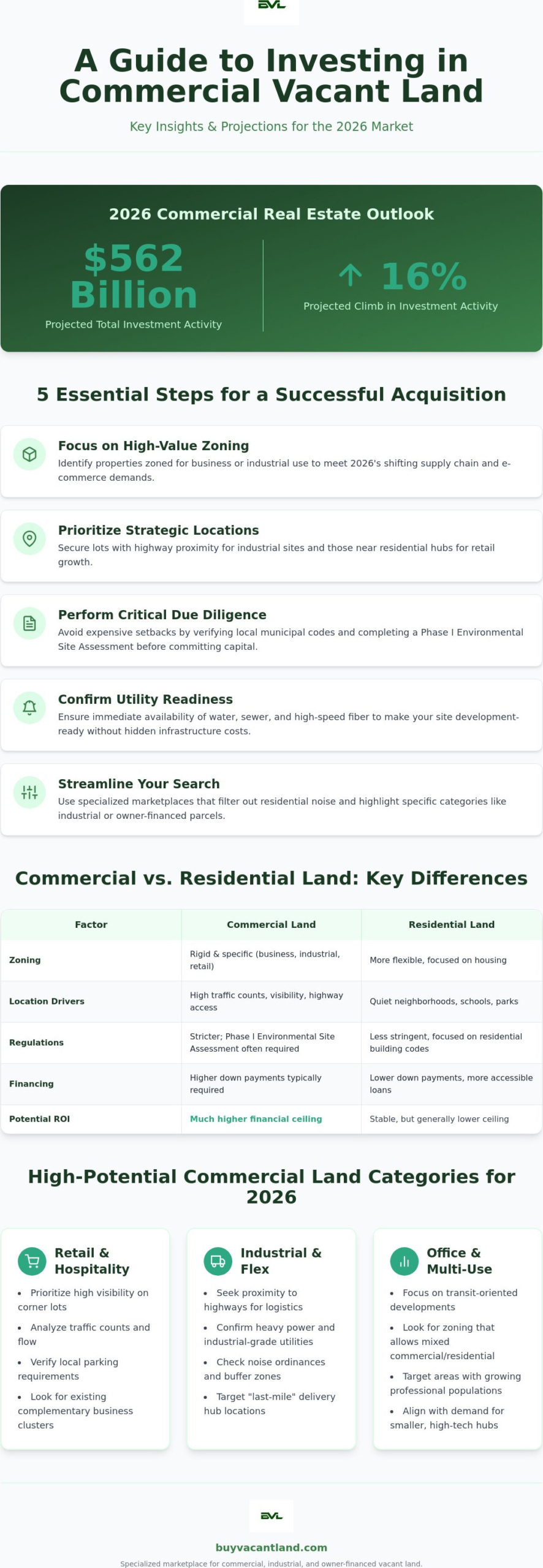
- Identify high-value opportunities by focusing on properties zoned for business or industrial use to meet 2026’s shifting supply chain needs.
- Secure the best commercial lots for sale by prioritizing highway proximity for industrial sites and residential hubs for retail growth.
- Avoid expensive legal setbacks by verifying local municipal codes and completing a Phase I Environmental Site Assessment before you commit capital.
- Confirm the immediate availability of water, sewer, and high-speed fiber to ensure your site is ready for development without hidden costs.
- Streamline your search using specialized marketplaces that filter out residential noise and highlight specific land categories like industrial or owner-financed parcels.
Understanding Commercial Lots for Sale in 2026
Commercial vacant land is undeveloped property specifically zoned for business, retail, or industrial activities. This includes everything from small corner lots for retail to massive industrial parcels. If you’re asking What is commercial property?, you need to understand that raw land is the foundation of the entire sector. The 2026 market is shifting. E-commerce and industrial needs are driving a 16% increase in investment activity, with projections hitting $562 billion. Supply chains are evolving. Businesses need localized distribution hubs. Investors look for commercial lots for sale to fill these gaps before existing inventory becomes too expensive or obsolete.
Value in this market isn’t just about size. It’s about “highest and best use.” This means identifying the specific use that generates the most profit while being legally and physically possible. A lot might be empty today, but its value is tied to its potential as a data center, a retail strip, or a warehouse. You aren’t just buying dirt. You’re buying the future utility of that space. This approach offers a significantly lower entry cost compared to buying existing commercial buildings, which often come with high overhead and maintenance burdens.
Why Investors Choose Raw Commercial Land
Raw land offers a clean slate. You don’t inherit someone else’s maintenance nightmares or outdated floor plans. In 2026, new building codes require “electric-ready” kitchens and solar-paired battery storage for new commercial builds. Building from scratch on vacant land ensures compliance from day one. You also avoid the high carrying costs of property taxes on expensive buildings and the headache of immediate tenant management. Appreciation often comes fast when you secure a lot in a path of progress or successfully rezone a parcel. It’s a low-overhead strategy with high-upside potential.
Commercial vs. Residential Land: Key Differences
Commercial land is a different beast than residential lots. Zoning is more rigid. You must account for traffic counts and visibility. A residential lot needs quiet; a commercial lot thrives on noise and movement. Environmental regulations are also stricter. You’ll likely need a Phase I Environmental Site Assessment to check for past contamination. Financing reflects this risk. Lenders often require higher down payments for commercial lots for sale compared to residential parcels. However, the potential ROI on a well-located commercial lot often justifies the extra hurdles. You’re trading simplicity for a much higher financial ceiling.
Identifying High-Potential Commercial Land Categories
Successful investing in commercial real estate starts with selecting the right category for the local market. Don’t just buy any dirt. Different business types have vastly different physical and legal requirements. Retail lots require high visibility and proximity to residential hubs. Industrial parcels need logistics access to highways or rail lines. Office and multi-use sites thrive near growing professional populations. In 2026, specialty niches like data centers and EV charging hubs are surging due to AI and electrification trends. Finding the right commercial lots for sale means matching the land’s physical traits to these specific demands.
Retail and Hospitality Sites
Visibility is your primary asset here. Focus on corner lots. High traffic counts and signalized intersections drive retail success. You must evaluate local parking requirements before buying. Some municipalities have strict setback rules that can shrink your buildable area significantly. Check the competition. Look for existing business clusters that complement your intended use. If an area is underserved by hospitality but has high corporate traffic, a hotel-zoned lot becomes a priority target. For those developing automotive retail spaces, CarSeek illustrates the breadth of new and pre-owned inventory that attracts buyers to well-located dealerships. Always analyze the flow of traffic to ensure customers can enter and exit without difficulty.
Industrial and Flex Space Opportunities
Demand for “last-mile” delivery hubs is peaking in 2026. These facilities must be near customers but close to major highways. Industrial land must handle heavy loads. Confirm the availability of industrial-grade water and sewer lines. Check for heavy power capacity; data centers and modern warehouses have massive electrical needs. Be aware of noise ordinances. Buffer zones between industrial lots and residential areas are mandatory in most jurisdictions. These regulations dictate where you can build and how late you can operate. If you want to skip the noise of residential sites, you can browse specific commercial vacant lots on our specialized platform to find industrial-ready land fast.
Office and multi-use lots are also evolving. As hybrid work stabilizes, demand is shifting toward smaller, high-tech professional hubs. Look for land near transit-oriented developments. These parcels often allow for a mix of commercial and residential uses, providing a hedge against market shifts. For those seeking these high-potential urban assets, Skyline Properties offers specialized brokerage for off-market investment sales to help you find the right location. Regardless of the category, your goal is to identify land that solves a specific business problem in its immediate area. This strategic alignment is what drives maximum ROI for commercial lots for sale in today’s competitive environment.
Critical Due Diligence for Commercial Land Buyers
Finding commercial lots for sale is just the start. The real profit is secured during due diligence. You must verify every claim made by a seller before you sign. Start with zoning. Never assume a lot can host your specific business just because it’s labeled “commercial.” Check the local municipal codes yourself. You also need a deep dive into the title and easements. Hidden restrictions or utility access rights can block your construction plans entirely. Finally, perform soil testing. Commercial structures are heavy. If the soil can’t support the weight, your foundation costs will skyrocket.
The Zoning and Entitlement Process
Development usually follows one of two paths. “As-of-right” development means your project fits existing zoning perfectly. You move straight to permitting. If it doesn’t fit, you’ll need a variance or a full rezoning. This requires public hearings. Neighbors might object. Local officials will scrutinize your impact on traffic and noise. Always consult the local planning department’s future land-use maps. A lot that’s perfect today might be surrounded by incompatible developments tomorrow. Knowing the city’s long-term vision saves you from buying into a dead-end location.
Environmental and Physical Constraints
The physical state of the land dictates your buildable area. Identify wetlands or flood zones early. These areas are often protected by federal or state laws. You can’t just fill them in. Endangered species habitats also halt projects indefinitely. Soil stability is another massive factor. Soft clay or high water tables require expensive pilings or specialized drainage systems. A Phase I Environmental Site Assessment (ESA) is the industry standard for identifying past contamination from previous owners or adjacent properties. If the ESA finds issues, you’ll need a Phase II study, which involves actual soil and water sampling. Don’t skip this step. Environmental liabilities stay with the property owner, regardless of who caused the original mess.
Due diligence isn’t about finding reasons to say no. It’s about quantifying your risk. If you find an issue, you can negotiate a lower price or ask the seller to fix the problem. Use a checklist to track every requirement. This systematic approach removes emotion from the transaction. It ensures you only close on properties that are truly ready for development. When you’re ready to start your search, look for commercial lots for sale that have already undergone preliminary site assessments to speed up your timeline.
Evaluating Infrastructure and Utility Requirements
Infrastructure determines whether commercial lots for sale are viable investments or expensive mistakes. You must confirm the proximity of water, sewer, natural gas, and high-speed fiber before making an offer. If utilities are at the property line, you’re in a strong position. If they’re hundreds of feet away, your development costs will explode. In 2026, high-speed fiber is a baseline requirement for any business operation. Research municipal impact fees early. These “hook-up” costs vary by city and can reach tens of thousands of dollars per connection. You don’t want to discover these costs after you’ve already committed your capital.
The Cost of Site Development
Budgeting for site prep is a critical part of the how do you buy land decision process. You must account for clearing, grading, and bringing utilities from the street to your building pad. There’s a massive difference between “shovel-ready” lots and raw acreage. Shovel-ready sites already have utilities at the pad and basic grading completed. Raw acreage requires heavy earthwork and infrastructure installation. You also need a plan for stormwater management. Retention ponds or underground drainage systems are legally mandated to handle runoff. These systems take up valuable buildable space. Account for this loss of square footage in your ROI calculations to ensure the project remains profitable.
Access and Traffic Flow
Ingress and egress dictate your property’s daily functionality. You need a clear path for vehicles to enter and exit safely. If your lot sits on a major state or federal road, you must secure DOT permits for driveway cuts. This isn’t a guarantee. Some jurisdictions require you to build dedicated turn lanes to prevent traffic congestion. These requirements are often triggered by traffic studies during the permitting process. A lot with poor accessibility will struggle to attract tenants or customers. Analyze the flow of traffic during peak hours to ensure your site can handle the volume. If you want to skip the guesswork, search for commercial lots for sale that already feature established road access and utility connections.
Site development is a multi-step process that requires precision. Missing one utility connection or failing to account for a turn lane can delay your project by months. Working with a specialized marketplace helps you identify properties that already meet these basic infrastructure needs. This transparency allows you to focus on building your business rather than fighting with municipal planning departments. Secure a lot that’s ready for your vision and avoid the hidden costs of poor infrastructure planning.
Navigating the Commercial Land Marketplace
General real estate sites are a mess. They bury commercial lots for sale under thousands of residential listings and apartment rentals. You waste hours filtering through homes you don’t want just to find a single viable business parcel. BuyVacantLand.com is built for efficiency. We focus exclusively on vacant land to ensure your search stays productive. This specialization saves you time and reduces the stress of asset acquisition. Use high-impact keywords like “unrestricted” or “industrial” to find specific parcels that match your development goals. This approach cuts through the noise and puts you in front of the right sellers fast.
Finding Value in Niche Listings
Investors often find the best deals in overlooked categories. You can find cheap land for sale by searching for listings that feel “off-market.” These properties often lack the polish of corporate-backed listings but offer massive upside for those who know how to perform due diligence. Consider owner financed land to preserve your liquid capital for construction and site prep. This strategy allows you to bypass strict bank lending requirements and move toward development faster. Whether you are looking for land for sale in Florida or industrial hubs in the Midwest, a specialized marketplace puts the right data in front of you immediately.
Direct-to-Seller Advantages
Traditional brokers often create layers of communication that slow down your transaction and add unnecessary fees. Dealing directly with land owners eliminates these hurdles. You get fast, honest answers about property history, previous environmental issues, and utility access. This transparency leads to better negotiations and faster closings. We emphasize the total absence of common transactional costs and service fees in our marketplace. You can craft an equitable financial proposal that benefits both parties without the interference of third-party commissions. Once you find the right parcel, move quickly from discovery to a signed purchase agreement. Speed is your greatest advantage in a competitive 2026 market.
Finalizing the deal is a simple, three-step sequence: 1. Identify your lot. 2. Verify the details. 3. Sign the agreement. This streamlined path removes the traditional procedural hurdles that plague commercial real estate. The 2026 market doesn’t wait for slow movers. You’ve learned how to evaluate zoning, check infrastructure, and identify high-potential categories. Now you need the platform to execute. Stop scrolling through cluttered residential sites. Focus your search on a marketplace designed for your specific needs. Browse commercial lots for sale on BuyVacantLand.com today and secure your next high-ROI asset.
Secure Your Next Commercial Asset
Success in the 2026 land market requires a ruthless focus on details. You’ve learned to look past the surface and evaluate entitlements, utility readiness, and traffic flow. These factors turn raw acreage into high-yield investments. Don’t let residential clutter or complex brokerage layers slow your progress. You need a platform that values your time and provides direct access to the data that matters most. Whether you’re targeting industrial hubs or retail corners, the right parcel is waiting for your vision.
BuyVacantLand.com offers a national marketplace designed specifically for vacant land. We eliminate the noise of homes and rentals to keep your search efficient. You’ll connect directly with owners to secure commercial lots for sale without traditional procedural hurdles. It’s time to stop researching and start acquiring. Start your search for commercial lots on BuyVacantLand.com and finalize your next deal with total confidence. Your high-ROI project begins with the right piece of land. Go find it today.
Frequently Asked Questions
What is the difference between commercial and industrial land?
Commercial land is designated for customer-facing businesses like retail shops, restaurants, and professional offices. Industrial land focuses on manufacturing, large-scale warehousing, and logistics hubs. Industrial sites often require specialized access to rail lines or heavy-duty highways to handle freight. Commercial parcels thrive in high-traffic corridors where visibility is the primary driver of value. Always check local ordinances to confirm which business activities are permitted.
How do I know if a vacant lot is zoned for commercial use?
You must consult the local municipality’s official zoning map or visit the planning department. Every parcel has a specific designation such as C-1 for retail or O-I for office use. These codes dictate exactly what you can build and how the land can be used. Never trust a listing description alone. Verify the zoning yourself to ensure your intended business use is legally permitted on the commercial lots for sale you are considering.
Can I buy commercial land with owner financing?
Yes, you can often find commercial lots for sale that offer owner financing. This arrangement allows you to skip traditional bank hurdles and preserve your liquid capital for site development. You negotiate directly with the seller to set interest rates and payment terms. It is a pragmatic solution for investors who want to move quickly and avoid the lengthy approval processes of conventional commercial lenders.
What is a Phase I Environmental Site Assessment and why do I need it?
A Phase I Environmental Site Assessment (ESA) is a professional report that identifies past contamination risks on a property. It involves a site visit and a review of historical records to check for previous hazardous use. Lenders require this report to protect their collateral. It ensures you don’t inherit legal liabilities for pollution left by previous owners. If the report identifies concerns, you’ll need deeper testing before proceeding.
Are utilities usually included with commercial lots for sale?
Utilities are not always included with vacant land. “Shovel-ready” lots usually have water, sewer, and power already brought to the property line. In contrast, raw acreage requires you to pay for these extensions yourself. Always confirm the exact location of the nearest utility hook-ups during your due diligence. Bringing utilities from a significant distance can add substantial costs to your site development budget and delay your timeline.
What are impact fees in commercial land development?
Impact fees are one-time charges imposed by local governments on new development projects. These fees fund the expanded public infrastructure required by your new business, such as improved roads and sewer systems. The cost varies significantly by jurisdiction and the scale of your build. Research these fees early in the planning process. This prevents unexpected expenses from draining your contingency fund and ensures your project remains financially viable.
How much does it cost to clear and grade a commercial lot?
The cost to clear and grade a lot depends on the specific terrain and vegetation. Heavily wooded sites or those with steep slopes require more heavy equipment and labor hours. You must also account for the removal of debris and the installation of required erosion control measures. Get multiple quotes from local grading contractors to establish a realistic budget. This step ensures your site is stable and ready for a proper foundation.
Is buying raw commercial land a good investment in 2026?
Buying raw commercial land is a strategic investment in 2026. Total investment activity is projected to rise by 16% this year, reaching $562 billion. E-commerce and the growth of data centers continue to drive demand for strategically located parcels. While conventional commercial mortgage rates range from 5.49% to 8.80%, the potential for value growth through rezoning or site development remains high for pragmatic, well-informed investors.



Join The Discussion