

A single missing clause in your land sale agreement can turn a 76.6 percent value increase into a total financial loss. You likely feel the pressure of rising prices and complex new 2026 federal reporting rules. It is common to fear hidden property defects or get lost in dense legal jargon that seems designed to confuse you. You deserve a clear path to ownership without the high cost of traditional real estate attorneys. We understand that the process should be fast, transparent, and certain.
This guide changes everything. You will master the essentials of vacant land contracts and secure your property transaction with absolute confidence. We provide a direct roadmap for due diligence and a strategy to finalize your sale securely. You will learn how to handle new disclosure laws and FinCEN reporting requirements with ease. Our goal is to cut through traditional procedural hurdles and deliver peace of mind. Stop worrying about legal complexity and start focusing on your new asset. Follow this simplified sequence to move from discovery to a finalized deed without the typical stress.
Key Takeaways
- Define the land sale agreement as a binding roadmap that locks in your price and closing terms.
- Secure your asset with essential clauses covering legal parcel descriptions and earnest money protections.
- Eliminate risk by using contingencies to verify zoning and land use before you finalize the deal.
- Streamline the closing process with a clear sequence for escrow and document execution.
- Connect directly with buyers or discover new off-grid and commercial parcels through a focused national marketplace.
What Is a Land Sale Agreement?
A land sale agreement is a legally binding contract between a buyer and a seller for undeveloped property. It is not a suggestion. It is the definitive document that establishes the purchase price, the closing date, and the specific terms of the transfer. This contract protects both parties by clearly outlining responsibilities before the deed is signed. Unlike residential contracts that focus on structures, this agreement prioritizes land-use rights and physical attributes. It is your primary tool for securing a vacant land transaction with total certainty.
The Legal Purpose of the Contract
The contract exists to satisfy the Statute of Frauds. This legal principle requires all real estate transactions to be in writing to remain enforceable. A written land sale agreement creates a clear timeline for the exchange of funds and the title. It prevents misunderstandings about who pays for what. If a party fails to meet their obligations, the document provides a legal basis for dispute resolution. It ensures you don’t lose your investment due to a verbal miscommunication. By defining the exact parcel through tax IDs and legal descriptions, you eliminate the risk of purchasing the wrong lot. The agreement also defines the consequences of a breach. If a buyer backs out without a valid contingency, the seller often keeps the earnest money. This transparency builds trust between buyers and sellers.
Why Raw Land Agreements Are Unique
Raw land deals differ significantly from home sales. You aren’t inspecting a kitchen; you are verifying zoning and legal access. Most vacant parcels are sold in “as-is” condition. This shifts the burden of discovery to the buyer. You must confirm that the land can actually be used for your intended purpose, whether that is a residential lot or a farm. Traditional home contracts don’t address sub-surface issues or water rights with the same intensity. A land sale agreement often includes specific contingencies for environmental testing or soil percolation tests. Understanding What Is a Land Contract? is also useful if the seller is providing the financing directly. These agreements prioritize utility easements over physical structures. They ensure the property you found on BuyVacantLand.com is legally the same property you receive at closing. The discovery phase on a national marketplace like BuyVacantLand.com is just the first step. The agreement is what makes that discovery permanent and secure. It cuts through the noise of traditional real estate hurdles to deliver a fast, reliable result. It replaces uncertainty with a multi-step path to completion.
7 Essential Clauses for Every Land Sale Agreement
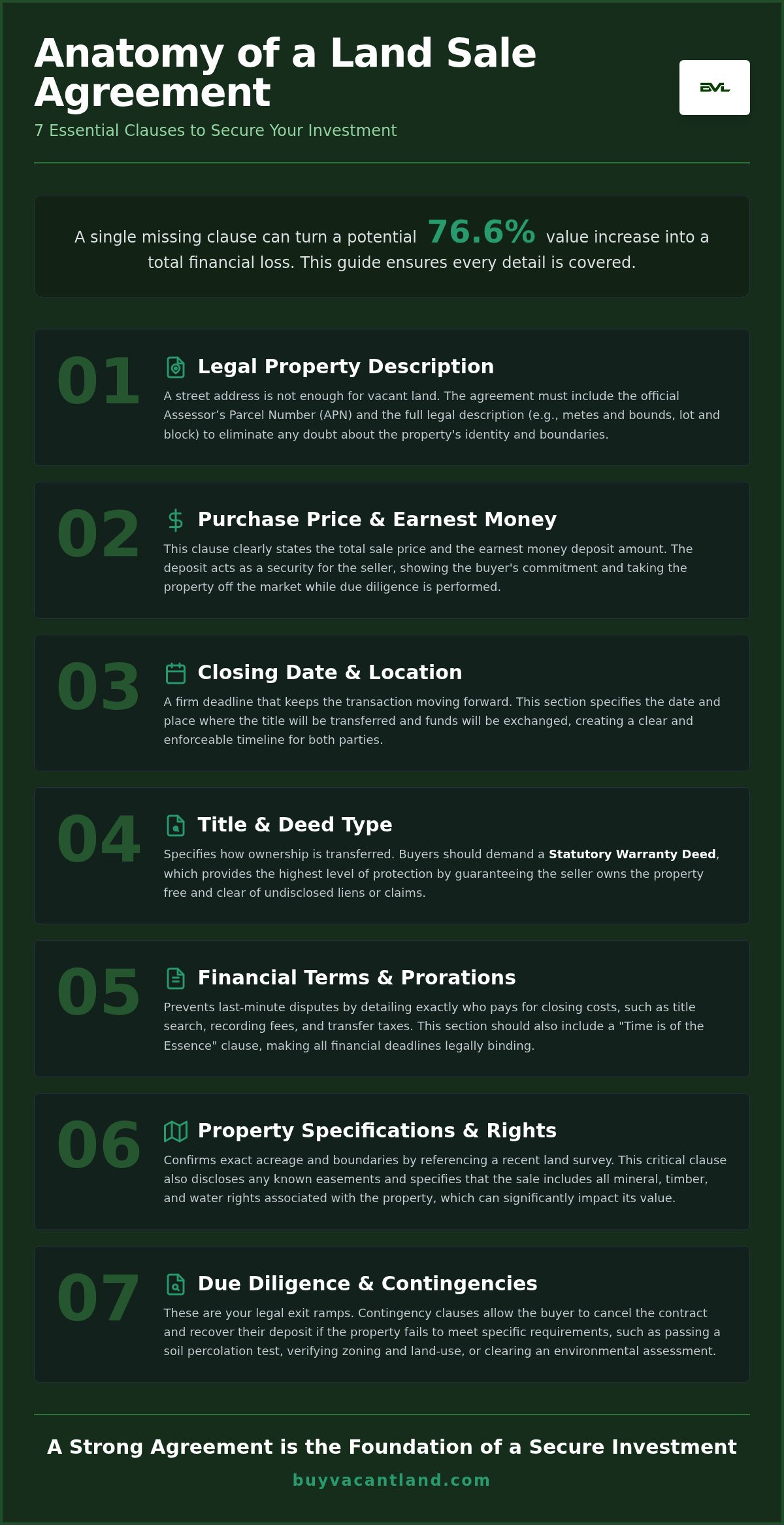
A generic contract won’t protect you in a vacant land deal. You need specific protections that address the unique nature of raw acreage. Your land sale agreement must include these seven essential components to be effective and enforceable. Start with the Legal Property Description. A simple street address is insufficient for undeveloped parcels. You must include the Assessor’s Parcel Number (APN) and the full legal description, such as metes and bounds or lot and block numbers. This ensures there is no confusion about which dirt you are buying.
Next, define the Purchase Price and Earnest Money. This clause establishes the total financial commitment and the security deposit required to take the property off the market. You must also specify the Closing Date and Location. Setting a firm deadline creates urgency and keeps the transaction moving. Finally, identify the Title and Deed Type. Most buyers should insist on a Statutory Warranty Deed. This deed type provides the highest level of protection by guaranteeing the seller owns the property free and clear of undisclosed liens.
Defining the Financial Terms
Transparency in your financial clauses prevents last-minute collapses. Clearly state the down payment amount and detail any owner financing terms. You must outline exactly who pays for the title search, recording fees, and transfer taxes. In 2026, state and local governments may charge a transfer tax ranging from 0.1 percent to 2 percent of the sale price. Including a “Time is of the Essence” clause is critical. This phrase makes all deadlines legally binding. If a party misses a date, they are in immediate breach of the agreement. Reviewing essential clauses for a land purchase agreement can help you structure these payments correctly.
Property Specifications and Boundaries
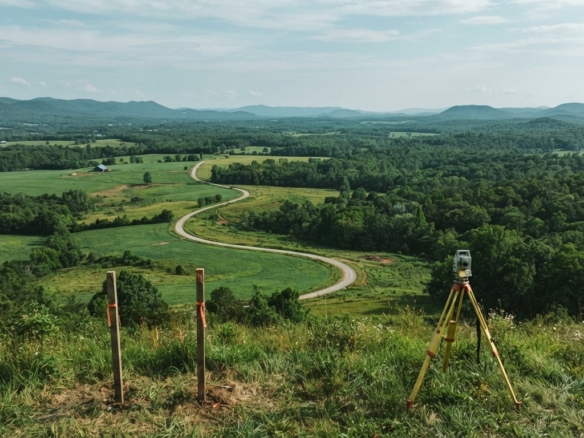
Boundary disputes are the most common post-sale headache. Your agreement must reference the most recent land survey to confirm exact acreage and lot lines. Don’t rely on old fences or verbal claims. You must also disclose any known easements or right-of-way restrictions that could limit your use of the land. Ensure the contract specifies that the sale includes all mineral, timber, and water rights. Losing these rights can significantly decrease the property’s value. If you are still looking for the perfect parcel to secure, you can browse thousands of residential lots and off-grid land to find your next investment. Secure these details now to enjoy a swift, assured transaction later.
Due Diligence and Land-Specific Contingencies
A land sale agreement is only as strong as its contingencies. These clauses act as your legal exit ramp. They allow you to cancel the deal and recover your deposit if the property fails to meet your requirements. In the vacant land market, the burden of discovery sits squarely on your shoulders. You aren’t just checking for leaky roofs; you are verifying the very viability of the soil and the legality of the access. Never sign a contract that locks you into a purchase before you have verified these critical facts.
Zoning and land use are your first priorities. You must confirm the land is zoned for your specific project, whether that is a residential lot or a commercial venture. Local regulations change. A parcel that was buildable five years ago might now be restricted by new environmental setbacks or 2026 wildlife protection zones. Access and utilities are equally vital. Ensure the property isn’t landlocked. You need a recorded easement for physical and legal access. Verify the proximity of power lines and water sources, as extending these services can cost tens of thousands of dollars.
The Feasibility Period
You need a dedicated window to perform your investigations. A standard feasibility period typically ranges from 30 to 60 days. Your land sale agreement should explicitly list the tests you are permitted to conduct during this time. This includes soil borings, environmental phase I reports, and utility markers. If you discover a deal-breaking issue, you must notify the seller before this period expires. Doing so ensures the full return of your earnest money. This window turns a risky gamble into a calculated, secure investment.
Common Land Contingencies to Include
- Perc Test Contingency: This is essential for any property requiring a septic system. If the soil doesn’t drain, you can’t build.
- Survey Contingency: This confirms the exact acreage and identifies any encroachments or boundary disputes.
- Financing Contingency: This protects you if your land loan is denied. Land loans often require higher down payments and stricter scrutiny than home mortgages.
Using a specialized marketplace like BuyVacantLand.com helps you identify properties with existing disclosures, but your contract is your final line of defense. It provides the multi-step path to completion you need for a successful transaction. Secure your future by making these protections non-negotiable.
How to Execute and Close Your Land Agreement
Executing a land sale agreement requires a disciplined, multi-step approach. You cannot afford to skip steps when transferring high-value assets. Once you have negotiated the terms, you must move quickly to formalize the deal. This process transforms a written offer into a finalized property transfer. It ensures every legal requirement is met before any significant funds change hands. Follow this sequence to secure your transaction with confidence.
The Signing Process
Start by gathering all necessary signatures. You must ensure every owner listed on the current deed signs the agreement. If a parcel is owned by a married couple or a business entity, every authorized representative must participate. Use a notary public to witness these signatures. This simple step adds a layer of legal security and prevents future claims of forgery or unauthorized sales. Provide every party with a fully executed copy of the agreement immediately. Digital signatures are often acceptable, but verify local requirements first to avoid delays.
Once signed, open escrow with a neutral third party. This is typically a title company or a specialized real estate attorney. They will hold the earnest money and all essential documents until every condition is met. Settlement or escrow fees generally range from $300 to $800. This cost is a small price for the security of knowing your funds are protected during the due diligence phase.
Finalizing the Transfer
The final phase is the closing. You must verify the title is clear of all liens, judgments, or unexpected encumbrances. A professional title search generally costs between $200 and $400. If the title is clean, the closing agent will draft the new deed according to the specific terms of your land sale agreement. You will likely use a Warranty Deed to ensure the highest level of protection. In 2026, you must also be aware of the new FinCEN reporting rules for all-cash transactions intended for residential development. These rules increase scrutiny but ensure a transparent transfer.
The transaction is not complete until you record the deed. Your closing agent will submit the document to the local county recorder of deeds. County recording fees are usually between $25 and $150. This public record is your ultimate proof of ownership. If you are ready to start your search for the perfect parcel, you can browse vacant land for sale on our national marketplace today. Take the final step toward ownership with a clear, efficient closing process.
Finding and Selling Land with BuyVacantLand.com
Finding the right parcel is the critical first step toward signing a secure land sale agreement. You cannot afford to waste time on generic residential sites filled with houses and rental properties. BuyVacantLand.com is a specialized marketplace designed exclusively for raw land. We connect sellers directly with buyers across the entire United States. This direct connection streamlines the discovery process and removes unnecessary procedural hurdles. You reach serious land investors who understand the value of undeveloped acreage. Every listing on our platform represents a specific opportunity for development, recreation, or long-term investment. Our platform ensures you find exactly what you need without the noise of the traditional housing market.
The Advantage of a Specialized Marketplace
Traditional real estate websites prioritize improved properties. This makes finding raw acreage difficult, slow, and frustrating. Our platform focuses entirely on undeveloped land to eliminate that clutter. You can connect directly with motivated buyers interested in cheap land for sale. Sellers benefit from a highly focused audience that values the unique attributes of vacant lots. You list your property where buyers are specifically searching for hunting land, farms, ranches, or industrial lots. This specialized focus increases the speed of your transaction. It provides the relief and peace of mind that come from a swift, assured sale. We provide the professional credibility you need to move from a listing to a signed contract without the typical distractions of the residential market.
Next Steps for Buyers and Sellers
Your journey toward a finalized land sale agreement starts with a targeted search on a reliable platform. Start your search for owner financed land to bypass traditional bank hurdles and high interest rates. We offer a diverse range of property types, including off-grid land, residential lots, and commercial vacant lots. Sellers should list their vacant lot today to reach our expansive national network of buyers. Our marketplace simplifies the initial discovery phase and sets the stage for a successful transaction. It allows you to move quickly from browsing to due diligence and final closing. Whether you are looking for a remote building site or a strategic industrial parcel, we provide the tools to make it happen. Take action now to find or sell your property with total certainty and efficiency.
Secure Your Property Future Today
Success in raw land transactions depends on a precise land sale agreement. You have learned how to protect your investment with essential clauses and land-specific contingencies like perc tests and zoning verification. You now have a clear roadmap for a secure closing process that avoids hidden defects and legal jargon. Mastering these contract essentials eliminates the stress of asset ownership and replaces it with the relief of a swift, assured transaction. You don’t need to navigate this alone or pay for unnecessary residential overhead.
Our platform provides the direct connection you need to move from discovery to a finalized deed. We focus exclusively on vacant land with a national reach across the United States. You won’t find distracting home or rental listings here; only serious buyers and sellers of undeveloped property. Take the final step toward your goals by using a marketplace built for your specific needs.
List your vacant land for sale on our national marketplace today to reach a focused audience of investors and builders. Secure your next parcel with confidence and start your project without delay.
Frequently Asked Questions
Is a land sale agreement legally binding?
A land sale agreement is a legally binding contract once both parties sign. It establishes a mutual obligation to complete the property transfer under specific terms. If one party fails to perform, the other can seek legal remedies for breach of contract. This document satisfies the Statute of Frauds, which requires real estate sales to be in writing. It ensures your transaction is enforceable and provides a clear path to ownership without unnecessary stress.
Do I need a lawyer for a land sale agreement?
You aren’t always legally required to hire a lawyer, but some states mandate their involvement at closing. Many buyers and sellers use title companies or escrow agents to handle the paperwork and funds. These professionals ensure the deed is recorded and the title is clear. If your transaction involves complex easements or owner financing, a legal review provides extra security. It’s about choosing the most efficient, cost-effective path for your specific deal.
What is the difference between a land contract and a purchase agreement?
A purchase agreement is the initial document that sets the terms for a one-time sale. A land contract, also known as a contract for deed, is a financing tool where the seller retains the title until the buyer pays the full price. The purchase agreement is the roadmap to the closing table. The land contract is the long-term payment plan. Both are essential for different types of vacant land transactions across the country.
How much earnest money is typical for a land sale?
Earnest money usually ranges from 1 percent to 5 percent of the total purchase price. This deposit proves the buyer is serious and takes the property off the market. On a national marketplace like BuyVacantLand.com, the exact amount is often negotiated directly between the owner and the buyer. The funds are held in a neutral escrow account until the sale is finalized. This protection ensures neither party loses out during the due diligence phase.
What happens if a buyer backs out of a land sale agreement?
The outcome depends on your specific land sale agreement contingencies. If the buyer backs out for a reason covered by a contingency, like a failed perc test, they receive their earnest money back. If they default without a valid legal reason, the seller typically keeps the deposit as liquidated damages. This protects the seller’s time and marketing efforts. Define these consequences clearly in your contract to avoid expensive disputes and ensure a fast, reliable result.
Can I use a land sale agreement for owner financing?
You can certainly include owner financing terms within your contract. This allows you to bypass traditional banks and high interest rates. The agreement must specify the down payment, the interest rate, and the monthly payment schedule. It also defines what happens if the buyer misses a payment. This method is a popular way to sell off-grid land or large farms and ranches quickly and efficiently on a national scale.
How do I describe a property without a street address in the contract?
You must use the Assessor’s Parcel Number (APN) and the full legal description. Raw land often lacks a street address, so you rely on metes and bounds or lot and block numbers found on the current deed. This data is available through county records or title searches. Including the exact GPS coordinates can also help identify the parcel. This precision ensures the contract covers the correct dirt and prevents boundary confusion during the sale.
Who usually pays for the survey in a land sale?
The buyer typically pays for the survey as part of their due diligence. However, this cost is entirely negotiable. In a competitive market, a seller might provide a recent survey to speed up the transaction. Surveys for vacant land generally cost between $300 and $1,000 depending on the acreage and terrain. Always specify who is responsible for this fee in your written contract to maintain a transparent, cost-effective process for both parties.



Join The Discussion