
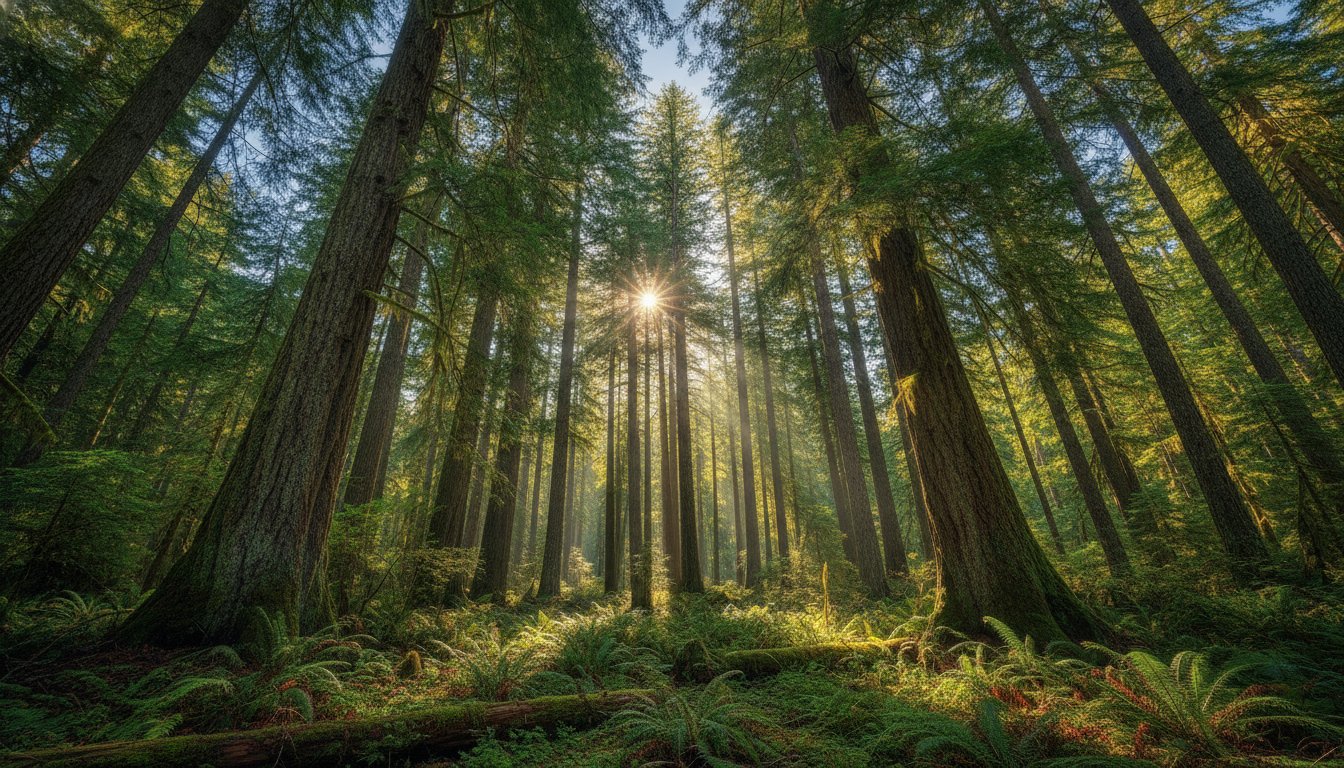
Most investors look at a forest and see trees, but a seasoned pro looks at land with mature timber and sees a standing bank account that grows while you sleep. It’s a physical asset that provides immediate privacy and long-term liquidity. You might worry about overpaying for “scrub” land or feel lost when trying to navigate modern logging regulations. It’s stressful to guess at the value of standing trees when your capital is on the line. We understand that uncertainty and we’re here to cut through it.
This guide ensures you never overpay for a parcel again. You’ll learn how to evaluate, value, and acquire timberland as a high-yield asset. We’ll cover the 2026 market essentials, including recent significant price points for key timber types and how to identify species that drive the highest returns. We’ll also show you how to use BuyVacantLand.com’s streamlined marketplace to find these assets without the distraction of residential listings. By the end of this article, you’ll have a clear, multi-step path to securing a high-quality timber investment with total confidence.
Key Takeaways
- Treat your property as a “standing bank account” where trees increase in volume and value regardless of economic shifts.
- Distinguish between high-value hardwoods and fast-growing softwoods to ensure your acreage yields maximum commercial returns.
- Verify legal logging easements and hire a professional forester for a timber cruise to confirm the exact volume of your assets.
- Identify land with mature timber using specialized marketplace filters to skip residential clutter and find specific investment-grade parcels.
- Leverage mature forests as dual-purpose assets that provide immediate recreational privacy and long-term financial liquidity.
What Is Land with Mature Timber and Why Invest Now?
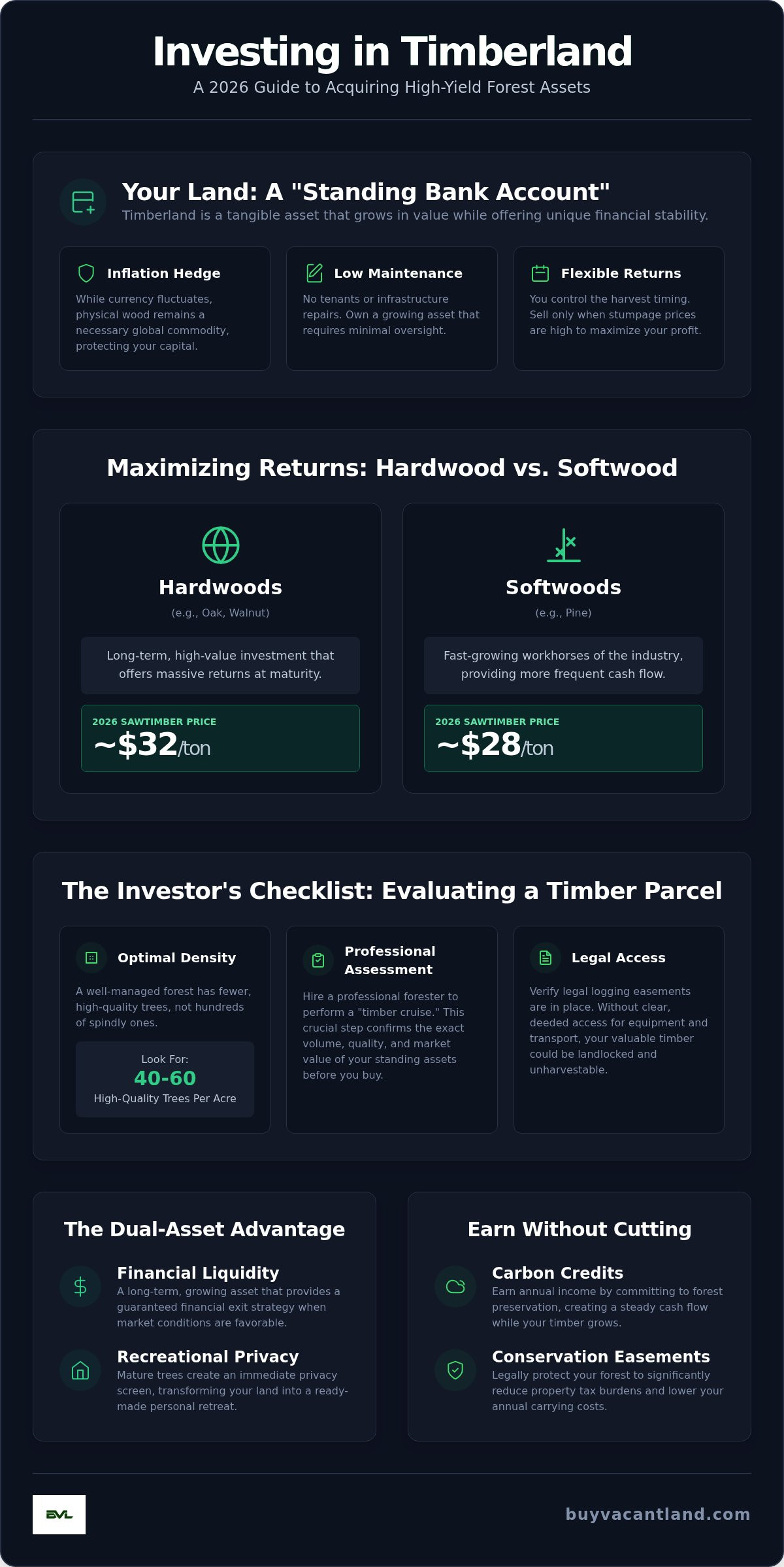
Mature timber describes trees that have reached their optimal size for commercial harvest and ecological stability. In the science and craft of forestry, this represents the peak intersection of biological growth and financial return. Investing in land with mature timber provides a distinct advantage over clear-cut lots or scrub land. You own a “standing bank account.” If market prices are low, you simply leave the trees in the ground. They continue to add volume and value while you wait for a favorable selling window.
The 2026 market shows high demand for these tangible assets. Lumber futures recently traded at $562.50 per 1,000 board feet, signaling steady industrial needs. Legislative shifts like the Wildfire Reduction Market Expansion Act have also increased the value of woody biomass. Investors are moving away from speculative residential flips. They want assets that provide security and utility. You aren’t just buying a parcel; you’re buying a self-sustaining factory that produces value 24/7 without your daily intervention.
The Economic Resilience of Timberland
Timberland functions as a natural hedge against inflation. While currency fluctuates, physical wood remains a necessary global commodity. You control the timing of your returns with total flexibility. You only harvest when stumpage prices are high, such as the peaks seen earlier this year. Maintenance costs are exceptionally low compared to developed real estate. You don’t manage tenants or repair infrastructure. You own a growing asset that requires minimal oversight while providing long-term peace of mind.
Immediate vs. Long-Term Value
Distinguishing between immediate harvest value and future growth is key to a successful acquisition. A mature pine plantation can yield significant returns in a single clear-cut based on current national averages. However, the value isn’t limited to the logs. Mature trees create a privacy screen that significantly increases the land’s appeal for recreational use. The how do you buy land process for timber-heavy lots focuses on board feet rather than just road frontage. This dual-asset nature provides both an immediate sanctuary and a guaranteed financial exit strategy.
Evaluating Timber Quality: Species, Density, and Age
Identifying high-quality land with mature timber requires a technical eye for forest health and species composition. You must look beyond the green canopy to assess the “veneer grade” potential of the stems. Veneer logs are straight, thick, and free of defects; they command the highest market prices for architectural finishes. Focus on managing timber quality by ensuring the trees have had enough space to grow without competing for sunlight. A neglected forest often results in stunted growth and lower-quality wood, decreasing your eventual payout.
Density is a critical metric for both health and profit. A well-managed forest typically features 40 to 60 high-quality trees per acre rather than hundreds of spindly ones. Professional landowners use “thinning” to remove diseased or crooked trees, allowing the strongest specimens to reach their full financial potential. When you walk a parcel, look for clear forest floors and wide crowns. These are signs of a healthy biological engine that is ready for harvest or long-term holding. It shows the property has been treated as a serious asset rather than a neglected lot.
Hardwood vs. Softwood Markets
Hardwoods like Oak and Walnut represent a long-term, high-value investment. In early 2026, mixed hardwood sawtimber prices reached approximately $32 per ton in prime timber regions. These species take longer to mature but offer massive returns. Softwoods like Pine are the workhorses of the industry. Pine sawtimber traded at approximately $28 per ton during Q2 2026. Softwoods grow faster and provide more frequent cash flow opportunities. A diverse mix of both protects your asset from species-specific pests and market fluctuations. It ensures you always have a marketable product regardless of specific industry shifts.
Modern Revenue: Carbon Credits and Conservation
You can now monetize your forest without cutting a single tree. Carbon credit markets in 2026 allow landowners to earn annual income by committing to forest preservation. This creates a steady cash flow while your timber continues to gain volume and value. Conservation easements also provide a pragmatic way to reduce property tax burdens. By legally protecting the forest, you lower your carrying costs and increase the net yield of your investment. Finding these specialized assets is simple when you use a dedicated land listing marketplace to filter for timber-rich properties.
Timberland as a Dual-Asset Investment
Investing in land with mature timber isn’t just a spreadsheet exercise. It’s a lifestyle upgrade that pays you to enjoy it. While the trees grow in value, they serve as a thick, natural privacy screen from neighbors and roads. This immediate seclusion is a massive selling point that raw, cleared land lacks. You aren’t just buying acreage; you’re buying a ready-made retreat. Savvy investors often hunt for cheap land for sale that contains hidden timber value. Buying at a low entry point while the trees are near maturity maximizes your eventual clear-cut or selective harvest payout. This strategy turns a simple land purchase into a self-funding recreational asset.
Recreational and Lifestyle Benefits
Mature forests create superior wildlife habitats. Tall canopies provide thermal cover for deer, while specific hardwood species like Oak offer mast crops for forage. This makes the property highly attractive to the hunting land market. The “cathedral effect” of a mature forest shades out the dense, tangled brush found on clear-cut lots. This naturally open understory makes the land perfect for hiking trails, campsites, or off-grid homesteads. You get immediate utility. You don’t have to wait 20 years for a privacy screen to grow; it’s already there. Owning a legacy forest provides a sense of permanence and security that developed real estate cannot match. It is a tangible piece of heritage for your family.
Improving Land Resale Value
Aesthetics drive price premiums in the rural land market. Buyers pay significantly more for a “park-like” setting than they do for a messy, overgrown thicket. You can perform selective thinning to generate immediate cash flow while actually improving the property’s visual appeal and health. This process requires carefully evaluating timber quality and value to ensure you aren’t removing the most valuable specimens prematurely. When it’s time to sell, market the land to two different personas: the timber investor looking for board feet and the recreational buyer looking for a weekend retreat. This dual-market appeal creates a competitive bidding environment. Highlighting the “standing bank account” aspect alongside the lifestyle benefits ensures you capture the highest possible resale value.
Due Diligence: How to Assess Standing Timber Value
You need total certainty before you wire funds for a property. Assessing land with mature timber requires more than a casual walk through the woods. You must verify that the trees are healthy, legal to harvest, and located entirely within your property lines. Skipping these steps can turn a high-yield asset into a costly legal liability. Efficiency in due diligence is the only way to protect your capital and ensure a swift, successful transaction.
Start by reviewing the property’s site index. This metric evaluates soil quality to predict how fast specific tree species will grow on that parcel. High-quality soil ensures that your next crop of timber reaches maturity faster, maintaining the property’s value long after the first harvest. You must also check for environmental restrictions. Some regions enforce strict “streamside management zones” (SMZs). These regulations often prohibit logging near water sources to protect local ecosystems. Knowing these boundaries beforehand prevents unexpected hurdles during the harvest phase.
The Timber Cruise Process
Don’t rely on a seller’s estimate. Hire a professional forester to conduct a formal timber cruise. They use standardized sampling plots to calculate the total volume of wood by species and grade. This data determines the “stumpage value,” which is the current market price of the trees while they’re still in the ground. A formal appraisal provides a defensible financial figure for your records. A rough estimate might work for a quick look, but a certified cruise is the only way to know the true worth of your standing bank account.
Legal and Access Considerations
Access is the primary driver of timber liquidity. If a logging crew can’t get heavy equipment to the trees, the timber has no commercial value. You must verify legal access and permanent logging easements before closing. Check the title for severed timber rights. In some cases, a previous owner may have sold the rights to the trees while retaining the land. A recent survey is also mandatory to prevent timber trespass. Accidental cutting on a neighbor’s lot can result in massive fines, often triple the market value of the wood. Protect your investment by confirming exactly where your ownership ends. Ready to find a secure asset? Browse our national timberland listings to find parcels with verified investment potential.
How to Buy or Sell Timberland on Our Marketplace
Finding land with mature timber shouldn’t involve digging through thousands of residential listings. You need a specialized tool that focuses exclusively on raw acreage. Our national marketplace connects you directly with sellers who understand the value of standing timber. We eliminate the noise of suburban developments and multi-family homes. This streamlined approach saves you time and ensures you only see parcels that fit your investment criteria. It’s about efficiency and reliability.
Modern investors often look for flexible purchase options to preserve capital. You can use our advanced search filters to find owner financed land with mature trees. This allows you to secure a high-yield asset without the hurdles of traditional bank lending. It’s a pragmatic solution for scaling your timber portfolio quickly. By bypassing the bank, you can often close faster and start your forest management plan immediately.
Finding the Right Timber Parcel
Use specific keywords to narrow your search results. Terms like “managed pine” or “mature hardwoods” help you identify properties that have already undergone professional oversight. Look for listing descriptions that mention tree age or past thinning cycles. These details indicate a well-maintained forest. Don’t hesitate to contact sellers directly through our platform. Ask if a recent timber cruise is available or if they have records of past harvests. This direct communication cuts through procedural delays and provides the transparency you need to make an equitable financial proposal.
Selling Your Timberland Fast
If you own timber-rich property, you need an audience that values board feet over bedroom counts. Listing your land with mature timber on our platform puts your asset in front of a niche group of forestry investors and recreational buyers. Focus on the data in your description. Highlight the primary species, estimated age, and any existing conservation easements. High-quality photos are essential. Capture the forest canopy to show health and the forest floor to demonstrate accessibility. Show potential buyers exactly what they’re getting. A clear, well-documented listing builds immediate trust.
We remove the stress of high transactional costs and unnecessary service fees. Our platform focuses on simplicity and ease of use. You won’t face the common hurdles that eat into your profits on traditional real estate sites. It’s a straightforward path to liquidity. Whether you’re liquidating a legacy forest or seeking your next standing bank account, we provide the infrastructure to get it done. List your land on our marketplace today and reach the right buyers without the traditional procedural hurdles.
Secure Your Standing Bank Account Today
Investing in land with mature timber is a pragmatic strategy for the 2026 market. You now understand how to distinguish high-value hardwoods from fast-growing softwoods and why a professional timber cruise is mandatory. These assets provide a unique dual-benefit. They offer immediate recreational privacy while serving as a liquid physical asset that grows in value regardless of economic shifts. By focusing on site index and legal access, you ensure your capital remains secure and your transaction stays efficient.
Our marketplace removes the stress of asset ownership by providing a streamlined path to purchase. We offer exclusively vacant land listings to eliminate the noise of residential real estate. You won’t deal with hidden listing fees or complex procedural hurdles that eat into your returns. We connect you directly with a national buyer network and motivated sellers. This transparency ensures you receive an equitable financial proposal every time. Take control of your portfolio with a tangible asset that works for you. Browse National Timberland Listings Now and find your next high-yield property today.
Frequently Asked Questions
Is land with mature timber a good investment for beginners?
Yes, it’s a stable physical asset with minimal maintenance requirements. It’s less complex than managing residential rentals because trees grow without daily oversight. Beginners should hire a professional forester to avoid overpaying for low-quality species. This ensures you buy a “standing bank account” rather than a liability. It’s a reliable way to enter the land market with a built-in exit strategy through timber sales or recreational resale.
How much does a timber cruise cost?
Costs vary based on the total acreage and the density of the forest. Most professional foresters charge a flat fee or a per-acre rate for this inventory. You should budget for this expense as a mandatory part of your due diligence. It prevents you from making a blind investment. A certified cruise provides the exact volume of board feet and stumpage value you need for an accurate financial appraisal.
Can I build a house on land with mature timber?
Yes, you can build on these parcels if you verify local zoning and soil stability first. Mature trees provide an immediate privacy screen for your new home. You’ll need to clear a specific area for the foundation and driveway. Selling the logs from the cleared area can often help offset your initial construction costs. Always verify building permits before you finalize the purchase of land with mature timber.
What is the difference between timberland and a regular wooded lot?
Timberland is managed specifically for commercial tree growth and future harvest cycles. A regular wooded lot might have trees, but they’re often poor species or overcrowded. Professional timberland usually shows signs of past management like thinning or controlled burns. The value of timberland is tied directly to the commercial volume of wood. Wooded lots are typically valued for their aesthetic or residential potential rather than their “stumpage” value.
Do I have to cut down the trees to make money from timberland?
No, you can generate revenue without performing a harvest. Modern landowners use carbon credit programs to get paid for keeping trees standing. You can also lease the land for hunting or recreational use to cover your property taxes. Conservation easements provide another path to financial gain through significant tax deductions. These alternative streams allow you to hold the asset while the timber continues to age and increase in volume.
How do I find out who owns the timber rights on a property?
You must conduct a thorough title search at the local county recorder’s office. Timber rights are sometimes “severed” and sold separately from the surface land. Review the deed history for any recorded timber deeds or long-term harvest contracts. A professional title company can identify these encumbrances during the closing process. Don’t assume the trees come with the dirt until you verify the legal chain of title in writing.
What are the tax benefits of owning managed timberland?
Income from timber sales is typically treated as a long-term capital gain. For the 2026 tax year, these rates are 0%, 15%, or 20% depending on your income thresholds. This is often lower than ordinary income tax rates. You can also deduct expenses related to forest management and property maintenance. Some states offer “current use” programs that lower your property taxes if the land remains in timber production. Consult a professional to maximize these incentives.
Does mature timber increase the price of vacant land?
Yes, land with mature timber carries a higher market value because of its immediate liquidity. The standing wood is a separate, appraisable asset from the raw land. Buyers pay a premium for the “standing bank account” and the aesthetic privacy these trees provide. In many cases, the timber value represents a significant portion of the total purchase price. This makes it a more secure investment than clear-cut or undeveloped scrub land.


Join The Discussion