
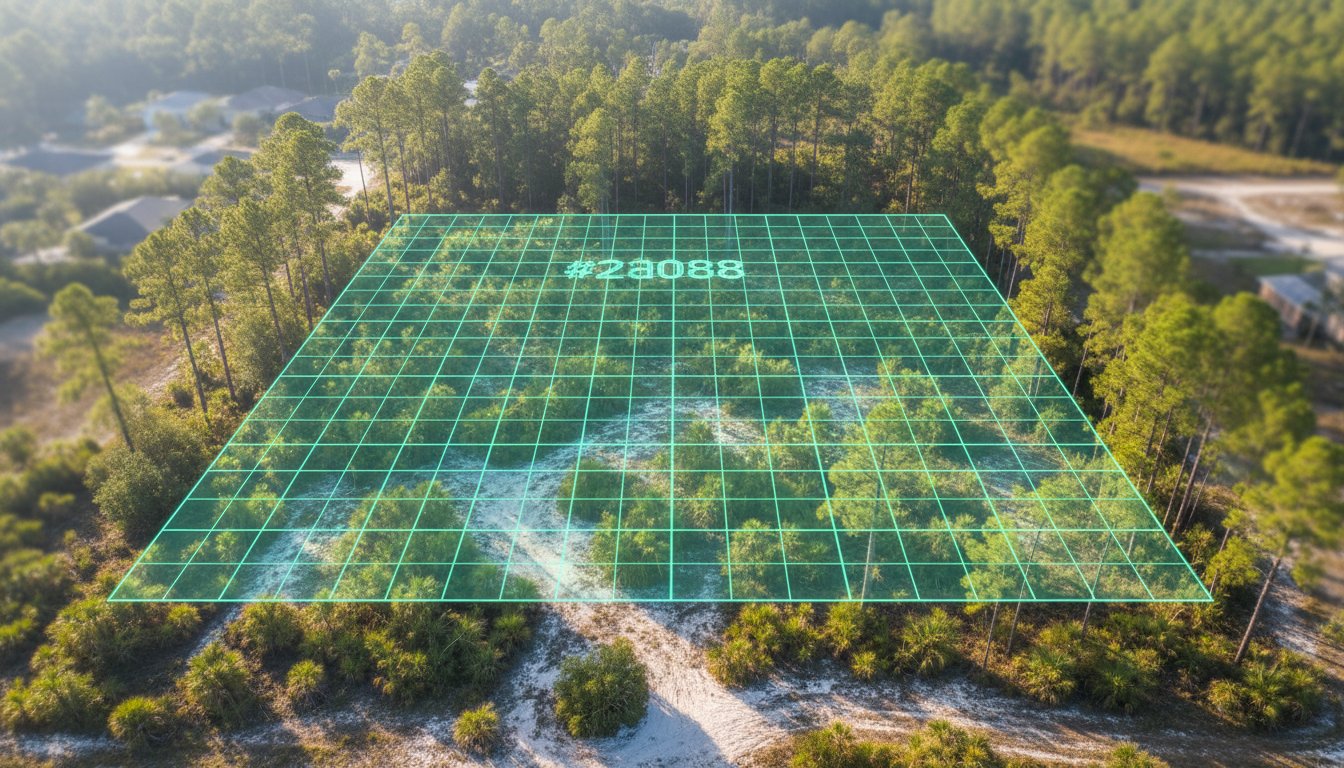
Owning land you cannot measure is like carrying a wallet without knowing the currency inside. Most owners struggle to answer the basic question: how much is an acre in terms of actual square footage and market value? You know that land value is more than just a number on a tax bill. It’s frustrating to look at a lot and feel uncertain about its boundaries or why a neighbor’s parcel sold for a different price. You deserve a fast, reliable way to understand exactly what you own.
This guide provides the professional framework you need to master land measurements and determine the current market value of any vacant parcel. We’ll show you how to visualize 43,560 square feet instantly and use 2026 market data to price your property accurately. You’ll learn a simple three-step process to calculate acreage and identify the specific factors that drive land values. We’re cutting through the red tape to give you total peace of mind about your property’s worth.
Key Takeaways
- Understand the exact dimensions of an acre and how 43,560 square feet translates to your specific property.
- Use legal descriptions and plat maps to calculate your total acreage with a simple, two-step measurement method.
- Determine how much is an acre worth by analyzing location, zoning, and current market demand.
- Uncover the hidden costs of land ownership, including property tax implications for vacant versus developed parcels.
- Price your property for a fast sale using a professional Comparative Market Analysis and highlighting high-value features.
Defining the Acre: Dimensions and Real-World Comparisons
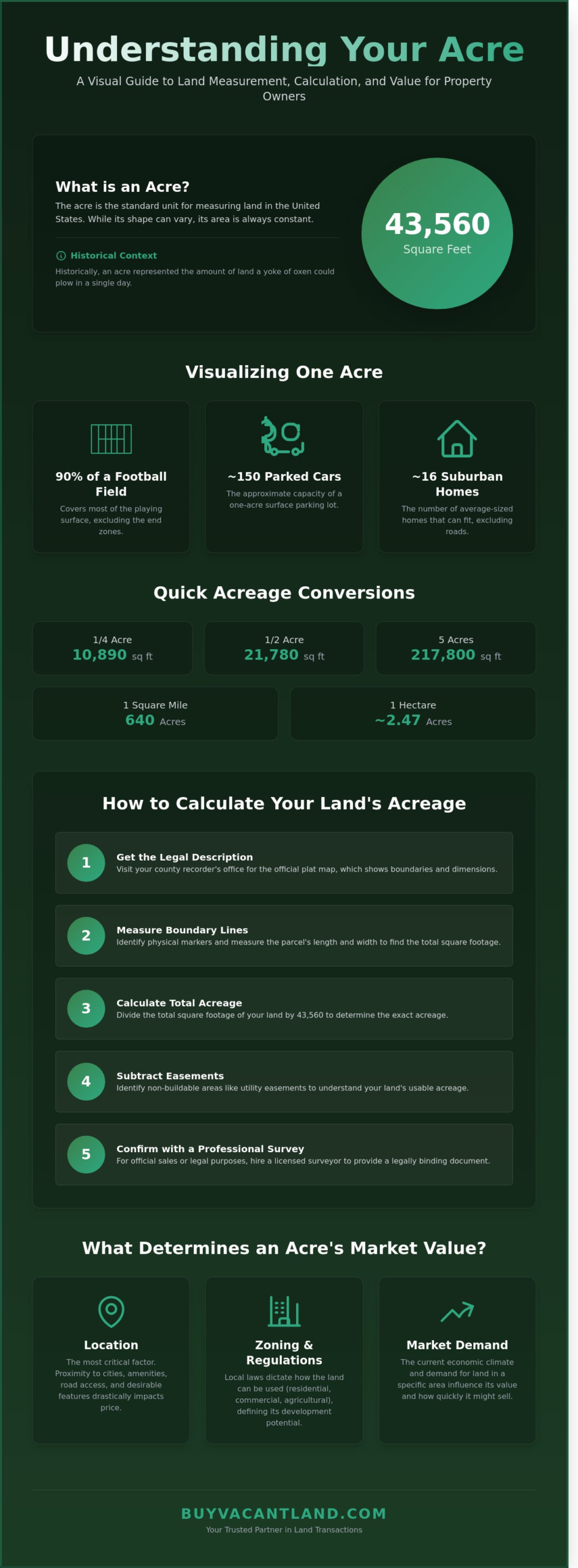
Understanding land size is the first step in any real estate transaction. If you are asking how much is an acre, the answer starts with one specific number: 43,560 square feet. This standardized unit allows buyers and sellers to communicate value clearly across different markets. Historically, an acre represented the amount of land a yoke of oxen could plow in a single day. While we no longer use oxen to measure property, the unit remains the bedrock of American land ownership. To better understand the historical evolution of this measurement, you can research What is an acre? to see how it transitioned from medieval tradition to modern law.
Square Footage and Linear Measurements
An acre measures area, not shape. This means an acre can be a perfect square, a long rectangle, or an irregular circle. To calculate how much is an acre in linear terms, imagine a square parcel. Each side would measure approximately 208.71 feet. Most land parcels in the real world don’t follow these perfect lines. Surveyors focus on the total square footage rather than the perimeter. Use these common conversions for quick mental math during your property search:
- 1/4 Acre: 10,890 square feet.
- 1/2 Acre: 21,780 square feet.
- 5 Acres: 217,800 square feet.
If you’re dealing with larger tracts, remember that one square mile contains exactly 640 acres. For those looking at international or scientific data, one hectare equals approximately 2.47 acres. Keeping these numbers handy prevents confusion when reviewing deeds or plat maps.
Visualizing an Acre in Daily Life
Raw numbers can be difficult to visualize when you’re standing on a vacant lot. Using familiar landmarks helps you gauge the true size of a property. A standard American football field is the most common comparison. One acre covers about 90% of the playing surface, excluding the end zones. If you can see a football field, you can see an acre.
In a commercial or urban setting, think about parking. One acre of flat land can hold roughly 150 standard-sized cars. This visualization is particularly useful for investors looking at potential storage or retail development. Residential density provides another clear picture. In a typical suburban neighborhood, you can fit approximately 16 average-sized homes on a single acre. This excludes the space needed for roads and sidewalks. Knowing these benchmarks allows you to assess a property’s potential quickly without needing a tape measure.
How to Measure and Calculate Your Land’s Total Acreage
Measuring land isn’t a guessing game. You need exact figures to understand how much is an acre on your specific plot. Calculations matter because a single error can cost you thousands in a 2026 real estate market. Follow these five steps to get your numbers straight.
- Step 1: Get the legal description. Visit your county recorder’s office or search their online portal. Pull the plat map. This document provides the official boundaries and dimensions of your parcel.
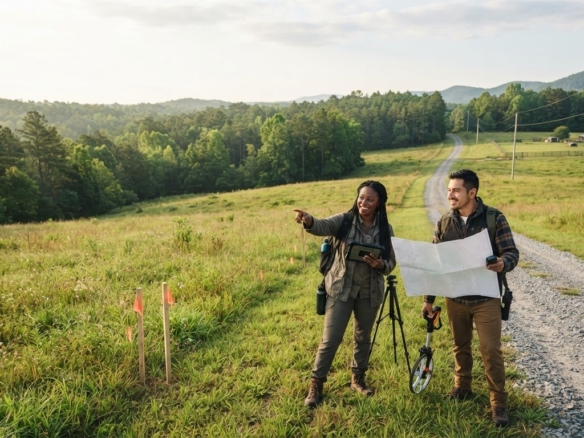
- Step 2: Identify boundary lines. Use your plat map to locate physical markers or corner stakes. Measure the length and width of the lot. If the lot is a rectangle, multiply these two numbers to find the total square footage.
- Step 3: Run the calculation. Take your total square footage and divide it by 43,560. This is the standard number of square feet in one acre. For example, a 200,000 square foot lot is approximately 4.59 acres.
- Step 4: Subtract easements. Look for utility easements or public rights-of-way on your deed. These areas belong to you, but you can’t build on them. Knowing the usable acreage is vital for future development plans.
Utilizing Professional Land Surveys
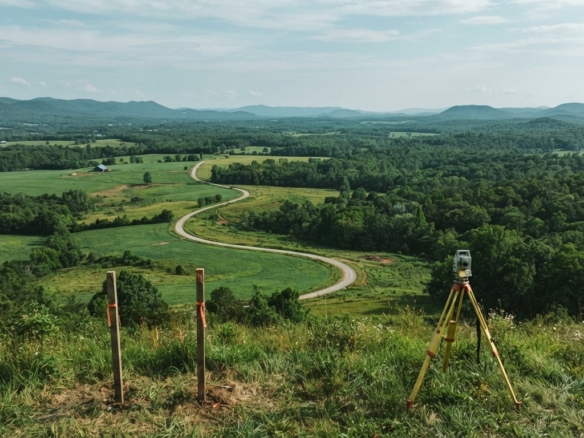
Accuracy is your best friend when you prepare to sell land. A boundary survey identifies exact property lines to prevent legal disputes with neighbors. A topographic survey adds detail about elevation and physical features like hills or streams. Reviewing a lot survey price guide helps you budget for this essential step. Professional stamps provide the legal certainty that buyers and title companies demand. Once you understand how much is an acre in the context of your specific terrain, you can price your property with confidence.
Digital Tools for Rough Estimates
You can start your research from your desk. Tools like Google Earth or local GIS maps provide quick visual data. You can measure your land’s acreage using digital rulers to get a baseline estimate. Online acreage calculators handle triangles or curved edges that manual math might miss. Remember that these tools are for estimation only. They don’t replace a licensed surveyor’s report. If you want a fast exit without the hassle of measuring every inch, you can get a fair cash offer today and skip the red tape.
Determining Market Value: What Influences the Price of an Acre?
Location dictates the final sale price. You cannot move land, so its surroundings define its worth. An acre in a high-growth urban corridor like Austin, Texas, commands a premium. That same acre in a remote desert region sells for a fraction of the cost. When asking how much is an acre, you must first look at local demand. Scarcity drives prices up. If 100 buyers want land in a county with only 5 available parcels, the price per acre skyrockets. In contrast, a surplus of land in a stagnant market keeps prices low.
Physical traits also change the math. A flat lot is easier to build on than a steep hillside. Soil quality affects agricultural use and septic system approval. Land located in a FEMA-designated flood zone often sees a 25% drop in market value. Buyers avoid the high insurance premiums and construction restrictions associated with these areas. You need to know these details before you buy or sell. It’s the difference between a smart investment and a financial burden.
Zoning and Development Potential
Zoning determines the financial ceiling of your property. Appraisers use the “Highest and Best Use” (HBU) principle to find value. Land zoned for industrial use or high-density residential housing is worth more than agricultural land. A buildable lot with local government permits is ready for construction. Raw, unrestricted land requires more work and carries more risk. Local ordinances also impact ROI. If a town limits building heights or requires large setbacks, the usable space shrinks. This reduces the price per acre significantly.
Accessibility and Utility Infrastructure
Infrastructure creates value. A landlocked parcel with no legal access is a liability. Properties with direct road frontage sell for 40% to 60% more than those without it. Utilities are the next major factor. Connecting a lot to municipal water, sewer, and electricity increases its worth exponentially. Off-grid land appeals to some, but it usually carries a lower price. Bringing power to a remote site can cost over $15,000 per pole. This high entry cost lowers the initial purchase price. When you evaluate how much is an acre, always check for existing utility hookups at the property line.
- Road Access: Paved access is the gold standard for value.
- Utilities: Water, sewer, and power add immediate equity.
- Topography: Flat, dry land is the most liquid asset in real estate.
- Zoning: Commercial and multi-family zoning offer the highest price ceilings.
The Financial Reality of Land Ownership and Sales
Buying land involves more than just the sticker price. You must calculate the total cost of ownership to understand the true investment. This includes the initial purchase, annual taxes, and the price of keeping the property secure. When you ask how much is an acre, you are really asking about the long-term carrying costs. These expenses accumulate every month the land sits idle. Smart investors track every dollar spent on holding an asset that doesn’t produce immediate income.
Property taxes vary based on the land’s status. Vacant land often carries lower tax rates than developed property. However, once you add a structure or utility hookups, your tax bill can jump by 300% or more. In many jurisdictions, vacant land taxes range from 0.5% to 2% of the assessed value annually. You are paying for the dirt while waiting for it to appreciate. This financial drain makes a quick sale a logical choice for many owners.
Closing Costs and Transaction Fees
Standard real estate deals are expensive. You face title insurance, escrow fees, and recording costs. These transaction fees typically total 2% to 5% of the total sale price. Traditional brokers also demand a 6% commission. This eats into your equity immediately. Many sellers now prefer a direct cash offer to bypass these hurdles. Working with cash buyers for land allows you to skip the 6% realtor commissions and close in as little as 7 days. Owners who want to avoid these costs entirely can follow a land for sale by owner checklist to keep 100% of their profit without paying agent fees. You can avoid hidden fees by using a specialized land for sale in florida marketplace. We focus on simplicity. Our process involves:
- Zero commissions.
- Zero closing costs for the seller.
- Zero hidden administrative fees.
Ongoing Maintenance and Liability
Empty land is not maintenance-free. You have a legal responsibility to keep the property safe. Liability insurance is a necessity for rural acreage. This coverage protects you if a trespasser gets injured on your property. Policies for vacant land often start at $250 per year. You must also manage physical risks. This includes clearing brush to prevent fires and installing fencing to stop illegal dumping. According to industry data, cleaning up a single illegal dump site can cost an owner over $2,500 in hauling fees.
You can offset some costs through tax benefits. Agricultural exemptions allow you to pay lower rates if the land is used for farming or timber. Land conservation credits also provide relief for keeping the acreage natural. Even with these credits, the burden of ownership remains high. If the costs outweigh the benefits, it is time to exit. Knowing how much is an acre in today’s market helps you decide when to liquidate.
Stop paying taxes on land you don’t use. Get your fair cash offer from BuyVacantLand.com today.
How to Price and List Your Acreage for a Fast Sale
Specialized Marketplaces vs. General Real Estate Sites
General real estate websites are designed for houses, not dirt. They prioritize bedroom counts and square footage, which makes them a poor choice for listing cheap land for sale. Your property will get lost behind thousands of residential listings. Instead, use a platform like lands of america to reach targeted investors. These buyers understand the nuances of zoning and soil quality. When you write your description, be punchy and declarative. State the exact acreage, the zoning type, and the nearest utility hookups. Avoid flowery language. Land buyers want facts, not fluff.
Getting Your Fair Cash Offer
Traditional land sales often take 12 months or longer to close. If you want to skip the wait, follow our proven 3-step process to turn your unwanted acre into cash. First, submit your property details through our online form. Second, receive a written cash offer within 24 to 48 hours. Third, sign the documents and close at a reputable title company. We handle all the logistics.
This method eliminates the stress of real estate red tape. You don’t have to worry about how much is an acre going for on the open market or wait for a buyer’s financing to fall through. We provide certainty and speed. You pay:
- Zero commissions.
- Zero closing costs.
- Zero hidden fees.
The price we offer is the exact amount you receive at closing. It’s the fastest way to walk away from property taxes and maintenance costs today. Get your fair cash offer now and simplify your life.
Turn Your Land Into Liquid Capital Today
Understanding the standard 43,560 square feet of a single acre is only the beginning of your property journey. You now know how zoning regulations and physical access dictate the 2026 market value of your dirt. Knowing exactly how much is an acre worth in the current economy gives you the power to make a smart financial move. Stop letting your unused land sit idle while property taxes eat your savings every year. Traditional sales methods are slow and often outdated.
We’ve eliminated the typical real estate headaches that stall sales for months. Our platform operates as a direct national marketplace that connects sellers with serious buyers immediately. You’ll pay zero commissions and zero hidden fees. We use a simple 3-step listing process to ensure you spend less time on paperwork and more time planning your next move. It’s the most efficient way to exit a property without the traditional stress of agent negotiations or high closing costs.
Don’t wait for a buyer to eventually find your listing. Take charge of your assets now. Get your fair cash offer for your vacant land today and experience the relief of a guaranteed transaction. Your land is a valuable resource; it’s time you finally saw the cash for it.
Frequently Asked Questions
How many square feet are in exactly one acre?
One acre contains exactly 43,560 square feet. This standard measurement applies across the entire United States for all real estate transactions. To visualize this size, an acre is roughly 90% of a standard American football field. Knowing how much is an acre in square feet helps you verify property tax assessments and listing accuracy quickly.
How do I calculate the acreage of an irregularly shaped lot?
Divide the lot into smaller geometric shapes like triangles and rectangles to find the total area. Calculate the square footage of each section and add them together. Divide that final sum by 43,560 to determine the total acreage. Professional surveyors use GPS tools to get these measurements accurate within 0.01 feet for complex boundaries.
Is an acre of land a lot of space for a single-family home?
One acre provides plenty of space since the average new home footprint is 2,299 square feet according to 2023 U.S. Census data. You can easily fit a house, a multi-car driveway, and a large backyard with room to spare. Most suburban lots range from 0.15 to 0.25 acres, so a full acre is four times larger than a standard neighborhood plot.
What is the average price of an acre of land in the United States?
The USDA reported the 2023 average value of farm real estate at $4,000 per acre. Prices change based on location, zoning, and road access. For example, farm land in Iowa averages $9,000 per acre while rangeland in New Mexico often costs $600 per acre. Always check local comparable sales to determine how much is an acre in your specific county.
Can I build on just a quarter-acre of land?
You can build on 0.25 acres if the local zoning board permits it. Many urban residential zones only require a minimum of 5,000 to 10,000 square feet for a single-family home. A quarter-acre provides 10,890 square feet, which exceeds these common requirements. Check your local setback rules and utility access before you begin any construction project.
How long is the perimeter of a square acre of land?
A perfectly square acre has a total perimeter of 835 linear feet. Each of the four sides measures approximately 208.71 feet. If the lot is a long, thin rectangle, the perimeter will be much longer even though the area remains the same. Use a 100 foot measuring tape to mark your corners and confirm the boundaries match your deed.
Does the price of an acre include mineral or water rights?
Not necessarily, because mineral and water rights are often severed from the surface rights. In states like Texas or Colorado, a previous owner might have sold the oil or gas rights decades ago. Review your title commitment or hire a specialist to track the chain of title. This ensures you know exactly what you own before you sign any contracts.
What happens if my land survey shows fewer acres than the deed says?
The physical survey usually takes legal precedence over the written deed description. If the survey shows a 5% discrepancy, you might need to file a corrective deed or negotiate a price adjustment with the seller. Boundary disputes sometimes require a quiet title action in court. Contact a licensed surveyor to resolve these errors before you close the transaction.


Join The Discussion