
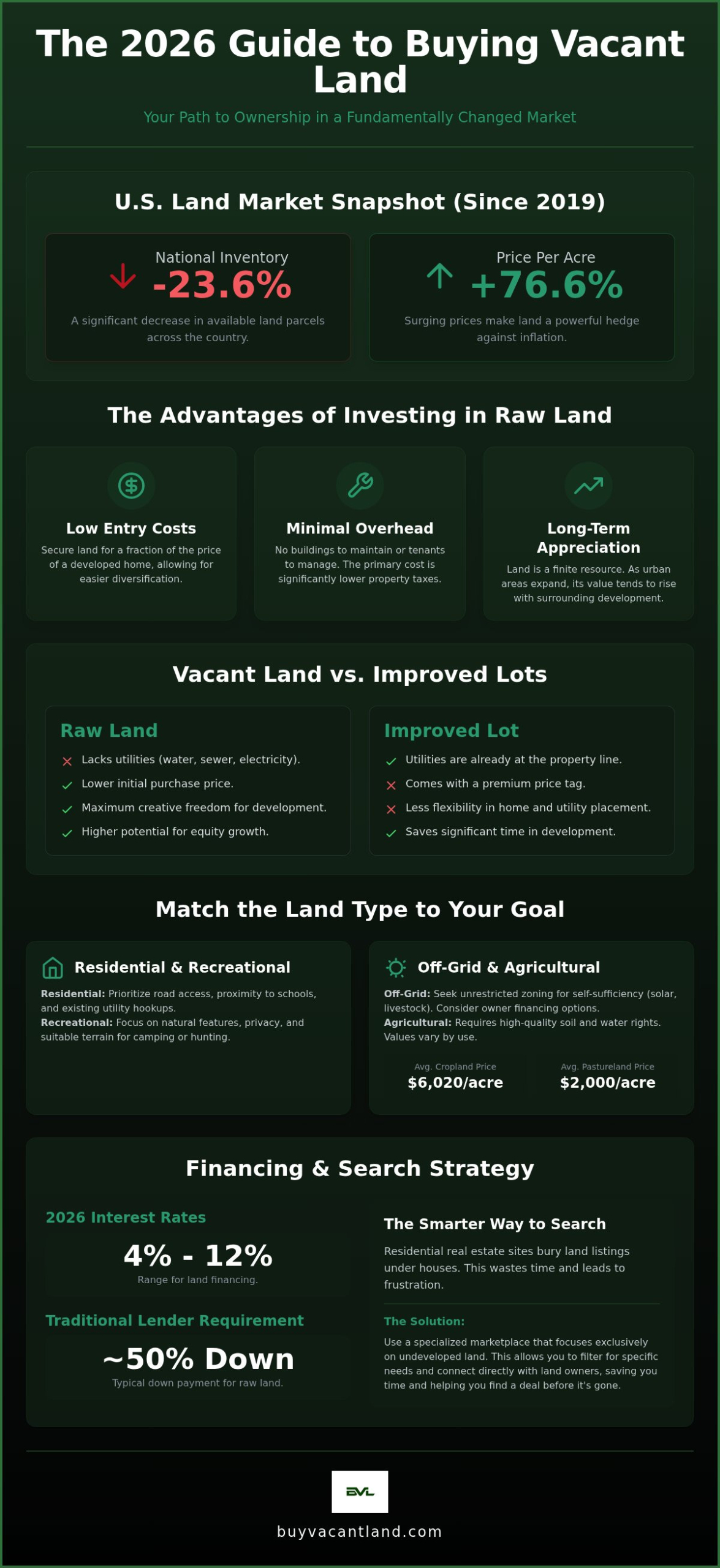
Land inventory in the United States has plummeted by 23.6 percent since 2019, while prices per acre have surged by more than 76 percent. If you’re searching for vacant land for sale, you’re competing in a market that has fundamentally changed. Most buyers waste hours scrolling through residential real estate sites that prioritize houses over dirt. You need a better strategy to find a deal before the inventory shrinks even further. It’s time to stop guessing and start using a specialized approach.
You’re likely tired of sites that bury land listings under houses or lots that turn out to be unbuildable. You want a clear path to ownership without the stress of hidden development costs. This 2026 guide gives you that clarity. We promise to help you master the process of finding, evaluating, and securing raw land across the country with zero fluff.
You’ll learn how to verify if a lot is truly buildable, how to navigate 2026 interest rates that range from 4 to 12 percent, and where to find specialized listings that avoid the housing market noise. We break down the complex reality of land acquisition into a simple, repeatable sequence.
Key Takeaways
- Understand why raw land remains a stable, low-maintenance investment in the 2026 market.
- Verify critical zoning, utility, and access requirements before you commit to any purchase.
- Use a specialized marketplace to find vacant land for sale and skip the noise of residential housing sites.
- Simplify your acquisition with a five-step path that covers everything from budgeting to securing owner financing.
- Save time by connecting directly with land owners on a national platform designed exclusively for undeveloped parcels.
What is Vacant Land for Sale and Why Buy Now?
Searching for vacant land for sale in 2026 requires a focused mindset. Understanding What is Vacant Land starts with a simple definition. It is undeveloped property with no permanent buildings or structures. In 2026, the market has stabilized after years of volatility. While national land inventory has shrunk by 23.6 percent since 2019, the demand for tangible assets remains high. Land prices per acre grew by 76.6 percent over that same period. This makes it a powerful hedge against inflation. This isn’t just dirt. It is a finite resource that requires zero maintenance while it gains value.
Finding high quality vacant land for sale on traditional real estate platforms is frustrating. Sites designed for residential housing often clutter your results with condos or teardowns. They treat land as a secondary category. You need a platform that focuses exclusively on acreage. This allows you to filter for specific needs like off-grid potential or owner financing without digging through residential listings. Whether you want to build immediately or use a buy and hold strategy, the timing is critical as prime parcels disappear from the market.
To maintain your privacy while registering for these specialized platforms or contacting sellers, you can visit RentalNumbers.com to obtain a temporary phone number for secure SMS verification.
The Advantages of Investing in Raw Land
Investing in raw land provides a level of security that volatile stocks cannot match. It is a physical asset that cannot be destroyed or stolen. Consider these primary benefits:
- Low entry costs. You can often secure raw land for a fraction of the price of a developed home. This allows for diversification without massive debt.
- Minimal overhead. There are no roofs to leak or tenants to manage. Your primary cost is property taxes, which are significantly lower for undeveloped lots.
- Appreciation. As urban sprawl continues, remote land becomes the next residential frontier. Land values tend to rise as surrounding infrastructure improves.
Vacant Land vs. Improved Lots
You must distinguish between raw land and improved lots. Raw land is completely untouched. It lacks water, sewer, and electricity. Improved or pad-ready lots already have these utilities at the property line. While improved lots save time, they come with a premium price tag. Raw land offers the most creative freedom. You decide where the well goes, how the driveway curves, and where the home sits. It requires more due diligence, but the potential for equity growth is far higher when you manage the development yourself. Using a specialized marketplace like BuyVacantLand.com helps you identify these differences before you sign a contract.
Identifying the Right Type of Land for Your Goals
Before you browse vacant land for sale, define your endgame. Buying for a future home is different from buying for a long-term investment. Successful buyers match their parcel to a specific lifestyle or financial outcome. Investing In Vacant Land requires understanding that each category has unique requirements. A mistake in categorization can lead to a lot you can’t use. Some want a backyard. Others want a forest. Your choice dictates your search and your budget.
Residential and Recreational Lots
Residential lots need infrastructure. Look for road access and proximity to school districts if you plan to build a family home. Check for existing hookups at the property line to avoid massive utility installation fees. Recreational land prioritizes natural features. You want timber, water, or elevation. When evaluating cheap land for sale for weekend use, prioritize privacy over proximity to town. Verify the terrain is suitable for camping or hunting. Hunting land often requires larger acreage to ensure safety and game variety. Industrial lots need heavy road access and specific zoning for manufacturing or storage. Industrial parcels must also be near major highways and three-phase power. Know these details before you commit.
Off-Grid and Agricultural Land
The rise of off-grid living has changed the market. Remote parcels offer peace but require self-sufficiency. Modern tech like satellite internet and efficient solar arrays make remote living easier than ever. However, you must find owner financed land to bypass strict bank requirements for raw acreage. Traditional lenders often require 50 percent down for raw land. Agricultural use requires high-quality soil and established water rights. As of July 2026, the average price for cropland is $6,020 per acre. Pastureland averages around $2,000 per acre. These values change based on the region and water availability. Zoning is the final hurdle. Search for “unrestricted” parcels if you want maximum freedom for homesteading. This prevents local regulations from blocking your solar panels, livestock, or tiny home. You need a clear path to ownership that matches your vision.
Browse our current inventory of specialized land listings to find a lot that fits your specific needs.
Critical Due Diligence: Evaluating Raw Land Before You Buy
Finding vacant land for sale is only the first step. You must verify the “Big Three” before you sign any contract: Zoning, Utilities, and Access. Without these, your investment is just expensive dirt. Under the legal definition of land, your ownership includes the surface and the space above and below it, but local regulations dictate exactly how you can use that space. Never skip a professional land survey. It’s the only way to confirm property boundaries and identify hidden easements that could block your construction plans. Check for existing liens or deed restrictions that might limit your development options. Environmental factors are equally critical. You need to identify flood zones and protected wetlands. The EPA updated the “Waters of the United States” (WOTUS) definition in 2026, which changed how certain wetlands are protected. Always verify these protections with a local expert.
Zoning and Land Use Regulations
Call the county planning department immediately. Don’t rely on the seller’s claims about what you can build. Ask about specific setbacks, which determine how far your structure must be from the property line. You should also confirm the minimum square footage requirements for any new home. Some counties have strict rules against tiny homes or mobile units. Unrestricted land is property with minimal county-level building constraints. If your parcel isn’t unrestricted, you’ll need to follow a rigid set of local codes. These rules can change based on the specific district, so get everything in writing from the planning office.
Utilities and Infrastructure Access
The cost of bringing power and water to your site can exceed the purchase price of the land itself. If municipal water isn’t available, you’ll need to drill a well. Well depth and water quality vary wildly by region, so talk to neighbors about their experiences. For waste management, undeveloped lots require a septic system. You must perform a soil percolation test, or “perk test,” to see if the ground can handle a septic drain field. If the soil fails, you might be stuck with a lot you can’t build on. Finally, confirm both legal and physical access. A parcel might look like it has a road, but if you don’t have a recorded easement, you could be landlocked. Verify these details before you search for your next parcel of vacant land for sale.
How to Buy Vacant Land in 5 Simple Steps
Buying vacant land for sale follows a specific rhythm. It’s different from buying a house. You’ve got to move quickly but with precision. The process requires a logical sequence to avoid costly errors. Follow these five steps to secure your parcel with confidence.
Step 1: Financing Your Land Purchase
Traditional bank loans for raw land are difficult to secure. Lenders view undeveloped property as a high-risk asset. You’ll likely face a minimum credit score requirement of 670. Down payments typically range from 20 to 30 percent. For raw land with no improvements, some lenders demand 50 percent down. Interest rates in 2026 currently sit between 4 and 12 percent depending on the lot type. This is why many buyers explore how do you buy land using owner financing. This method bypasses bank hurdles and offers more flexible terms. Always set aside funds for closing costs and property taxes. The national average property tax rate is approximately 0.99 percent of the property value.
Step 2: Finding the Right Listings
Generic real estate sites waste your time. Use a specialized marketplace to filter for “Residential Lots” or “Off-Grid Land” immediately. This ensures you only see vacant land for sale rather than existing homes. Look for “For Sale By Owner” (FSBO) opportunities to negotiate directly with the seller. Direct communication often leads to better pricing and a clearer history of the land. You can also use lands of america resources to compare national prices and identify emerging markets. Once you find a lot, move to the evaluation phase.
Step 3: Conduct remote and on-site due diligence. Start with satellite imagery and county records. Check for the zoning and utility issues mentioned in the previous section. Once the paperwork looks clean, walk the property in person. Look for signs of flooding or difficult terrain that didn’t show up on a map.
Step 4: Submit a formal offer and navigate the escrow process. Use a written purchase agreement. This document should outline the price, down payment, and any contingencies. An escrow company will hold the funds and ensure all conditions are met before money changes hands.
Step 5: Finalize the deed transfer and secure title insurance. Title insurance protects you against future ownership claims. Once the deed is recorded at the county office, the land is officially yours. This final step provides the peace of mind that your investment is secure.
Ready to start your search? Find your perfect parcel here.
Finding National Land Listings on BuyVacantLand.com
Finding the right parcel of vacant land for sale shouldn’t be a full-time job. Most real estate websites prioritize residential housing because that’s where the high commissions are. They treat land as an afterthought. We don’t. BuyVacantLand.com is a dedicated marketplace built for one purpose. We connect people who have land with people who want it. This focus eliminates the clutter that slows you down. You won’t find a single rental property or three-bedroom home here. You only find opportunity. Our national marketplace covers every type of terrain across the United States. You can find cheap land for a weekend getaway or a prime residential lot for your forever home.
Why Use a Specialized Land Marketplace?
Efficiency is the primary benefit. When you use a generic search tool, you spend half your time filtering out properties you don’t want. A specialized marketplace respects your time. You can search by specific land use categories like hunting land, farms, or industrial lots. This is critical when you’re looking for land for sale in florida or other high-demand markets. These areas have specific environmental challenges. You need to connect with sellers who understand the nuances of the local terrain. Our platform facilitates these direct connections. You speak with the people who actually know the dirt. This transparency alleviates the stress of the unknown.
The BuyVacantLand.com Difference
We provide a no-nonsense path to ownership. Our platform is built for speed and reliability. We prioritize transparency in every listing. One of our most powerful tools is the focus on bank-free financing. As interest rates for land loans hit 12 percent in 2026, traditional financing has become a burden for many. We solve this by featuring owner-financed opportunities. This allows you to bypass the credit score hurdles and massive down payments required by banks. You negotiate terms directly with the owner. This creates a simplified, numbered sequence to closing that works for both parties. It is a pragmatic solution for a tough market.
We reduce the procedural hurdles that traditionally make land buying a headache. There are no hidden service fees to surprise you at the end. You get a straightforward transaction that moves at your pace. We aim for the relief and peace of mind that come from a swift, assured transaction. Take the stress out of asset ownership. Start your search for vacant land for sale on a platform that values your time and your goals. Take control of your investment and secure your future with raw land today.
Start your search for vacant land for sale today on BuyVacantLand.com
Take Control of Your Land Investment
The 2026 market moves fast. You now have the framework to evaluate zoning, verify utility access, and navigate the five-step acquisition process. Buying raw land is a powerful way to build wealth, but it requires a specialized approach. Don’t let cluttered residential sites distract you from your goals. Success comes from direct action and reliable data. You can now bypass traditional banking hurdles and connect directly with sellers who understand the value of undeveloped property.
BuyVacantLand.com offers a streamlined experience with exclusively vacant land listings and national US coverage. We provide direct seller connections to ensure your transaction is transparent and efficient. It’s time to stop searching through houses and start finding the perfect vacant land for sale for your specific needs. Your path to ownership is clear and manageable.
Browse our national vacant land listings today
Secure your parcel and start building your legacy today. The right lot is waiting for you.
Frequently Asked Questions
Can I build a house on any vacant land for sale?
No, you cannot build on every lot. Zoning laws, environmental protections, and soil quality determine buildability. You must check with the local county planning department before purchasing any vacant land for sale. Some lots are zoned strictly for agricultural or recreational use. Others may be protected wetlands or lack legal access for construction equipment. Always verify the specific land use codes for your district to avoid buying unusable dirt.
How do I get a loan for a vacant lot?
You typically need a land loan rather than a standard mortgage. Lenders require a credit score of at least 670 and a down payment of 20 to 50 percent. Interest rates for raw land in 2026 range from 4 to 12 percent. Because these loans are higher risk, banks often require a detailed development plan before approval. Improved lots with existing utilities are generally easier to finance than raw, untouched acreage.
What is owner financing for land and how does it work?
Owner financing occurs when the seller acts as the lender. You make a down payment and pay monthly installments directly to the land owner instead of a bank. This method bypasses strict credit requirements and high loan fees. It is a pragmatic solution for buyers who want to secure property quickly without traditional financial hurdles. Terms are negotiated directly between both parties, providing flexibility that traditional institutions don’t offer.
What are the hidden costs of buying raw land?
Costs include property taxes, land surveys, and utility installation fees. You may also face expenses for clearing brush, building a driveway, or conducting environmental assessments. The national average property tax rate is 0.99 percent, but this varies by state. You must also account for the cost of drilling a well if municipal water is unavailable. Always budget for these extras to avoid financial stress after the deed transfer is finalized.
Do I need a real estate agent to buy vacant land?
No, you don’t need an agent, especially when using a specialized marketplace. Buying directly from the owner often simplifies the process and reduces transactional costs. If you choose to work alone, you must handle your own due diligence. This includes verifying titles, zoning, and legal access to ensure the transaction is secure. Direct communication with the seller often leads to a faster and more transparent closing process.
How can I verify if a piece of land has utility access?
Contact local utility providers and the county planning office. Ask for the nearest connection points for electricity, water, and sewer lines. If municipal services aren’t available, you’ll need to investigate private options like wells or solar power. Physical proximity to a power pole doesn’t always guarantee a legal right to connect. Get written confirmation from utility companies regarding the feasibility and estimated cost of extending services to your specific lot.
What is a perk test and why is it important for land buyers?
A perk test, or percolation test, measures how quickly soil absorbs water. This is critical for installing a septic system on undeveloped lots. If the soil fails the test, the county may deny your building permit. You cannot build a residence without a functional waste management plan. Always make a successful perk test a contingency in your purchase agreement. This protects your investment from being tied to a lot that cannot support a home.
Is buying vacant land a good long-term investment in 2026?
Yes, land is a finite resource with low maintenance costs. U.S. land prices grew by 76.6 percent between 2019 and 2026, while inventory dropped by 23.6 percent. This scarcity drives long-term value. It serves as a stable hedge against inflation. Purchasing vacant land for sale offers creative freedom for future development or resale as urban sprawl continues to push into new national markets. It is a reliable asset for patient investors.



Join The Discussion