
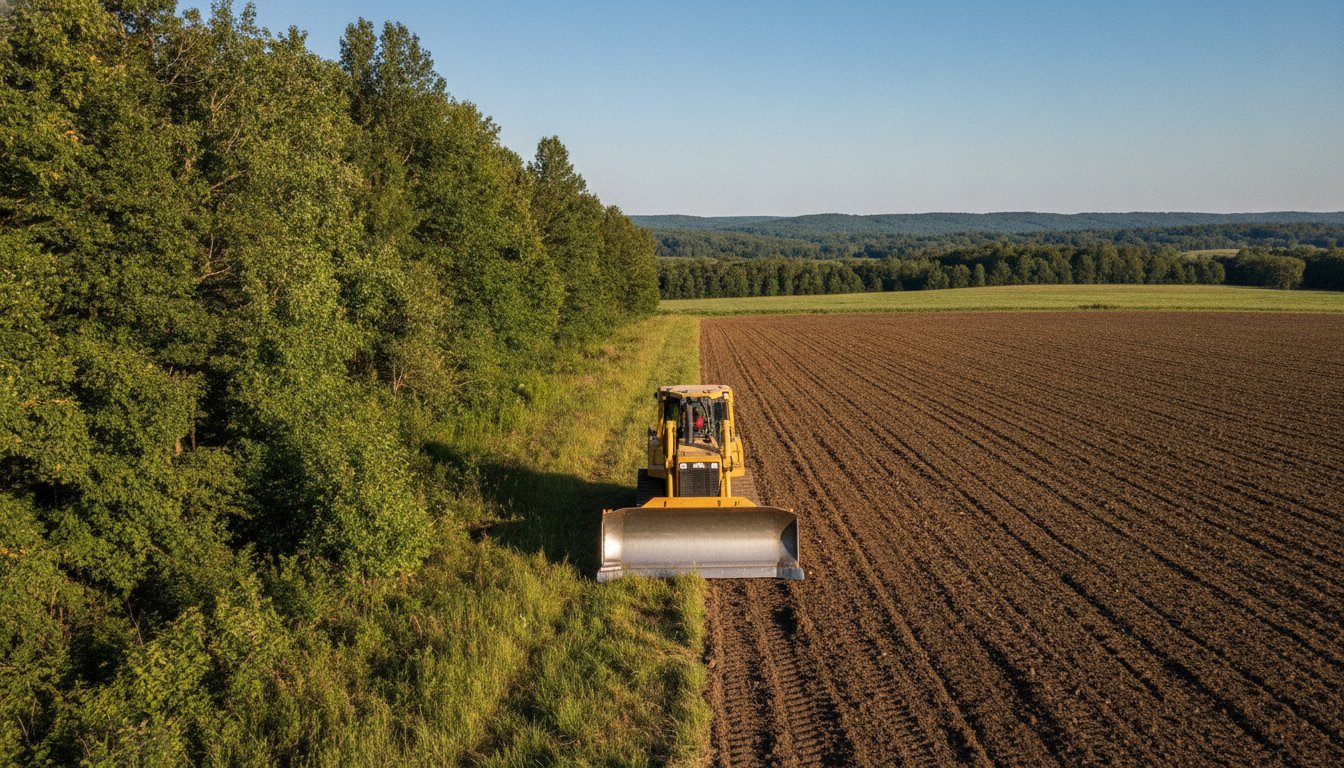
Clearing your land isn’t just an expense. It’s a strategic move that can increase your property’s market value by as much as 30% almost overnight. Most owners struggle with unpredictable contractor quotes and the fear of hidden fees for debris hauling or permits. You need to know exactly what you’re paying for before the first machine arrives on site. Understanding current land clearing costs is the only way to protect your investment and ensure your budget stays on track.
You want a reliable estimate that reflects the reality of the 2026 market. This guide provides a pragmatic breakdown of expenses to help you budget your next project or evaluate a potential land purchase. We’ve removed the guesswork by analyzing national averages for everything from light brush removal to heavy timber clearing. You’ll get the facts you need to make an informed decision without the usual industry fluff.
We’ll walk through a complete checklist of price drivers like terrain slope and equipment needs. You’ll also learn which disposal methods offer the best return on investment. This guide gives you a clear, multi-step path to preparing your land for a successful listing or development.
Key Takeaways
- Increase your property’s market value by up to 30% by improving curb appeal and buyer accessibility before listing.
- Budget accurately using current 2026 national averages for land clearing costs across light, medium, and heavy vegetation densities.
- Avoid unexpected budget overruns by identifying how steep terrain and hardwood density drive up labor and equipment hours.
- Select the most cost-effective pricing model by comparing flat-rate quotes against hourly equipment rates for your specific lot size.
- Protect your investment by vetting contractors for insurance and defining a precise scope of work before the first machine arrives.
Understanding Land Clearing: What You Are Paying For
What is land clearing? It’s the process of removing physical obstacles to make your property functional and accessible. You pay for more than a tidy view. You’re investing in the systematic removal of vegetation, rocks, and debris to prepare for development or a high-value sale. For most owners, land clearing costs represent the price of turning a stagnant asset into a marketable listing. A professional job delivers a ‘ready-to-build’ state. This means buyers can drive onto the lot, walk the perimeter, and visualize their project without fighting thickets. Raw land demands a heavy-duty approach. You aren’t just trimming a hedge; you’re re-engineering the surface of the earth to support future structures.
A standard project includes four core components:
- Brush removal: Eliminating thick undergrowth, tall grasses, and invasive species.
- Tree felling: Safely dropping and processing large timber.
- Stump extraction: Pulling the entire root ball from the earth.
- Grading: Reshaping the soil to ensure proper drainage and a level building site.
The Difference Between Clearing and Grubbing
Surface clearing is only half the battle. It removes the visible vegetation but leaves the root systems intact. Grubbing is the technical process of digging out those roots and stumps. This step is mandatory if you plan to build. Leftover organic material eventually decays. This creates underground voids that lead to foundation cracks and sinkholes. If you want to list your property on a marketplace like BuyVacantLand.com, decide your goal early. Simple clearing improves visibility for hunters or hikers. Grubbing prepares the site for a permanent structure and professional development.
Commercial vs. Residential Land Prep
Scale changes your entire strategy. A half-acre residential lot requires precision. You might use smaller equipment to protect specific trees or existing property lines. Large tracts, such as 20-acre farms or 40-acre ranches, demand raw power. Heavy machinery like excavators and bulldozers becomes more cost-effective on larger acreage. They move more material per hour. Site accessibility is your biggest wildcard. If a contractor can’t move a low-boy trailer directly to the site, expect your land clearing costs to rise. Remote raw land often lacks the road infrastructure of a suburb. This adds transport time and complexity to your project timeline.
2026 Land Clearing Cost Estimates: Per Acre and Lot Size
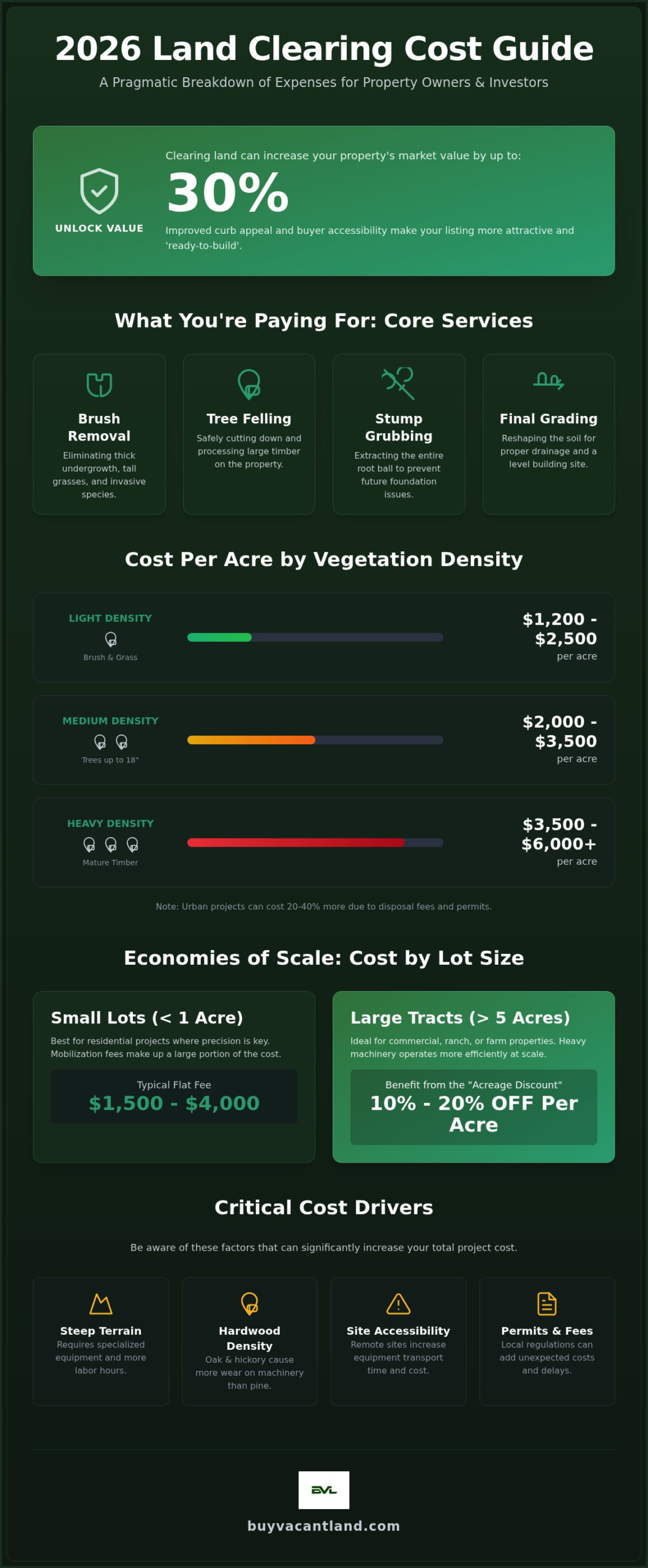
Budgeting for your project requires current data. In 2026, land clearing costs reflect higher fuel surcharges and rising labor rates. You’ll likely see a national average between $1,500 and $6,000 per acre. Your specific price depends on the volume of material on the ground. Professional contractors usually offer two pricing models: flat-rate or hourly. Flat-rate quotes provide certainty. Hourly rates for heavy equipment can vary wildly based on operator skill and site conditions. Always push for a flat fee to avoid budget creep as the project progresses.
Cost by Vegetation Density
Density is the primary driver of your total bill. Clearing light brush and grass averages $1,200 to $2,500 per acre. This work typically involves skid steers or brush hogs and moves quickly. Moderate vegetation with trees up to 18 inches in diameter costs between $2,000 and $3,500 per acre. If you face heavy forest with mature timber and deep stumps, expect rates from $3,500 to over $6,000 per acre. Urban projects often see higher land clearing costs because of disposal requirements and local permits. In these areas, costs can jump by 20% to 40% compared to rural sites.
Cost by Lot Size
Small residential lots under one acre often carry a flat fee of $1,500 to $4,000. For these projects, mobilization fees represent a large portion of the cost. It takes the same amount of fuel and time to transport a mulcher for one acre as it does for ten. Large tracts benefit from the “Acreage Discount.” Projects over 5 acres often receive a 10% to 20% discount per acre. If you are evaluating cheap land for sale, factor these economies of scale into your offer. Forestry mulching is the most efficient choice for large parcels. It eliminates debris hauling costs by leaving a protective layer of mulch on the soil. This method costs between $1,800 and $4,000 per acre and is often the most cost-effective path for light commercial work.
Large-scale projects of 10 acres or more allow for specialized machinery. Dedicated forestry mulchers with high horsepower can clear several acres per day. While the daily rental for these machines starts around $1,750, their speed reduces total labor hours. This efficiency keeps your per-acre cost at the lower end of the national range. Always confirm if your quote includes stump grinding and rough grading. These additions can add $1,000 to $3,000 per acre but are necessary for a build-ready site.
Critical Cost Drivers: What Drives the Price Up?
Your budget isn’t just about acreage. It’s about resistance. Various physical and regulatory factors can cause land clearing costs to spike far beyond the initial estimate. Hardwoods fight back. Species like oak and hickory are denser than pine or cedar. They cause significantly more wear on mulcher teeth and saw blades. This increased maintenance and slower processing speed translate directly to higher labor charges. If your parcel is thick with mature hardwoods, expect to pay at the top of the national range.
Terrain and slope are the next major hurdles. Machines lose efficiency on steep grades. Operators must work slower to maintain safety and stability on inclines. A 30% slope can easily double the time required to clear a single acre. Soil condition also dictates your timeline. Heavy mud or loose sand can stall equipment, while buried rocks can shatter expensive attachments. Finally, check your site’s accessibility. Contractors need to move heavy gear on lowboy trailers. If your property lacks a wide, stable entry point, you’ll pay for the extra mobilization time.
Debris Disposal: The Biggest Pricing Lever
How you handle the leftover mess determines your final bill. On-site burning is the cheapest method. You’ll spend $50 to $500 on permits, but you must comply with EPA air quality standards and local fire bans. Hauling debris off-site is the most expensive path. You can expect to pay $500 to $2,000 per acre just for trucking and dump fees. This method is often mandatory in urban areas where burning is prohibited. Forestry mulching provides a pragmatic middle ground. It costs $1,800 to $4,000 per acre and eliminates the need for hauling or burning. The machine grinds vegetation into a nutrient-rich layer that stays on the soil to prevent erosion.
Permits and Environmental Regulations
Compliance is a fixed cost you can’t ignore. Any land disturbance of one acre or more triggers federal NPDES stormwater requirements. You’ll need to install erosion control measures like silt fences, which can cost between $500 and $2,000 depending on the perimeter size. Wetland protections are even stricter. Clearing near protected waterways or “waters of the United States” requires specific permits from the U.S. Army Corps of Engineers. Environmental permits for complex sites can sometimes exceed $10,000. Always verify these requirements before you sign a contract to avoid surprise fines and project shutdowns.
The ROI of Clearing: Does it Increase Land Value?
Clearing your property is a strategic investment in liquidity. A tangled forest hides the land’s true potential and scares away inexperienced buyers. When you clear, you remove the “fear factor” associated with hidden topography or drainage issues. Professional clearing can increase your property’s market value by 10% to 30% depending on the market and location. You must weigh your land clearing costs against this potential appreciation. If spending $3,000 on a mulcher adds $10,000 to your final sale price, the decision is simple. You’ve effectively created $7,000 in equity through basic site prep.
Strategic clearing is often more profitable than clearing an entire tract. Don’t clear-cut the whole 40-acre farm. Focus on the building pad and a clear path for a driveway. This “selective clearing” gives buyers a “ready-to-build” vision without the high price tag of a total clear-cut. It preserves mature trees that add character while removing the scrub brush that makes a lot look neglected. This balance maximizes your return while keeping your initial land clearing costs manageable. You’re selling a vision, not just dirt.
Selling Raw Land vs. Developed Lots
Prepping the site shifts its status. It moves from “raw acreage” to “prepped lot.” This distinction is vital for buyers researching how do you buy land and what to look for in a listing. During the clearing process, you should also highlight utility access points. Clearing a path to the nearest power pole or marking a potential well site boosts perceived value. It proves the lot is functional. Buyers pay a premium for certainty. They want to know the land is buildable today, not next year. This preparation justifies a higher listing price and attracts serious developers who value speed.
Clearing for Market Exposure
Your listing photos are your first impression. Thick brush makes for poor drone shots and obscures the best views. Clearing strategic sightlines allows you to capture high-quality images that showcase the property’s elevation and layout. This transparency helps you sell land faster than competitors with overgrown parcels. A cleared lot feels larger and more inviting. It allows prospects to walk the property lines safely. This physical connection often closes the deal. Ready to see the difference a cleared lot makes? Browse our marketplace to find undeveloped vacant land that’s ready for your next project.
Executing the Project: How to Hire and Manage Land Clearing
Successful execution starts with a precise scope of work. You must decide between a total clear-cut or selective thinning. A clear-cut removes every piece of vegetation to create a blank slate. Selective thinning preserves mature “specimen” trees while removing the undergrowth. This choice dictates your total land clearing costs and the final look of your listing. Define these boundaries before the first machine arrives to avoid permanent mistakes on your property.
Vetting contractors is your primary defense against budget overruns. Never hire based on a handshake. Demand proof of liability insurance and worker’s compensation. Ask for a specific equipment list. A contractor using an undersized skid steer for heavy timber will work slower and charge more. Request references from previous land projects of similar size. If they can’t show you a finished, build-ready lot, keep looking. Your goal is a professional result that stands out on a marketplace like BuyVacantLand.com.
Contract essentials protect your bottom line. Always push for a fixed-price bid rather than a vague estimate. Estimates are often “best guesses” that inflate once the work begins. Ensure the contract specifies the disposal method, stump treatment, and final grading. Once the clearing is complete, plan for maintenance. Nature fills a vacuum quickly. Without periodic mowing or targeted herbicide use, your cleared lot will return to thicket within two growing seasons.
Questions to Ask Your Contractor
- What disposal method do you recommend for this specific terrain?
- Are mobilization fees and fuel surcharges included in the per-acre quote?
- How do you handle stump removal and root raking to ensure the site is build-ready?
- What is your timeline for completion, and how do you handle weather delays?
DIY Land Clearing: Is it Worth the Risk?
Clearing land yourself is a high-stakes trade-off. In 2026, renting a skid steer with a mulcher attachment costs between $1,200 and $1,900 per day. You also face transport fees and fuel surcharges. DIY is pragmatic for light brush on small parcels under half an acre. For anything larger, the risks multiply. You face the hidden cost of time and the potential for expensive equipment damage. Heavy timber and steep slopes demand professional-grade machinery and experienced operators. If the job involves felling large trees or extensive grading, call a pro to manage your land clearing costs efficiently.
Maximize Your Property’s Market Potential
Preparing your land for development is a high-impact investment that pays off during the sale. You now have a pragmatic understanding of how land clearing costs are calculated and which factors drive prices higher. Selecting the right disposal method and vetting your contractor are the final steps in securing your ROI. A cleared lot doesn’t just look better; it sells faster by providing the certainty that modern buyers demand.
Our national marketplace is the ideal venue to showcase your build-ready property. We focus exclusively on raw, undeveloped land, connecting you with thousands of active buyers searching for their next project. You’ll benefit from a streamlined listing process with no hidden service fees. This transparency ensures you keep more of your hard-earned equity after the transaction is complete.
Take the final step toward a swift and profitable sale. List your cleared land for sale on our national marketplace today. Your property is ready for its next chapter, and we are ready to help you find the right buyer quickly.
Frequently Asked Questions
Is land clearing tax deductible for property owners?
Land clearing is generally not a direct deduction from your annual income tax. Instead, the IRS treats these land clearing costs as a capital improvement. You add the total expense to your property’s cost basis. This reduces your capital gains tax when you eventually sell the land. If you clear land for a specific business use like farming, you might qualify for certain conservation deductions. Always consult a tax professional for your specific situation.
How much does it cost to clear 1 acre of heavily wooded land?
You should budget between $3,500 and $6,000 per acre for heavily wooded land in 2026. This price includes felling large trees, extracting deep root balls, and basic site grading. If the terrain is steep or the timber is exceptionally dense, costs can exceed $10,000 per acre. Factors like disposal methods and site accessibility also push the final bill higher. Get a fixed-price bid to keep your project within these national averages.
Does clearing land increase property taxes?
Clearing land can increase your property taxes by raising the assessed value of the lot. Most local assessors view a cleared, build-ready lot as more valuable than a raw, undeveloped tract. The exact increase depends on your local tax rate and how the assessor classifies the land’s new state. While your annual tax bill might rise, the jump in market value usually outweighs the additional tax burden. This preparation makes the property much more attractive to buyers.
What is the cheapest way to clear land of brush and small trees?
Forestry mulching is the most cost-effective method for clearing brush and small trees. This process costs between $1,800 and $4,000 per acre and eliminates the need for debris hauling. The machine grinds vegetation into mulch on-site, which prevents soil erosion. If your local laws allow it, on-site burning is another low-cost option for disposal. Avoid manual clearing with chainsaws for large areas. It’s the most expensive choice due to high labor hours and disposal fees.
Do I need a permit to clear trees on my own land?
You often need a permit if you clear more than half an acre or work near protected wetlands. Federal regulations like the Clean Water Act trigger specific requirements for land disturbance of one acre or more. Local municipalities also have rules regarding protected tree species and soil erosion control. Permit costs range from $50 to over $500. Always check with your county planning department before starting. Clearing without a permit can lead to heavy fines and stop-work orders.
Can I sell the timber from my land to offset clearing costs?
Selling marketable timber can significantly offset your land clearing costs. If your property contains high-quality hardwoods or mature pines, a logging company might pay for the right to harvest them. You should hire an independent timber cruiser to assess the volume and value of your wood first. Keep in mind that loggers often leave behind stumps and “slash” debris. You will still need to budget for professional grubbing and grading to make the site build-ready.
What happens if I clear land without a permit?
Clearing land without a permit can result in immediate stop-work orders and substantial financial penalties. Local fines often range from $500 to several thousand dollars per day of violation. If you disturb protected wetlands or endangered species habitats, you face federal enforcement from the EPA or U.S. Army Corps of Engineers. These environmental fines can exceed $10,000. You might also be forced to pay for expensive site restoration to return the land to its original state.
How long does it take to clear a 5-acre lot?
A professional crew can usually clear a 5-acre lot in three to five days using heavy machinery. If you use a dedicated forestry mulcher, the process moves quickly because there’s no debris to haul away. Heavily forested land with large stumps will take longer as each tree requires individual extraction. Weather conditions and terrain slope also impact the timeline. Expect a longer duration if your project requires extensive rough grading or off-site debris disposal.


Join The Discussion