
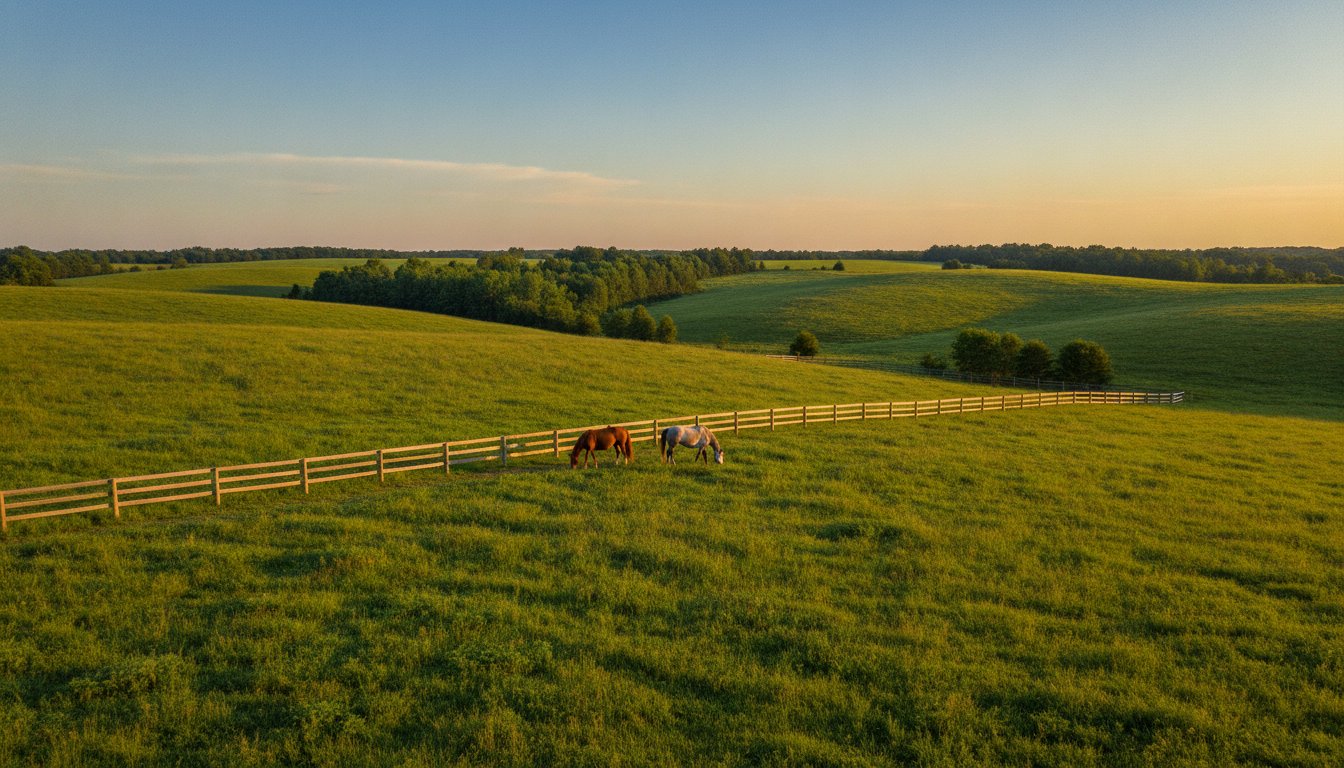
The most picturesque green pasture on a listing might actually be the most expensive mistake you make this year. Finding the right land for sale for horses requires looking past the view and into the legal and physical foundation of the property. You want a secure place for your animals to roam, but the fear of hidden zoning “gotchas” or poor drainage keeps many buyers stuck in a cycle of uncertainty. It’s frustrating to realize that a beautiful lot might not even legally allow the number of horses you own.
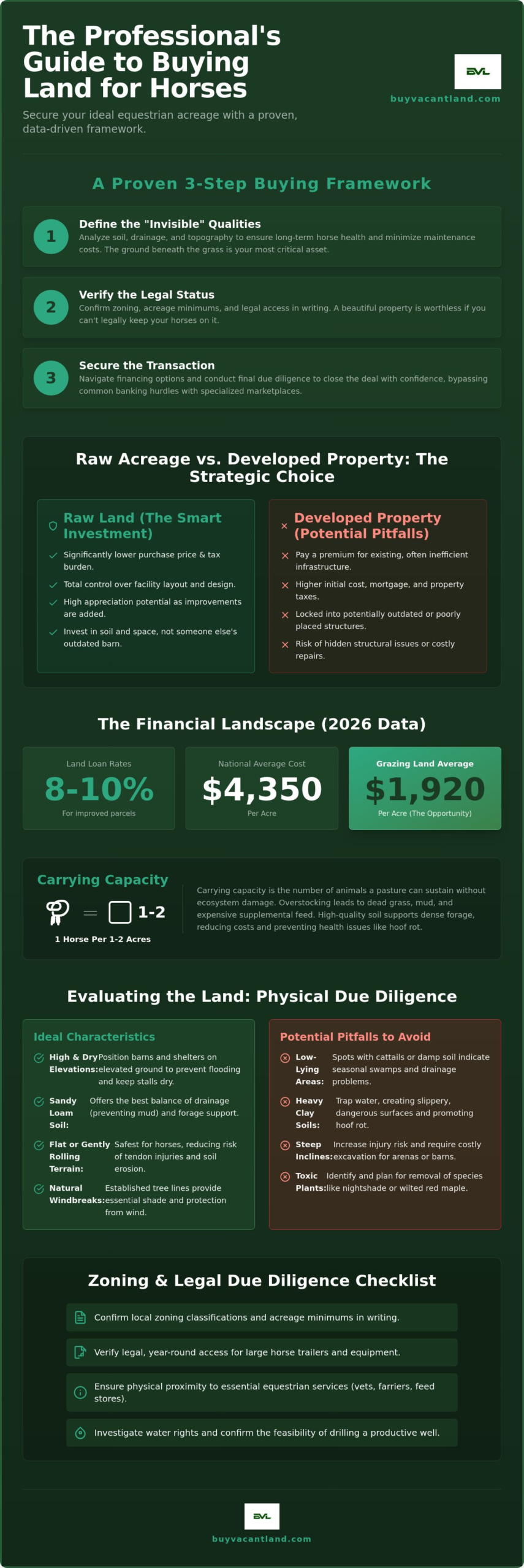
This guide provides a professional buying framework to help you identify and secure the perfect vacant land with total efficiency. You’ll learn how to evaluate raw lots for soil quality, ensure strict zoning compliance, and navigate 2026 land loan rates that currently sit between 8% and 10% for improved parcels. We provide a clear, logical path to finding affordable, equestrian-ready lots. First, we define the “invisible” qualities of the land. Second, we verify the legal status. Third, we secure the transaction. Stop guessing and start using a proven system to find your ideal acreage today.
Key Takeaways
- Distinguish between raw acreage and developed property to ensure you only pay for the land value you actually need.
- Identify high-quality topography and well-drained soil types that prevent hoof rot and reduce long-term maintenance expenses.
- Confirm local zoning classifications and acreage minimums in writing before finalizing your purchase of land for sale for horses.
- Execute a professional due diligence checklist to verify legal access for large trailers and physical proximity to equestrian services.
- Utilize specialized marketplaces to find owner-financed farms and ranches that bypass traditional bank hurdles and high interest rates.
Understanding the Essentials of Land for Sale for Horses
Equestrian vacant land is undeveloped acreage specifically zoned for equine use. It represents a blank slate for your vision. When searching for land for sale for horses, you’ll encounter two distinct categories: horse properties and horse land. A horse property is a developed estate with existing structures like barns, arenas, and residences. Horse land is raw, undeveloped acreage. Choosing raw land allows you to bypass the premium prices of existing infrastructure. You don’t pay for someone else’s outdated design choices. Instead, you invest in the soil and the space itself. This approach gives you total control over the layout and quality of your facility.
Why Investors and Owners Prefer Raw Land
Buying raw land is a strategic financial move. The initial purchase price is significantly lower than developed estates. This lower entry point reduces your tax burden and mortgage payments. You can secure acreage in 2026 at a national average of $4,350 per acre, though grazing land often averages closer to $1,920. Designing a facility from scratch ensures maximum efficiency. You place the barn, paddocks, and arenas exactly where they make sense for your workflow. This customization minimizes daily labor. Additionally, raw land offers high appreciation potential. As you add fencing, wells, and structures, the property value increases far beyond the cost of the improvements. It’s an efficient way to build equity while creating a tailored environment for your animals. For those who value the connection between healthy land and premium food, you can buy beef boxes online from Fowler & Valley Farms and support sustainable ranching today.
The Carrying Capacity Concept
You must understand how many animals the land can support before you buy. This is known as carrying capacity. Carrying capacity is the number of animals a pasture can sustain without ecosystem damage. A common rule of thumb is one horse per one to two acres of grazeable land. However, this varies based on local climate and soil quality. Poor soil requires more supplemental feed and increases your monthly costs. Effective horse management relies on maintaining healthy pastures to prevent overgrazing. High-quality soil supports dense forage. This reduces the need for expensive hay imports. If the land is overstocked, the grass dies and mud takes over. This leads to health issues like hoof rot and respiratory distress. Evaluate the acreage based on the specific needs of your herd and the local environment. High-quality land for sale for horses provides the nutritional foundation for your animals while protecting the long-term health of the land. Secure a lot that offers enough space to rotate pastures and maintain grass health throughout the year.
Physical Characteristics of High-Quality Equestrian Property
The physical integrity of the ground determines your long-term maintenance costs and your horse’s health. When evaluating land for sale for horses, look past the green grass. You need to assess what lies beneath and how the water moves across the surface. A lot that looks perfect in July might be a disaster in April. You must verify that the land can withstand the weight and activity of heavy animals year-round.
Drainage and Mud Management
Poor drainage leads to standing water and deep mud. These conditions cause hoof rot and fungal infections. Identify low-lying areas by looking for cattails or darker, damp soil patches. These spots will become seasonal swamps. High-quality equestrian land requires soil with good percolation. This allows rainwater to sink in rather than sit on top. Sandy loam is often the preferred soil type because it offers a balance of drainage and forage support. Heavy clay soils, by contrast, trap water and create slippery surfaces. Always select “high and dry” elevations for your future barn and shelter placement. This positioning keeps stalls dry and prevents runoff from contaminating your barn area.
Topography and Safety
Flat or gently rolling terrain is the gold standard for equine health. Steep inclines increase the risk of tendon injuries and accelerate soil erosion under heavy hooves. While a hill might look scenic, it creates massive expenses for leveling a future riding arena. Natural windbreaks, such as established tree lines, provide essential protection for horses kept outdoors. They reduce wind chill and provide shade without the cost of building new structures. If the land is completely open, you will need to budget for additional run-in shelters.
Vegetation and water access are equally critical. You must identify local forage grasses and eliminate toxic plants like nightshade or wilted red maple. Following principles of Basic Pasture Management ensures your acreage remains productive and safe. Check for natural water sources like creeks, but don’t rely on them entirely. Seasonal droughts can dry up surface water. Evaluate the depth of the water table for well drilling to ensure a reliable, year-round supply. In some regions, you also need to verify water rights to ensure you can legally pump enough for your herd. Finding the right balance of these features takes time. You can simplify your search by browsing Farms and Ranches on our marketplace to see properties already suited for livestock.
Zoning and Legal Requirements for Horse Land
Do not assume that a rural location automatically permits livestock. Zoning regulations are hyper-local and vary significantly between counties. When evaluating land for sale for horses, your first task is to verify the specific zoning designation. Agricultural (A-1) or Rural Residential zones are typically the most horse-friendly. For example, in Riverside County, California, A-1 zoning typically allows for one horse per acre. However, other municipalities might require a five-acre minimum just to house your first animal. You must confirm these numbers in writing before you sign a contract. Relying on a verbal “it’s fine” from a neighbor is a recipe for a legal disaster.
Acreage minimums are not the only hurdle. You must also investigate easements and Homeowner Association (HOA) rules. An easement for a high-voltage power line or a public utility can bisect your best pasture. You cannot build a barn or a permanent fence on these strips of land. Similarly, Covenants, Conditions, and Restrictions (CC&Rs) in newer rural developments often include “no-horse” clauses. These private rules override county permissions. If the deed says no livestock, the county’s agricultural zoning won’t save you.
Navigating Local Ordinances
Contact the local planning department immediately. Ask for the specific setback requirements for barns and manure storage. Many counties require structures to be 50 to 100 feet away from property lines or neighboring residences. If your lot is narrow, these setbacks might leave you with no legal place to build. Understanding these technicalities is a core part of the process. You can learn more about the broader due diligence process in our guide on how do you buy land. This step ensures you don’t buy a parcel that you cannot actually use.
Environmental Restrictions
Environmental laws in 2026 have become more stringent regarding sensitive watersheds. If your land contains designated wetlands, your building footprint will be severely restricted. You cannot simply fill in a damp spot to build a paddock. Manure management is another critical factor. Some regions require a formal management plan to prevent nitrogen runoff into local streams. Additionally, check for protected species. The presence of certain nesting birds or rare plants can halt land clearing for months. These “invisible” legal layers determine the true value of land for sale for horses. Secure a lot that is legally clear so you can focus on your animals rather than court dates.
Evaluating Raw Land: The Equestrian Buyer’s Checklist
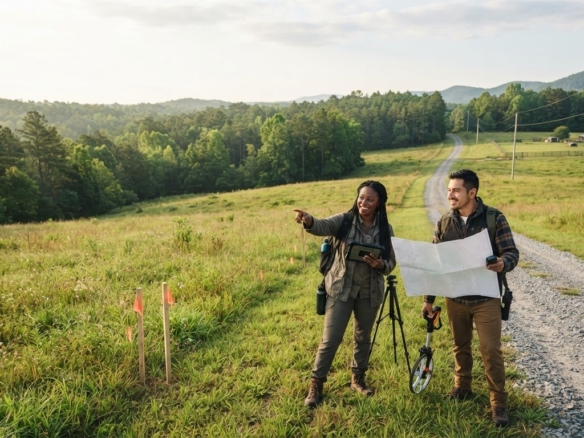
A physical inspection verifies the data you found online. When viewing land for sale for horses, bring a professional mindset. This is a technical assessment of your future assets, not a leisure walk. Use this checklist to confirm the property can handle your specific equine needs without unexpected costs. You must identify potential deal-breakers before you move into the financing stage.
- Zoning confirmation: Obtain a written letter from the county planning department confirming your specific animal count is permitted.
- Access verification: Confirm the property has a legal right-of-way and a physical entrance wide enough for commercial delivery trucks.
- Soil testing: Collect samples from multiple pastures to test for nutrient levels and drainage speed.
- Utility proximity: Locate the nearest electrical transformer and water main; extending these services can cost thousands of dollars per hundred feet.
- Perimeter integrity: Check existing fences for rot or damage and identify any shared lines with neighbors who keep different livestock.
The Trailer Access Test
Your property must accommodate a 24-foot or larger gooseneck trailer. Many rural roads have strict weight limits or low bridge clearances that can block your path. Check the approach to the property for sharp turns and narrow gates. An easement that is too narrow for a truck and trailer to pass safely will kill the deal. You also need a designated flat area on the lot for a turn-around. Backing a loaded trailer onto a busy county road is dangerous and inefficient. Ensure the entrance is reinforced with gravel or crushed stone to prevent sinking during wet seasons.
Fencing and Perimeter Security
Standard cattle wire is often dangerous for horses. You must budget for horse-safe fencing, such as no-climb wire, wood rails, or high-visibility polymer. Finding cheap land for sale often means buying a lot with zero existing infrastructure. In these cases, fencing will be your largest initial investment. Identify shared fence lines early. If a neighbor keeps cattle or sheep, their fencing may not be sufficient to keep your horses contained or keep stray dogs out. Secure your perimeter to protect your investment and ensure the safety of your herd. Browse our current Farms and Ranches to find acreage that provides the right layout for your fencing plan.
Finding the Best Land for Sale for Horses on BuyVacantLand.com
BuyVacantLand.com eliminates the noise of traditional real estate websites. Most platforms force you to sift through thousands of homes and rental listings just to find raw acreage. We don’t list houses. We only list vacant land. This focus allows you to find land for sale for horses without wasting time on irrelevant properties. Our marketplace streamlines the connection between sellers and buyers who value speed and clarity. You get direct access to undeveloped vacant land, farms, and ranches across the United States. This specialization ensures that every listing you see is a potential foundation for your equestrian vision.
Streamlining Your Search
Utilize our specialized filters to target “Farms and Ranches” or “Off Grid Land” specifically. These categories identify lots with the scale and privacy required for equestrian use. The “Farms and Ranches” filter is designed for livestock requirements. It prioritizes listings with large, contiguous acreage rather than small residential plots. This allows you to evaluate carrying capacity and facility layout before you even step foot on the property. You save hours of research by viewing only the lots that meet equestrian standards. If high interest rates or large down payments are a barrier, browse our owner financed land options. This path bypasses traditional bank scrutiny. It provides an equitable financial proposal directly from the seller. You get a clear, multi-step path to ownership without common transactional costs or service fees. Direct-to-seller connections save you money and accelerate your closing timeline.
Our national reach ensures you have access to diverse climates and soil types. Whether you need the grazing land of Missouri or the vast ranches of Texas, the platform delivers results. We remove the procedural hurdles that slow down traditional land acquisitions. You can identify a specific burden, like high interest rates, and find a solution through our seller-financed listings immediately. This structural simplicity mirrors the streamlined nature of the service we provide to every buyer and seller.
Ready to Start Your Equestrian Journey?
Securing the right piece of raw land is the most critical step in building your facility. You control the design. You manage the soil health. You protect the future of your herd. Don’t settle for a property that doesn’t meet your technical requirements. Use our professional framework to evaluate every lot with confidence. Your horses deserve a foundation built on quality drainage and legal certainty. We provide the tools to find affordable equestrian-ready lots quickly. Stop struggling with cluttered real estate sites and start your search on a platform built for land owners.
Browse vacant land for sale for horses today and secure your future acreage with total peace of mind.
Secure Your Equestrian Future Today
Finding the right land for sale for horses does not have to be an overwhelming procedural burden. Our marketplace removes the clutter of residential listings to provide direct access to land sellers nationwide. You benefit from exclusively vacant land listings and the total absence of hidden service fees for buyers. This transparency allows you to allocate your budget toward high-quality fencing and barn infrastructure. Secure an equitable deal on a lot that meets your specific technical requirements without traditional bank hurdles.
Find your perfect horse property on BuyVacantLand.com. Take control of your investment and start building on a foundation of quality today. Your ideal pasture is waiting.
Frequently Asked Questions
How many acres do I need for two horses?
You need a minimum of two to four acres of grazeable land for two horses. The standard rule of thumb is one to two acres per animal to maintain pasture health and prevent overgrazing. Smaller parcels require more intensive management and higher supplemental feed costs. Always verify your county’s specific animal-to-acreage ratio before purchasing.
What type of zoning is required for horses?
Look for Agricultural (A-1) or Rural Residential zoning classifications. These designations typically allow livestock and the construction of barns or arenas. Some residential zones permit horses but often impose stricter limits on the number of animals allowed. Confirm the zoning in writing with the local planning department to avoid legal “gotchas” after your purchase.
Is it cheaper to buy land and build a barn or buy an existing horse property?
Buying raw land for sale for horses usually has a lower initial purchase price. You avoid the premium costs associated with existing estates and outdated infrastructure. While building your own barn requires a significant upfront investment, it allows for a more efficient and customized layout. This approach often builds more long-term equity as you improve the property.
What should I look for in soil when buying land for horses?
Prioritize sandy loam soil with high percolation rates. This soil type provides a stable foundation for hooves and allows water to drain quickly. Avoid heavy clay that traps moisture or extremely rocky soil that causes injury. Testing the soil for nutrient levels ensures you can grow high-quality forage without excessive fertilizer costs.
Can I keep horses on land with a high water table?
Avoid land with a consistently high water table or designated wetlands. These areas become seasonal swamps that lead to hoof rot and fungal infections. Horses require “high and dry” spots for standing and sleeping. If you buy land with wet areas, you must budget for extensive drainage systems and gravel pads to maintain animal health.
Are there specific loans for buying vacant horse land?
You can secure financing through land loans, credit unions, or Farm Credit lenders. In 2026, interest rates for improved lots typically range from 8% to 10%. Expect to provide a substantial down payment between 20% and 50%. Lenders generally require a credit score of 680 or higher and a clear plan for the land’s use.
What are “setback” requirements for equestrian buildings?
Setbacks are the mandatory distances between a structure and the property line. Many counties require barns and manure storage to be 50 to 100 feet away from neighboring residences or roads. These rules prevent odor issues and runoff contamination. Verify these measurements on your specific lot to ensure you have enough legal space to build.
Do I need a permit to clear land for horse pastures?
Most jurisdictions require a permit for significant land clearing or grading. This is especially true if the work impacts more than one acre or occurs near sensitive watersheds. You may also need a sediment and erosion control plan. Check with your local environmental or building department to identify necessary permits before starting any heavy machinery work.


Join The Discussion