
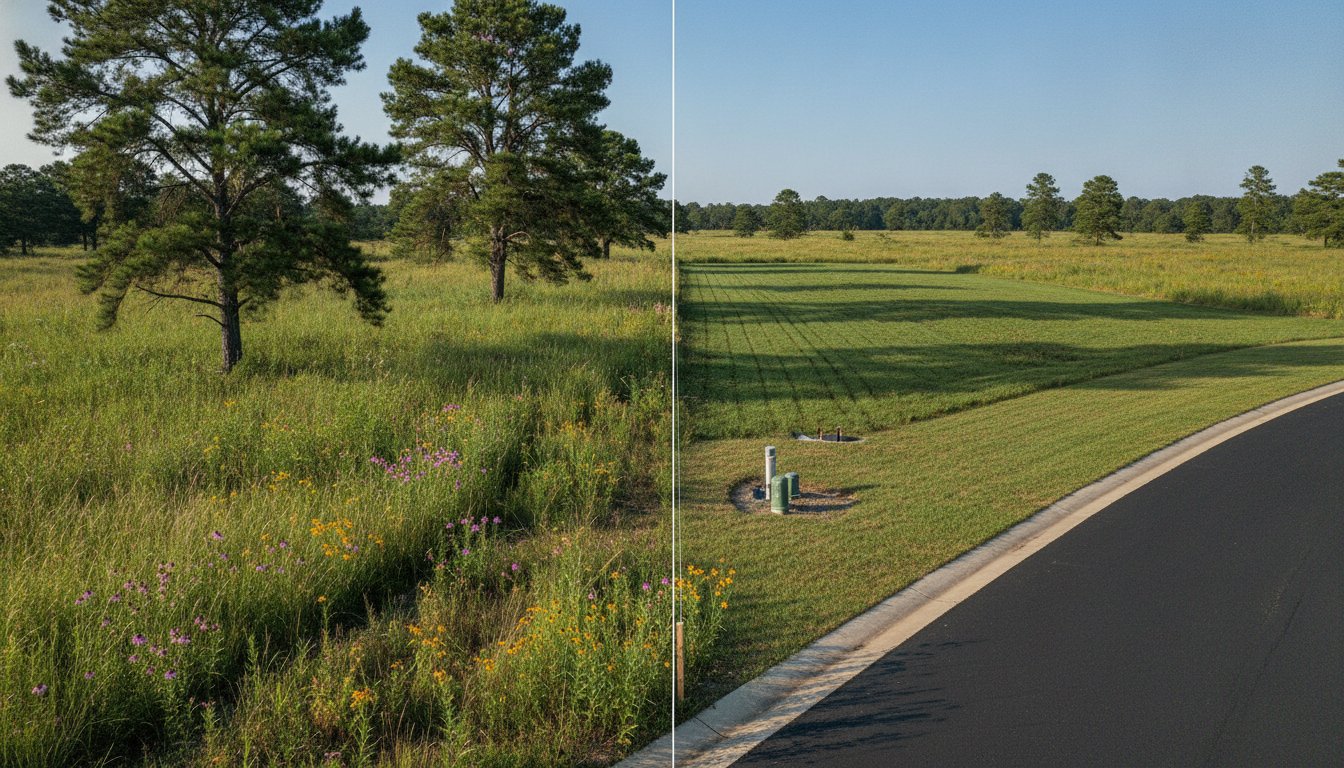
The cheapest land often ends up being the most expensive asset you ever own. You might find a bargain parcel for a fraction of market value, but hidden infrastructure needs can quickly double your total investment. It’s frustrating to face a wall of zoning permits and utility delays when you just want to start your project. You need a clear path forward without the financial guesswork. This raw land vs developed lot comparison provides the direct answers you need to move forward with certainty.
We acknowledge that navigating utility availability and complex local codes is a major burden for any buyer. This guide simplifies the decision by outlining the hard facts on 2026 costs, timelines, and risks. You will learn why utility connections now average between $2,500 and $11,700 and how the recent ROAD Act impacts your building rights. We also break down the specific down payment requirements for 2026 land loans. Use this data to compare build-ready lots against raw acreage and choose the parcel that fits your budget and your schedule. This comparison ensures you avoid common procedural hurdles and secure a reliable investment.
Key Takeaways
- Distinguish between untouched acreage and “curb-ready” developed lots to set realistic expectations for your build.
- Identify hidden development costs like soil tests and environmental studies that can inflate a raw land budget.
- Compare the low entry price and minimal property taxes of raw land against the immediate convenience of developed parcels.
- Use this raw land vs developed lot comparison to align your investment with your specific building timeline and budget.
- Learn how to efficiently filter specialized marketplaces to find owner-financed land or residential lots that meet your criteria.
Defining the Landscape: Raw Land vs. Developed Lots
Understanding the core differences in land types saves you from expensive planning errors. Most buyers confuse “empty” with “ready.” A plot might look clear but lack every essential service. This raw land vs developed lot comparison clarifies exactly what you are buying before you sign a contract. Knowing these definitions helps you calculate your true return on investment.
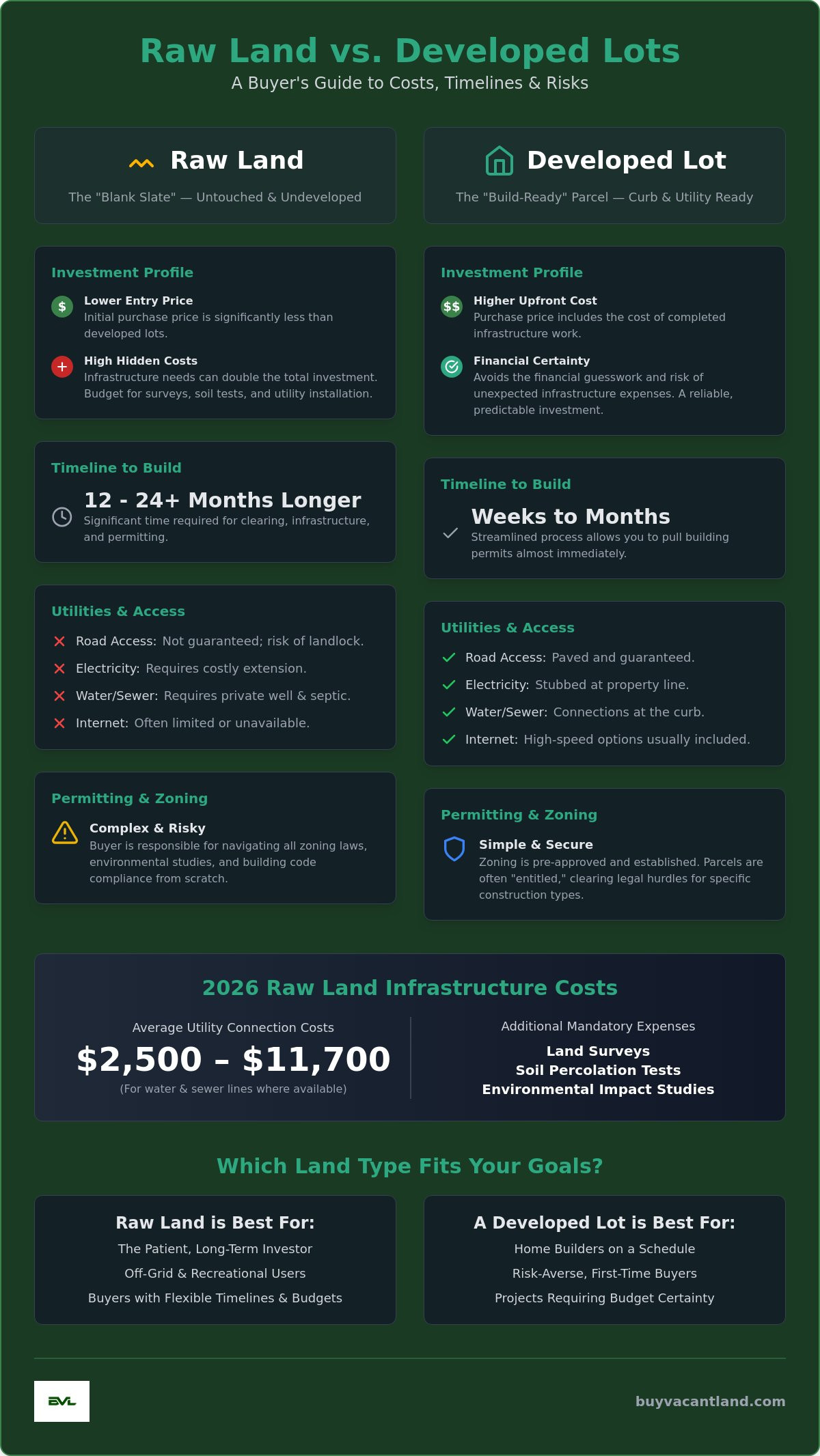
Raw land is a blank slate. It has no utilities, no cleared roads, and no grading. Developed lots are the opposite. They feature paved access and utility stubs at the property line. Unimproved land sits in the middle. It might have a dirt road or a simple fence but lacks water and sewer connections. Land development is the process that transforms raw acreage into these build-ready sites. This distinction dictates your 2026 building permit timeline. Under the 2026 ROAD Act, HUD guidelines now encourage municipalities to streamline permits for developed lots to increase housing supply. Buying raw land means you navigate these regulatory updates alone.
The Characteristics of Raw Acreage
Raw land offers the lowest entry price but requires the most labor. You will deal with natural vegetation and topographical challenges like steep slopes or rocky soil. Many investors look for cheap land for sale as a long-term hold or for off-grid living. In 2026, raw parcels remain ideal for agricultural preservation or recreational use. You must account for the cost of clearing sites and installing septic systems. Expect a longer timeline for these projects; often twelve to twenty-four months longer than developed sites. The lack of infrastructure makes these parcels a speculative play for patient owners.
The Anatomy of a Developed Lot
Developed lots come with legal and physical certainties. The zoning is already established for residential or commercial use. You won’t fight for rezoning or basic entitlements. These parcels include:
- Paved road access and engineered drainage systems.
- Utility connections for water, electricity, and sewer at the curb.
- Cleared and graded building pads ready for a foundation.
The “ready-to-build” promise means you can often pull a permit in weeks rather than months. You pay more upfront to skip the infrastructure phase. This raw land vs developed lot comparison shows that developed lots offer speed and reliability for immediate construction. Choose this option if you value time over a lower purchase price. It eliminates the stress of managing contractors for road work and power extensions. You buy a finished product rather than a project.
The Infrastructure Gap: Utilities, Access, and Permitting
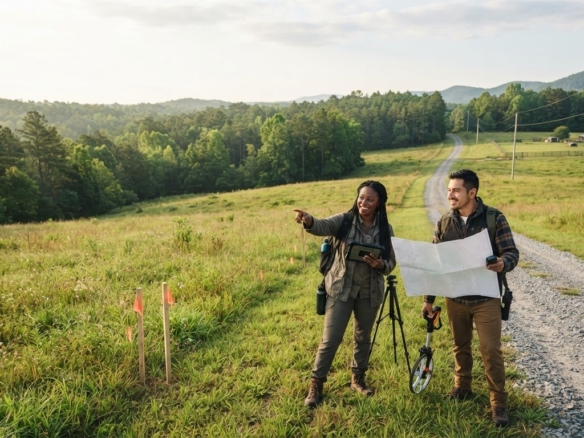
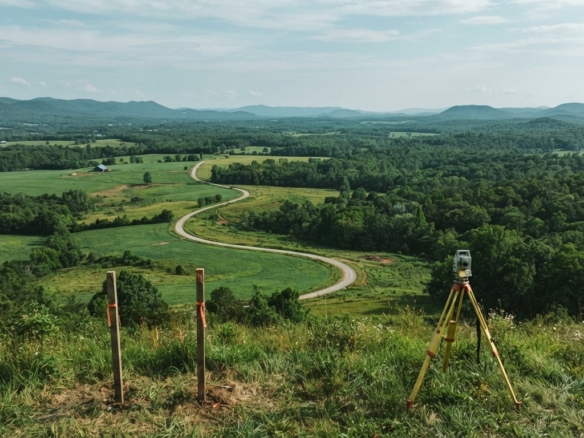
The price tag on a listing is only the beginning. Raw land often carries thousands in soft costs before you even break ground. You must pay for land surveys, soil percolation tests, and environmental impact studies. These steps are mandatory for building permits in 2026. A raw land vs developed lot comparison reveals that developed lots already have these hurdles cleared. You buy the results of those tests, not the risk of failure.
Bringing power to a remote line is a major expense. A simple 100-foot extension can cost thousands once you factor in poles, transformers, and trenching. Water and waste management present another gap. Municipal sewer hookups are efficient, but raw land requires a private septic system. If the soil fails a perc test, your land becomes unbuildable. In 2026, average utility connection costs for water and sewer lines range between $2,500 and $11,700. Developed lots include these tap-on points at the property line. This saves you months of coordination with utility companies. Understanding the raw land vs developed lot comparison is essential for managing your infrastructure budget.
Legal access is not guaranteed with raw acreage. You might find a beautiful parcel that is landlocked by neighbors. Without a recorded easement or road frontage, you cannot reach your property. Developed lots eliminate this risk. They feature paved public or private road access already in place. This certainty allows for a faster construction start.
Utility Connection Realities
Electricity on raw land involves more than just a wire. You often need to pay for a new transformer and hundreds of feet of trenching. Drilling a private well is a gamble. Costs vary wildly by depth and water quality. Conversely, developed lots offer predictable tap-on fees. High-speed internet is another factor. Remote raw land may never see fiber optic cables. Developed subdivisions usually include modern comms stubs as part of the package.
The Permitting and Zoning Hurdle
Zoning determines what you can build and when. If you are buying land USA in an “unrestricted” area, you still face county building codes. Developed subdivisions offer “Entitled Land.” This means the developer already secured the right to build specific house types. You must also watch for environmental restrictions. Wetlands, setbacks, and protected species can halt a project on raw land. Developed lots are typically pre-cleared of these legal obstacles. You can view build-ready listings to see parcels where this work is already finished.
Financial Realities: Acquisition Costs vs. Long-Term Holding
Your upfront purchase price is only one part of the financial equation. Raw land typically offers a significantly lower price per acre. In the first quarter of 2026, the national median price per acre reached $62,365. Developed lots command a premium because the infrastructure work is complete. This raw land vs developed lot comparison shows that you pay for either the land’s potential or its immediate utility. Choosing raw land preserves your capital for future development; buying a developed lot secures your building timeline now.
Financing remains a major hurdle for unimproved acreage. Traditional banks view raw land as a high-risk asset. You will face stricter lending terms and higher interest rates. As of July 2026, interest rates for raw land loans range from 4% to 10%. Some credit unions offer 10-year terms at approximately 9.00% APR. If you want to avoid these rigid bank requirements, owner financed land provides a flexible alternative. This strategy allows you to bypass traditional credit hurdles and secure a parcel with a direct agreement between buyer and seller.
The Cost of Capital and Financing
Lenders usually require a down payment of 20% to 40% for raw land in 2026. This is significantly higher than a standard residential mortgage. Construction loans are even more restrictive. Most banks will not issue a construction loan until the lot is fully developed and build-ready. Raw land serves best as a “buy and hold” strategy for long-term appreciation. You gain equity as the surrounding area grows and infrastructure moves closer to your borders.
Taxes and Maintenance
Holding costs for raw land are remarkably low. Unimproved parcels often qualify for agricultural or timber exemptions. these programs can reduce your annual property tax burden to a fraction of the standard rate. Developed lots do not share this benefit. They often carry higher tax assessments due to their “improved” status. You must also account for these additional costs:
- Monthly or annual HOA fees common in developed subdivisions.
- Mandatory maintenance like regular mowing and debris clearing.
- Special assessments for road repairs or shared amenities.
Raw land requires minimal maintenance. You can leave it wild until you are ready to build. This raw land vs developed lot comparison proves that raw land is the superior choice for low-overhead ownership. It allows you to control a tangible asset without the monthly drain of service fees and high taxes.
Strategic Selection: Which Land Type Matches Your Goal?
Choosing between these two assets depends on your appetite for administrative work. This raw land vs developed lot comparison focuses on your specific project goals. You must decide if you are an investor, a builder, or a homesteader. Your building timeline is the most critical factor in this selection process. Aligning your property type with your schedule prevents wasted capital and project delays.
If you plan to break ground within twelve months, buy a developed lot. The infrastructure is already there. You avoid the two-year wait for utility extensions and environmental clearances. If you are building a decade from now, raw land is the smarter choice. You lock in today’s price and benefit from long-term appreciation as the surrounding area develops. This “buy and hold” strategy minimizes your carrying costs while the market matures.
Risk tolerance also varies by land type. Raw land requires you to deal with city hall and county planning departments directly. You manage the zoning and the permits yourself. Developed lots shift that burden to the developer. You deal with a homeowners association (HOA) or established municipal codes instead. Your “sweat equity” capacity determines which path is right. Think about your exit strategy early. Selling raw land to a homesteader requires a different marketing approach than selling a build-ready lot to a professional developer.
Case 1: The Raw Land Enthusiast
This path is ideal for off-grid living, hunting, or recreational use. You want privacy and fewer rules. Raw land allows for agricultural preservation and significantly lower overhead. You can implement a “Value Add” strategy by clearing the site and securing permits yourself. This increases the land’s value before you sell it. In 2026, Arizona’s HB 2721 allows for more diverse housing like duplexes on certain lots. Securing raw land in these growth zones can lead to massive equity gains. It requires patience and a cash reserve to manage the development phases without a bank’s help.
Case 2: The Developed Lot Builder
This is the low-risk route for immediate residential construction. You pay more for the “Ready-to-Build” promise. This is why land for sale in Florida often favors developed lots for out-of-state buyers. Florida’s 2026 SB 686 revisions make agricultural enclaves more predictable for residential use. You get paved access and guaranteed utility stubs. It is a simple, efficient transaction. You can find residential lots that match these build-ready criteria on our national marketplace. This option provides the fastest path from purchase to move-in day.
Navigating the Marketplace: Buying and Selling Your Plot
Finding the right parcel requires the right filters. You don’t want to waste time on residential lots when you need off-grid acreage. Specialized marketplaces allow you to sort by utility status and road access immediately. This raw land vs developed lot comparison helps you identify the specific listing tags that matter most. Look for mentions of utility stubs, perc tests, and recorded easements to verify a lot’s true status. These details prevent you from buying a project when you wanted a finished product.
Many lands of america shoppers are shifting to niche marketplaces for better transparency. General real estate sites often bury vacant land under home listings. Niche platforms focus exclusively on dirt. They provide the technical data builders and investors actually need. You get direct access to sellers; this cuts out unnecessary middleman fees. This transparency ensures you get an equitable financial proposal without hidden commissions or surprise service charges. A specialized raw land vs developed lot comparison simplifies the search for everyone involved.
Listing your land for maximum exposure requires clarity. If you own a developed lot, highlight the utility connections in the first sentence of your description. If you are selling raw land, provide a recent survey and soil test results. These documents reduce buyer uncertainty and speed up the transaction. You reach serious buyers through BuyVacantLand.com because our audience specifically seeks empty parcels. It’s an efficient way to move assets quickly and reliably.
Closing the Deal Efficiently
Closing the deal should be simple. We eliminate common transactional costs and service fees to keep more money in your pocket. You can sell land on our platform using a streamlined three-step process. First, create your listing with clear photos and utility details. Second, connect directly with interested buyers. Third, finalize the agreement with transparent terms. Before you sign any land contract, use this final checklist:
- Verify legal access and road frontage status.
- Confirm utility proximity or connection costs with local providers.
- Review the most recent land survey for boundary accuracy.
- Check for any active HOA or county-specific building restrictions.
This disciplined approach ensures a swift, assured transaction. You gain peace of mind knowing you’ve accounted for every infrastructure gap. Whether you choose raw acreage or a build-ready lot, the right marketplace makes the difference. Focus on the data and ignore the ornamentation to secure your next investment with confidence.
Secure Your Ideal Land Investment Today
The choice between raw acreage and build-ready lots depends entirely on your project timeline and budget flexibility. You now understand that raw land offers a low-cost entry point but requires patience for infrastructure development. Developed lots demand higher initial capital but provide immediate utility and cleared regulatory paths. This raw land vs developed lot comparison ensures you avoid hidden development costs and select a parcel that matches your 2026 goals. You can now move forward without the stress of procedural uncertainty or utility guesswork.
Our national marketplace provides exclusively vacant land listings to help you find the perfect match. You deal directly with sellers to cut out middleman delays and unnecessary costs. We guarantee total transparency with no hidden service fees on any transaction. This efficiency allows you to focus on your build rather than the paperwork. Start your search for raw or developed land today on BuyVacantLand.com. You have the data to make a confident decision. Move forward with a partner who values your time and your budget.
Frequently Asked Questions
Is it cheaper to buy raw land and develop it?
Buying raw land is rarely cheaper in the short term. While the purchase price is lower, the national average to develop land in 2026 ranges from $20,000 to $200,000 per acre. You pay for every road, pipe, and wire yourself. It only saves money if you have the technical expertise to manage the development process efficiently over a multi-year timeline.
Can I get a mortgage for raw land?
Standard residential mortgages don’t apply to raw land. You need a specialized land loan or a construction loan. In July 2026, lenders typically require a down payment between 20% and 40% for these assets. Expect interest rates to range from 4% to 10% because banks view undeveloped parcels as a higher risk than finished homes.
What is the difference between unimproved and raw land?
Raw land is completely untouched with no utilities, modifications, or road access. Unimproved land is a middle ground that might include a basic dirt road or a fence but still lacks water and power. This distinction is vital for your raw land vs developed lot comparison because it dictates how much “soft cost” you must pay before building.
How much does it cost to clear a raw lot for building?
Clearing and preparing a half-acre lot in 2026 costs between $10,000 and $50,000. This price includes vegetation removal, grading, and site preparation for a foundation. Costs vary based on the density of the trees and the steepness of the terrain. You must factor these site preparation expenses into your total acquisition budget early in the process.
Does raw land have property taxes?
Raw land has property taxes, but they are significantly lower than taxes on developed property. Assessments are based on the “unimproved” status, meaning you don’t pay for the value of buildings or infrastructure. Many owners use agricultural or timber exemptions to reduce these annual costs further. This makes raw land a highly efficient asset for long-term wealth building.
What utilities are most expensive to add to raw land?
Water and sewer connections are the most expensive utilities to add. In 2026, connecting a plot to municipal lines averages between $2,500 and $11,700. If you are off-grid, drilling a well and installing a septic system can easily exceed these figures. Electricity also becomes a major expense if your building site is more than 100 feet from the nearest transformer.
Is a developed lot a better investment than raw land?
A developed lot is a better investment for immediate residential construction. It is a build-ready product with established zoning and cleared legal hurdles. Raw land is superior for speculative investors who want to lock in a low price and wait for appreciation. Your choice depends on your schedule; developed lots offer speed while raw land offers lower overhead.
How do I find out if a raw lot has road access?
Review the legal description and the most recent land survey for recorded easements. You must verify that the parcel has dedicated road frontage or a legal right-of-way across neighboring property. Physical tracks on the ground don’t guarantee legal access. This is a critical step in any raw land vs developed lot comparison to avoid the trap of buying a landlocked parcel.


Join The Discussion