

You don’t need a realtor or a massive bank loan to buy land in 2026; in fact, those two things often slow you down and inflate your costs. Recent industry data shows that nearly 70% of individual land buyers struggle with zoning clarity before they sign a contract. You’re likely tired of the confusion surrounding utility access and the fear of buying a “useless” lot that lacks building rights. It’s frustrating when traditional banks treat raw acreage like a high-risk gamble instead of a solid investment.
We provide a direct path to ownership that cuts through the noise. You’ll master the process of buying vacant land with our no-nonsense guide to evaluation, financing, and closing the deal. This roadmap delivers a clear due diligence checklist and explains how to find affordable owner-financed lots. You’ll gain the confidence to close your transaction with zero commissions and zero hidden fees. We’ve simplified the entire purchase into a logical sequence so you can move from browsing to owning with total peace of mind.
Key Takeaways
- Treat land as a unique asset class to hedge against inflation and maximize your investment flexibility.
- Master the “Look but Verify” checklist to uncover hidden property issues before any money changes hands.
- Learn why cash is king in land deals and how to navigate the lack of traditional bank financing.
- Identify specialized marketplaces to buy land and find high-value lots that generalist websites miss.
- Cut through the red tape and eliminate middleman fees by following a direct-to-seller path to ownership.
What Does It Mean to Buy Land in 2026?
When you decide to buy land, you aren’t just buying a place to park a car. You’re securing a tangible asset that doesn’t depreciate like a vehicle or rot like a house. In 2026, land represents one of the most reliable hedges against inflation. It’s a finite resource. They aren’t making more of it. Understanding What Does It Mean to Buy Land involves recognizing it as real property. This legal distinction separates the physical earth and its permanent attachments from personal belongings. Our focus remains exclusively on empty parcels. We don’t deal with broken-down houses or tenant headaches. We deal in dirt. It’s cleaner. It’s faster. It’s a guaranteed way to build wealth without the traditional stress of property management.
The Different Categories of Vacant Property
Not all dirt is the same. You’ll encounter three main types in the current market. Identifying these early prevents expensive mistakes later.
- Undeveloped Raw Land: This is the purest form of the asset. No power lines. No wells. No sewer. It’s a blank slate for long-term holds or off-grid living.
- Improved Lots: These parcels already have infrastructure. Data from 2025 shows that improved lots often sell for 25% more than raw land because the utility work is finished.
- Zoning: This is the rulebook. Residential zoning allows for homes. Commercial zoning allows for business. Recreational zoning might limit you to seasonal camping. Always check the county records before you sign.
Why Investors are Moving Toward Raw Land
Smart investors are shifting away from volatile stocks and high-maintenance rentals. Raw land offers a low-stress alternative that fits any budget. You get peace of mind without the 2:00 AM phone calls about leaking pipes.
The benefits are clear and immediate:
- Lower Entry Costs: You can often buy land for a fraction of the price of a developed home. Some rural parcels in the Midwest or Desert Southwest still sell for under $10,000.
- Zero Maintenance: There are no buildings to paint and no carpets to replace. Your carrying costs are virtually non-existent.
- Low Property Taxes: Property taxes on vacant land are typically minimal. In many rural counties, you’ll pay less than $250 per year on a standard acreage plot.
- Total Flexibility: You have the power to hold the land as it appreciates, flip it to a developer, or build your dream home when you’re ready.
We simplify this process. We cut through the red tape. You get a straightforward transaction with zero hidden fees. It’s the most efficient way to own a piece of the future.
The Due Diligence Checklist: Evaluating Your Potential Purchase
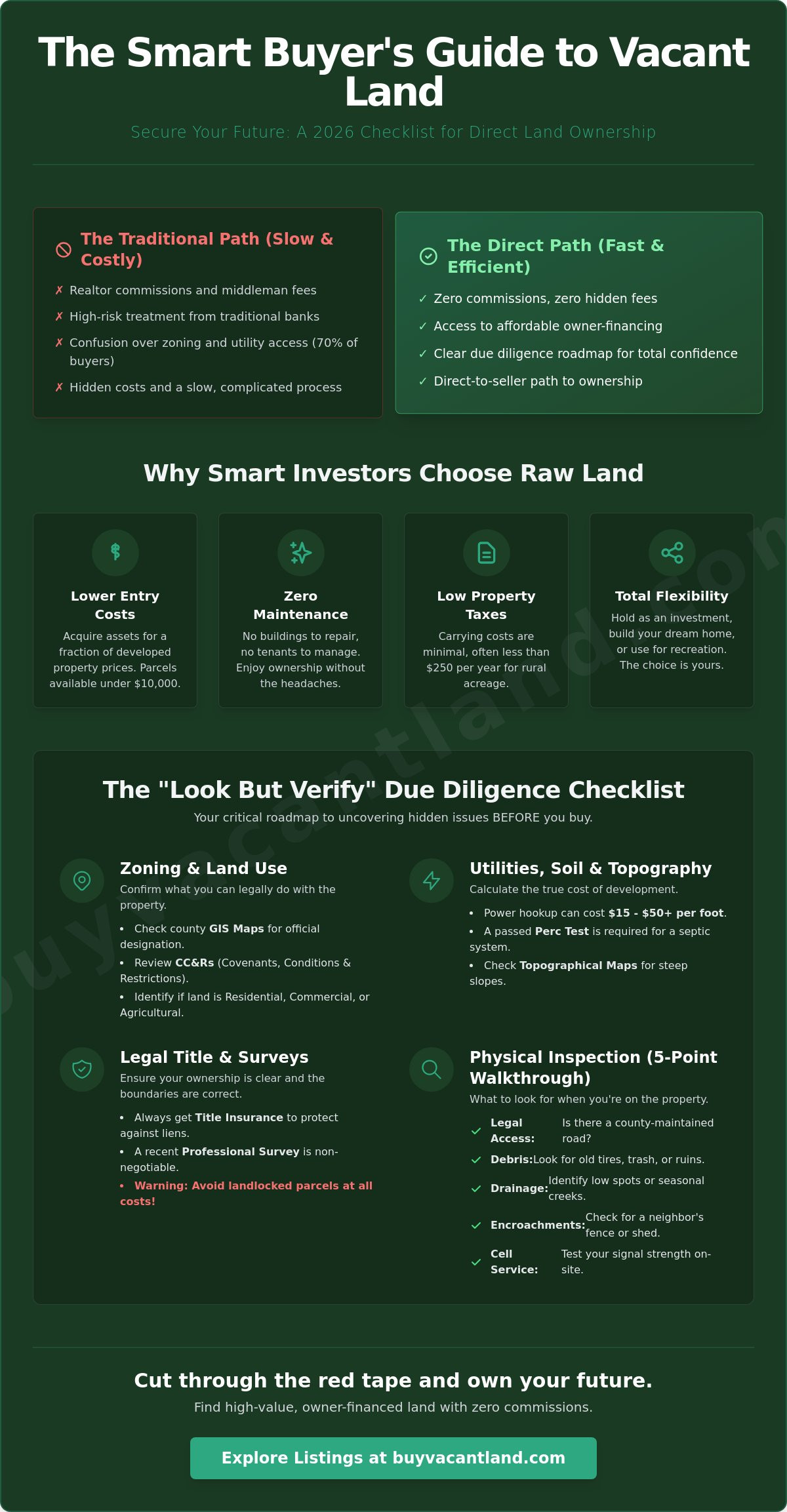
The most important work happens before any money changes hands. Don’t trust a listing description blindly. You must adopt a “look but verify” approach to every property. Sellers often highlight the views while ignoring the lack of legal access or poor soil quality. Use The Due Diligence Checklist to ensure you don’t miss critical red flags that could devalue your investment. If you want to buy land and actually build on it, you need facts, not marketing fluff.
Zoning and Land Use Restrictions
Open the county’s GIS (Geographic Information System) map first. This digital tool shows the exact zoning designation for the parcel. You’ll see if the land is zoned for residential, agricultural, or commercial use. Check for CC&Rs if the lot is in a subdivision. These private rules can ban everything from mobile homes to specific fence heights. Unrestricted land is property with minimal government or HOA oversight.
Utilities, Soil, and Topography
Remote lots look cheap until you price the infrastructure. Bringing power to a site can cost between $15 and $50 per linear foot. If the nearest pole is half a mile away, your budget is already blown. A perc test is non-negotiable for any lot without city sewer. This test measures how quickly water drains through the soil; if it fails, you can’t install a septic system. Always check topographical maps. A 30 percent slope might offer a great view, but it doubles your foundation costs and complicates driveway access.
Physical Inspection 5-Point Checklist:
- Legal Access: Confirm the property touches a county-maintained road or has a recorded easement.
- Debris and Structures: Look for old tires, buried trash, or dilapidated shacks that cost thousands to remove.
- Drainage: Identify low spots where water pools or signs of seasonal creek beds.
- Encroachments: Check if a neighbor’s fence or shed sits over the property line.
- Cell Service: Test your signal strength at multiple points on the lot if you plan to work remotely.
Legal Title and Surveys
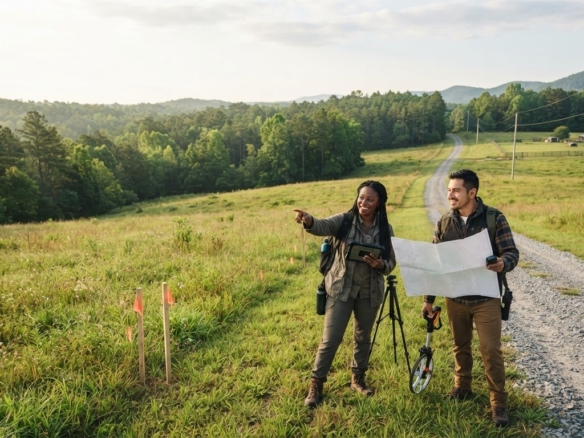
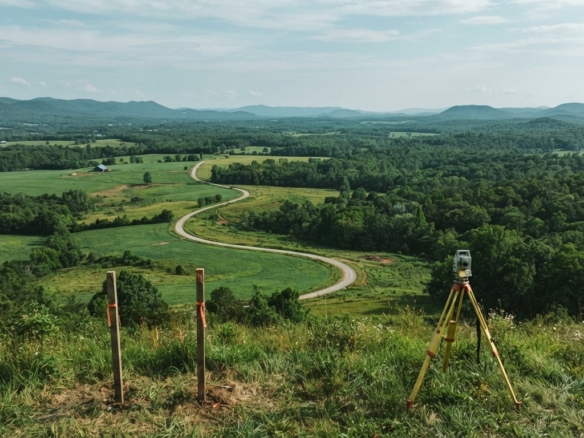
Title insurance is a requirement, even for “cheap land” deals. It protects you against back taxes, undisclosed heirs, or hidden liens. Never rely on an old map from the 1970s. A professional lot survey is the only way to confirm exact boundaries and markers. Without it, you might accidentally build your garage on someone else’s dirt. Avoid landlocked parcels at all costs. These lots have no legal way to enter or exit without crossing a neighbor’s land, which leads to expensive court battles. If the process feels overwhelming, you can always get your fair cash offer and move on to a simpler property.
When you buy land, you’re buying the legal rights and the physical reality of the dirt. Verify both before you sign the closing papers.
How to Finance Your Land Purchase: Cash vs. Owner Financing
Traditional banks rarely lend on raw land. They see it as a high-risk asset because there’s no structure to act as immediate collateral. Most lenders demand 35% to 50% down payments for vacant lots, which is a massive hurdle for most buyers. If you want to buy land without jumping through corporate hoops, you need a different strategy.
The “Cash is King” approach is the fastest way to secure a deal. Paying cash removes the stress of appraisals and long underwriting periods. Sellers often drop their price by 10% or more for a cash offer because it guarantees a closed deal. It’s a simple, clean transaction that can finish in as little as 7 days.
Owner financing is the primary alternative for everyone else. In this setup, the seller acts as the bank. You make a down payment and pay the balance in monthly installments. Typical land contracts in 2026 feature interest rates between 8% and 12% with balloon payments or full payoffs due in 3 to 5 years. It’s a pragmatic solution for buyers who want to start using their land immediately while paying it off over time.
The Benefits of Owner Financed Land
Many private sales don’t require credit checks. This opens the market to buyers with scores below 620 who would be rejected by big banks. Low down payments make land ownership accessible. You can often secure a property with a small deposit, sometimes as low as $1,000. For a deep dive into these bank-free strategies, check out our owner financed land guide to see how to structure your purchase.
Closing the Deal Without a Bank
You don’t need a bank to have a safe transaction. A title company or real estate attorney handles the logistics. They hold your money in escrow and verify that the title is clear of liens. This Zillow guide to buying land explains why checking for zoning and access is vital during this phase. The closing professional ensures every document is recorded correctly with the county.
Understand the difference between your deed options before you sign. A Warranty Deed offers the highest protection. It guarantees the seller owns the property free and clear. A Quitclaim Deed is faster but carries more risk. It only transfers the interest the seller has, without any guarantees about other claims. In 2026, standard closing costs for land transactions usually range from $500 to $1,500. This fee covers the title search, recording fees, and professional services.
Follow this simple sequence to buy land safely:
- Step 1: Sign a purchase agreement with the seller.
- Step 2: Deposit your earnest money with a third-party title company.
- Step 3: Review the title commitment for any hidden issues.
- Step 4: Sign the final deed and wire the remaining funds.
- Step 5: Confirm the title company has recorded the deed at the county office.
Where to Find the Best Land for Sale
Finding the right property to buy land requires a tactical approach. Most buyers start on general real estate sites. This is a mistake. Generalist platforms focus on houses and bedrooms. They often miss the nuanced data required for vacant lots. Specialized land marketplaces provide the technical details you need, such as soil quality, elevation, and zoning codes. These sites pull from rural databases that larger platforms ignore. Data from 2025 suggests that up to 30% of rural listings never appear on mainstream residential sites.
Off-market deals provide the highest ROI. You avoid bidding wars by contacting owners directly. Direct-to-owner listings often mean lower prices because there are no agent commissions involved. Use search filters to target land for sale near me by focusing on specific zip codes and “For Sale By Owner” tags. This strategy puts you in control of the negotiation. It cuts out the middleman and saves time.
Maximizing Your Search on Land Marketplaces
Efficiency is your greatest asset. Don’t browse aimlessly. Use filters to narrow your search by exact acreage and price per acre. Look for owner financing options to preserve your liquid cash. Setting up instant email alerts for new land lots for sale ensures you see the best deals first. Speed wins in this market. When you contact a seller, be brief and professional. Ask these three questions immediately:
- Does the property have legal road access?
- Are there any active liens or back taxes?
- What is the specific zoning classification?
Evaluating “Cheap Land” Listings
Low-cost property isn’t always a scam. Wholesale land pricing exists because investors buy large tracts and subdivide them for a quick exit. You can capitalize on these prices if you know what to look for. Red flags include listings that mention “limited access” or “tax deed only.” These often require expensive legal work to clear the title. Use our cheap land for sale guide to vet these properties before you send a deposit. Realize that a $5,000 lot with $10,000 in hidden costs is no bargain.
Ready to skip the search and secure a property? Get your fair cash offer and start your ownership journey today.
Buy Vacant Land: Your Direct Path to Ownership
Traditional real estate is often slow and expensive. High commissions and agent fees eat into your budget before you even break ground. BuyVacantLand.com offers a better way. We provide a stress-free alternative to the old-school market. Our Direct to Seller model removes the middleman entirely. This means you avoid the standard 6 percent commission fees that plague most transactions. We’ve built a platform that values your time and your money.
You want results, not a sales pitch. Our brand promise is simple: Zero fluff, just land. We cut through the red tape of traditional real estate to give you a clear, fast path to ownership. You get the peace of mind that comes from a transparent, guaranteed transaction. It’s the most efficient way to buy land in the current market. We focus on the relief that comes with a quick, professional closing.
Why Use Our Specialized Marketplace?
Searching for property on generic sites is a waste of time. Most platforms focus on residential homes and suburban sprawl. Our marketplace is different. We provide access to a national inventory of exclusively vacant parcels. You won’t have to filter through thousands of houses to find what you need. Our interface is designed specifically for land buyers. It’s built to be fast, responsive, and easy to use.
- Exclusively Vacant Parcels: Every listing is a raw lot or acreage, saving you hours of searching.
- Direct Communication: You speak directly with owners who are ready to sell right now.
- Specialized Properties: Easily find off-grid locations, hunting land, or investment lots.
- Streamlined Interface: We built this for land seekers, not home buyers.
Our system eliminates the noise. You get straight to the facts about the property. We provide the data you need to make a decision without the typical real estate runaround. This is the professional, no-nonsense way to build your portfolio.
Starting Your Journey Today
Land is a finite resource. They aren’t making more of it, and demand continues to rise as we head into late 2026. The best time to buy land was yesterday; the second best time is today. Don’t let another year pass while prices appreciate. Use the due diligence steps you’ve learned to evaluate our listings with confidence. You have the tools. You have the knowledge. Now you need the property.
The process is fast. It’s simple. It’s reliable. Browse our inventory and see how easy property ownership can be when you remove the obstacles. Your perfect lot is waiting. Secure your future and gain the peace of mind that comes with owning a tangible asset. Browse our current land listings and find your perfect lot.
Secure Your Future Acreage Today
Buying land in 2026 requires a sharp focus on due diligence and smart financing. You’ve learned that checking zoning laws and utility access prevents costly mistakes before you sign a contract. You also know that skipping traditional bank hurdles through owner financing opens doors for more buyers. The real estate market moves fast. Waiting for the perfect moment often means missing out on the best deals in growing rural and suburban markets.
You need a platform that cuts through the noise. We provide a specialized marketplace for raw land only. Our listings connect you directly with sellers across all 50 states. This direct-to-seller model means you pay zero realtor fees and zero hidden commissions. We’ve simplified the path to ownership into a clear, manageable process. You get transparency and speed without the typical industry red tape or complex paperwork. Our national coverage ensures you find the right location regardless of your zip code.
When you’re ready to buy land, don’t settle for outdated search tools or expensive middlemen. Take control of your investment now and build the legacy you’ve planned. Start your search for the perfect vacant lot on BuyVacantLand.com. Your property is waiting for you.
Frequently Asked Questions
Is it a good idea to buy land as an investment in 2026?
Buying land in 2026 is a smart move because the supply of usable earth is finite. Federal data from 2025 suggests rural land values are rising by 4% annually. You avoid the headaches of tenants and leaky roofs. It’s a low-maintenance way to build wealth. Land offers a tangible hedge against inflation that stocks can’t match. You get peace of mind with a physical asset that won’t disappear.
How much down payment do I need for owner-financed land?
You usually need 10% to 20% down for owner-financed deals. Some sellers accept as little as $500 to start the process. This method bypasses strict bank credit checks. It’s a fast way to buy land without traditional mortgage red tape. You get the deed quickly and start your ownership journey immediately. It’s a simple solution for those who want to avoid high-interest bank loans and long wait times.
Can I build a house on any piece of land I buy?
No, you can only build if the local zoning laws and soil conditions allow for residential structures. Check the county planning department for the specific 2026 zoning code for your parcel. You also need a successful percolation test for septic systems. If the soil fails this test, you can’t build a traditional home. Always verify these two factors before you sign any paperwork to avoid a costly mistake.
What is the difference between “raw” and “unimproved” land?
Raw land has zero human development while unimproved land might have some basic services nearby but lacks specific on-site connections. Raw land is completely untouched. It has no roads, no power, and no water. Unimproved land is slightly different. It might have a paved road nearby or a utility line at the property boundary. Raw land is usually cheaper but requires more work to develop into a usable site.
Do I need a realtor to buy vacant land?
No, you don’t need a realtor to purchase property. Many buyers work directly with sellers to save on commissions. This avoids the 6% commission fee typically charged in real estate transactions. Many savvy investors prefer direct deals to keep costs at zero. You just need a solid purchase agreement and a reputable title company to handle the closing. It’s a simple, transparent process that saves you time and money.
How do I check if a piece of land has legal access?
Check the property deed or a recent survey to confirm a recorded easement or direct frontage on a public road. Look at the legal description in the deed for specific access rights. If the land doesn’t touch a public road, you need a written easement. A 2025 survey will show exactly where your access point sits. Without recorded access, you’re landlocked. That makes the property nearly impossible to develop or sell.
What are the yearly costs of owning vacant land?
Property taxes and liability insurance are your primary annual expenses. Property taxes are the main cost. These usually range from 0.5% to 2% of the assessed value depending on the county. You should also pay for a basic liability insurance policy. This protects you if someone gets hurt on your property. There are no monthly utility bills or repair costs. It’s a predictable and low-cost way to buy land for the long term.
What happens if I buy land and can’t get utilities to it?
You must use alternative systems like solar power, water hauling, or composting toilets if traditional utilities are unavailable. You’ll have to go off-grid. This means installing solar panels for power and digging a well for water. If a well isn’t possible, you’ll need a cistern for water delivery. These systems can cost $15,000 or more. Just make sure the local 2026 building codes allow for these off-grid living solutions before you buy.


Join The Discussion