

Did you know that while overall land prices fell by 0.5 percent in early 2026, the median price per acre still sits at $62,365? With 36,000 custom home starts in the first quarter of the year, the race for premium lots is accelerating. You’ve likely found that searching for land for building a custom home on traditional real estate sites is a waste of time. It’s frustrating to find a plot that looks perfect only to discover that utility hookups cost $50,000. It’s even worse when new 2026 building codes make your plans obsolete before you break ground.
You need a process that eliminates the guesswork and the hidden fees. We understand the stress of vetting raw land. We’ve simplified the path to ownership. This guide shows you exactly how to identify and secure a buildable lot without the usual procedural hurdles. We provide a clear checklist for buildability, explain current financing requirements, and show you a streamlined way to browse vacant land listings without common service fees. Get the confidence you need to buy your dirt and start building today.
Key Takeaways
- Identify the legal and physical requirements that turn a simple plot into a buildable residential lot.
- Use a professional vetting checklist to evaluate land for building a custom home and avoid hidden utility costs.
- Weigh the lower entry price of raw acreage against the speed and simplicity of utility-ready developed lots.
- Streamline your search by using specialized marketplaces that focus exclusively on vacant land parcels.
- Eliminate traditional real estate headaches by connecting directly with sellers through a dedicated land platform.
What is Land for Building a Custom Home?
Finding the right land for building a custom home requires more than a scenic view. You need a buildable lot. This means the property is legally and physically capable of supporting a residential structure. Many buyers mistake raw acreage for a ready-to-build site. This is a costly error. A buildable lot must comply with local land use regulations and possess the physical stability to hold a foundation. Without these markers, your purchase is just expensive dirt.
You will encounter three primary types of vacant land listings. Raw acreage is undeveloped land with no utilities or road access. It offers maximum freedom but requires the most work. Improved lots already have utilities like water, power, and sewer at the curb. These are ready for immediate construction. Infill properties are vacant lots within established neighborhoods. Each type serves a specific goal. Custom home builders prioritize these listings because they bypass the limitations of pre-built inventory.
A major trend in 2026 is bank-free land acquisition. High interest rates for traditional land loans, which currently sit at 8.25 percent for raw land, have pushed buyers toward owner-financed land. This allows you to secure a lot without a standard mortgage. It simplifies the process. It cuts out the middleman. You get the land you need with fewer hurdles and lower upfront costs.
The 2026 Custom Home Market
Buyers are fleeing the stagnant existing home market. With house prices rising 1.7 percent this year, many find it cheaper to build. You might wonder, how do you buy land that fits a modern budget? The answer lies in the shift toward rural and off-grid custom builds. These areas offer lower land costs. As construction costs rise to $550 per square foot in some regions, selecting the right lot becomes your primary way to control the total project budget.
Why Buildability Trumps Everything
Buildability is your only metric for success. If the ground cannot support a septic system or the zoning board rejects your design, the land is a liability. Vetting buildability protects your long-term ROI. It is also essential for construction loan approval. Lenders won’t release funds for a site that lacks basic infrastructure or legal clearance. Securing a vetted, buildable lot provides psychological relief. You can move forward with confidence. You know your dream home is actually possible on the land for building a custom home that you just secured.
The Buildability Checklist: Critical Factors for Custom Lots
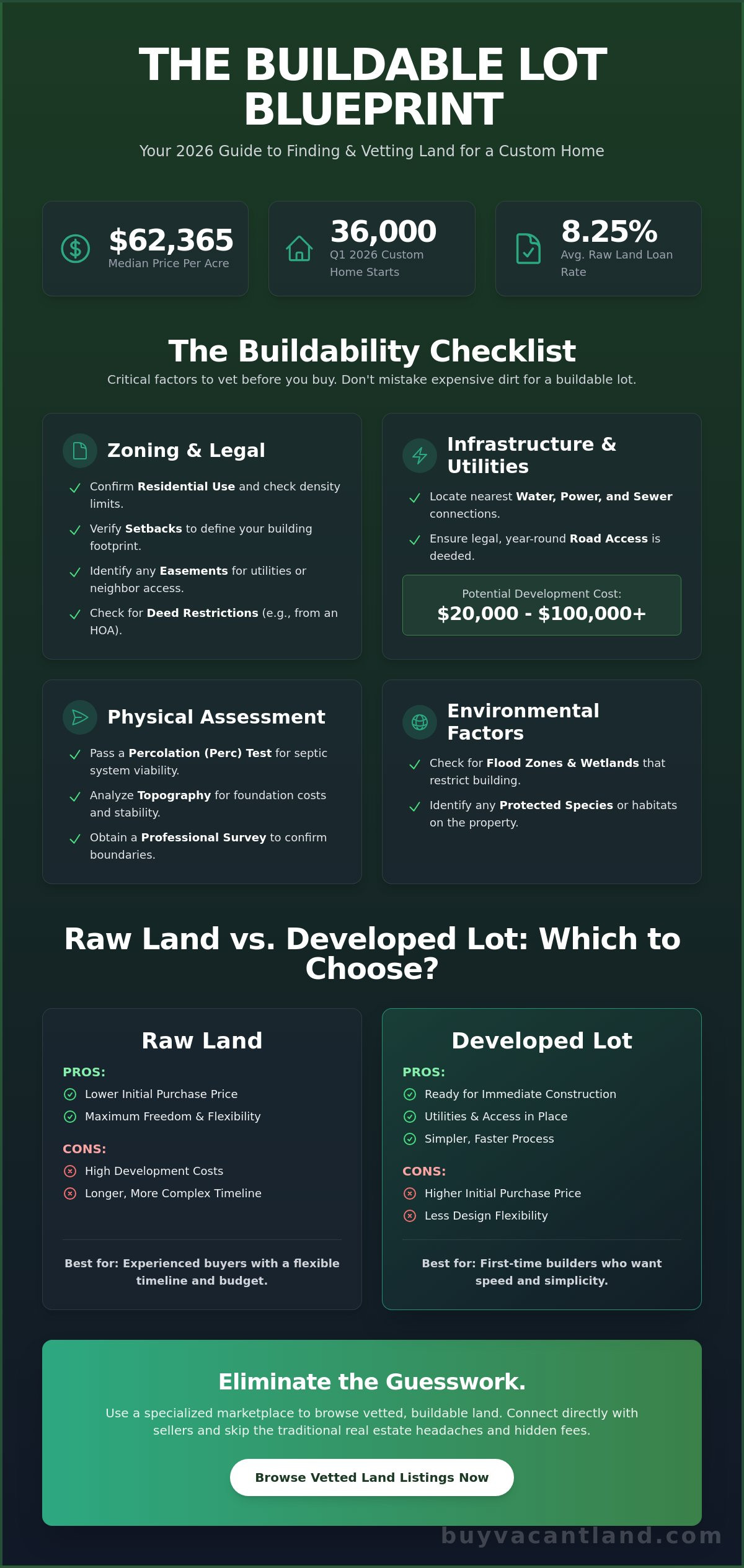
You cannot build a dream on a nightmare lot. Before you buy land for building a custom home, you must verify its buildability. This is the only metric that matters. Start with zoning and land use regulations. These local laws dictate what you can build and where. For example, the 9th Edition of the Florida Building Code takes effect December 31, 2026. California now requires all-electric systems for new builds in many jurisdictions. If your lot doesn’t meet these 2026 standards, your project stops before it starts.
Infrastructure is your next hurdle. Bringing power, water, and septic to raw land is expensive. Developing these essentials can range from $20,000 to $100,000 or more. This is why improved lots often justify their higher price tag. If you want to skip the high-stakes guessing game, browse vetted residential lots that already have these basics in place. Don’t forget environmental factors. Wetlands and flood zones can render a beautiful plot useless. Check the maps before you sign the contract.
Legal encumbrances are often invisible. Easements allow utility companies or neighbors to use your land. Setbacks limit your building footprint. Deed restrictions might even dictate your roof color or materials. Never assume a large lot has a large building area. A small easement in the wrong place can kill a floor plan. Use this checklist to vet every lot:
- Zoning: Confirm residential use and density limits.
- Utilities: Identify the nearest connection points for water and power.
- Access: Ensure the property has a legal, deeded entrance.
- Environment: Check for protected species or flood risk.
Zoning and Legal Restrictions
Setbacks are non-negotiable. They define how far your house must sit from property lines. Deed restrictions are private agreements that often come from HOAs or previous owners. Always verify that your desired square footage is allowed. Some jurisdictions have minimum or maximum size requirements that could conflict with your design. Do the research now to avoid a legal battle later.
Physical Land Assessment
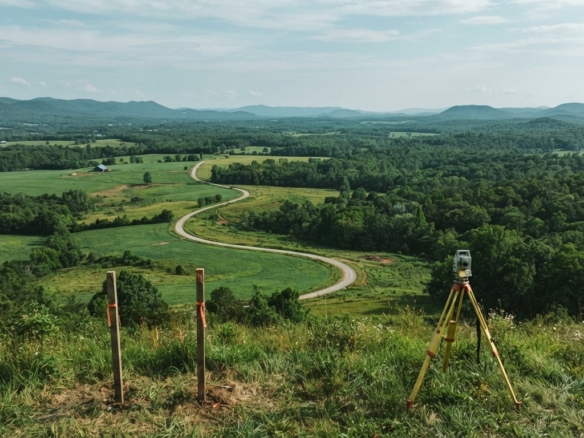
The perc test is your most important inspection. It measures how soil absorbs water. If it fails, you cannot install a septic system. Topography also impacts your budget. A steep hill offers a great view but can double your foundation costs. Finally, get a survey. A survey is a professional map that identifies property boundaries and legal easements. It is the only way to know exactly what you own.
Raw Land vs. Developed Lots: Which Should You Choose?
Choosing the right type of land for building a custom home depends on your budget and timeline. Raw land offers the lowest purchase price. It gives you maximum freedom to design your layout. However, it also brings the highest development complexity. You’re responsible for everything from road access to utility lines. This is a heavy burden for first-time builders.
Developed lots are the opposite. These residential lots have utilities ready at the curb. You pay a higher upfront cost, but your construction timeline is much faster. There’s no waiting for the city to approve sewer hookups or for power companies to run lines. Infill lots are a specific type of developed lot located in established neighborhoods. These provide existing infrastructure and community but often come with stricter design rules and higher taxes.
Don’t let a low sticker price fool you. Many buyers find that cheap land for sale often costs more after you pay for infrastructure. Clearing trees, grading the soil, and installing a septic system add up fast. You must also consider the environmental effects of development on your specific plot. Disturbing certain soil types or vegetation can trigger additional regulatory fees or mitigation requirements. This can turn a bargain into a financial drain.
Evaluating the Total Investment
The Off-Grid Alternative
Raw land makes sense for off-grid projects. In 2026, advances in solar technology and high-efficiency heat pumps make utility independence viable. You can use a well-water solution and a modern septic system to bypass municipal fees. This strategy reduces your long-term utility dependence. It’s a smart move if you want total control over your environment. Just ensure your land for building a custom home has the right soil for these systems. A failed perc test will kill an off-grid dream instantly.
How to Find and Vet Custom Home Lots Like a Pro
Finding land for building a custom home requires a professional approach. Stop wasting time on general real estate sites. They prioritize houses and rentals. You need a platform that understands dirt. Start by defining your absolute must-haves. Decide on the minimum acreage, necessary utility hookups, and proximity to schools. Speed is vital in 2026. With the median price per acre at $62,365, high-quality lots move quickly. You need your proof of funds or pre-approval ready before you make an inquiry. This preparation allows you to act with certainty when you find the right plot.
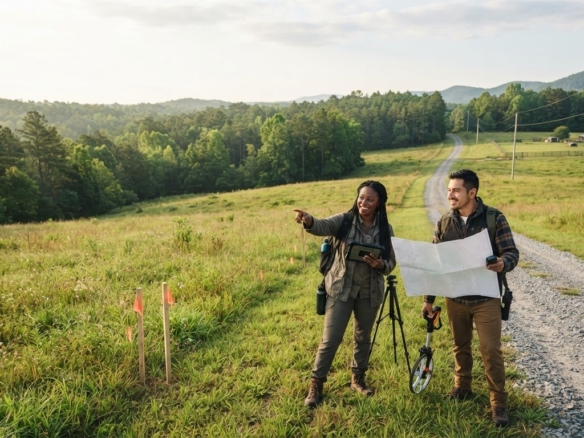
Preliminary due diligence happens at your desk. Use online county records to verify the owner and check for tax liens. Look for recent sales data to ensure the asking price is fair. If you are ready to start your search now, browse our vacant land listings to see current inventory in your target area. Never skip the physical inspection. Walking the property is the final step in vetting land for building a custom home. You must see the site in person to spot drainage issues or hidden terrain problems. Satellites miss things. Your eyes won’t.
Leveraging Specialized Marketplaces
General real estate sites bury land listings under layers of irrelevant data. Use specialized platforms that focus exclusively on vacant land. These sites provide better technical data and direct access to sellers. You can also filter for owner financed land. This is a strategic move in May 2026. It allows you to bypass the 7.25 percent interest rates currently found on building lot loans. Set up alerts for your target area to ensure you are the first to know when a buildable lot becomes available.
Remote Vetting Tools
Satellite imagery is your first line of defense. Use it to spot neighboring industrial sites or potential wetlands. Check the GIS data provided by the county. A GIS is a Geographic Information System that shows topography, property boundaries, and flood zones. It helps you visualize the slope of the land before you travel. Verify the ownership through the county assessor’s portal. This confirms the seller has the legal right to transfer the title. Check for any outstanding back taxes that could complicate the closing process.
Streamlining Your Search with BuyVacantLand.com
BuyVacantLand.com removes the friction from your property search. Most real estate platforms clutter your screen with houses and rentals you don’t want. We focus exclusively on vacant land. This specialization ensures you find the right land for building a custom home without digging through irrelevant data. Our marketplace connects you directly with land owners and sellers. This direct link speeds up the vetting process. You get answers about buildability and utilities straight from the source. It’s an efficient, no-nonsense way to secure your property.
Our platform offers unmatched variety for every type of builder. Whether you need cheap residential lots in a growing suburb or large undeveloped land for a private estate, we have the listings. We understand that the 2026 buyer values speed and transparency. We’ve stripped away the ornamentation of traditional real estate sites. You get a clean, functional interface designed for one purpose: finding and buying land. This simplicity mirrors the streamlined nature of the service we provide.
Cutting Through the Real Estate Noise
Searching for land on a general residential site is a waste of time. You often find listings that are actually teardown houses or long-term rentals. A dedicated land marketplace saves you dozens of hours of manual filtering. You can search specifically for off-grid land or expansive farms and ranches. This targeted approach is essential for finding the best value in a competitive market. Our national platform gives you a broader perspective on land prices. You can compare different regions to find where your dollar goes furthest without the distraction of home inventory.
Your Next Step to a Custom Home
You can start browsing today with zero registration fees. We believe in simplicity and immediate access. There are no hidden costs to view our database. Use our filters to find the exact land for building a custom home that fits your specific criteria. Once you find a potential lot, use our direct-to-seller communication tools to get fast answers. Ask about zoning, utility access, and recent surveys immediately. This transparency builds trust and moves the transaction forward toward a swift close. Don’t let traditional real estate hurdles slow your progress. Browse our vacant land listings now and take the first step toward your custom build.
Secure Your Lot and Start Building
Securing the right land for building a custom home requires a focus on buildability above all else. You now have the tools to vet zoning, verify utility access, and choose between raw acreage and developed residential lots. Don’t let traditional real estate sites waste your time with cluttered listings and irrelevant data. Efficiency is the key to a successful project in 2026. You must act with certainty to secure the best property for your needs.
Skip the procedural hurdles and connect directly with sellers. You need a platform that understands the specific needs of a land buyer. BuyVacantLand.com is a dedicated land-only marketplace featuring national listings across the United States. We facilitate a direct seller-to-buyer connection to ensure you get fast, accurate answers about the dirt you want to buy. This transparency eliminates the stress of the unknown.
Take the guesswork out of your search. Use our streamlined platform to find a lot that meets your exact criteria. Your dream home starts with the right foundation. Find your perfect buildable lot on BuyVacantLand.com today. You are ready to build with confidence.
Frequently Asked Questions
Is it cheaper to buy land and build a house or buy an existing one in 2026?
Building a custom home often carries a higher upfront cost but provides better long-term value. Existing house prices rose 1.7 percent in early 2026, while raw land prices actually fell by 2.4 percent year-over-year. Custom construction costs currently range from $200 to $550 per square foot. Building allows you to avoid the maintenance costs of older homes and ensures your property meets the 2026 energy efficiency standards.
Can I get a loan for land for building a custom home?
You can secure financing for land for building a custom home, but requirements are stricter than standard mortgages. As of May 2026, raw land loans typically require a 40 percent down payment with interest rates around 8.25 percent. Developed building lots are easier to finance, often requiring only 20 percent down with rates starting at 7.25 percent. Lenders prioritize lots that are already build-ready with utility access.
What is a perc test and why do I need one before buying land?
A perc test measures the water absorption rate of the soil to determine if it can support a septic system. You need this test because if the soil fails to drain properly, you cannot legally install a septic tank. This renders the land unbuildable for residential use. Never buy a rural or off-grid lot without a successful perc test on file.
How do I know if a piece of land has access to utilities?
Check the property listing for “improved” or “at the curb” status and verify these claims with local utility providers. You can also contact the county planning department to see the proximity of the nearest sewer and power lines. Bringing utilities to raw land is expensive. Infrastructure development for a well, septic, and power can cost between $20,000 and $100,000 before you even start the house foundation.
What are deed restrictions and how do they affect my custom build?
Deed restrictions are private agreements recorded in the property’s title that limit how the land is used. They can dictate your home’s minimum square footage, roof materials, or even where you park your vehicles. Unlike zoning laws, these are enforced by HOAs or previous owners. Always review the title report to ensure these rules don’t kill your dream design.
Do I need a survey if the seller already has one?
You should always get a new survey or have the existing one officially recertified by a licensed professional. Old surveys might not show new easements or changes in property boundaries. A fresh survey confirms exactly what you’re buying. It protects you from legal disputes with neighbors and is usually a mandatory requirement for securing a construction loan.
What is the difference between an improved lot and raw land?
An improved lot has roads and utilities like water and electricity already brought to the property line. Raw land is completely undeveloped and lacks any infrastructure. While raw land has a lower purchase price, the complexity of development is much higher. Improved lots allow for a faster construction timeline because the buildability factors are already addressed.
How much does it typically cost to clear land for building?
Land clearing costs depend on the density of the vegetation and the slope of the terrain. While we focus on listings rather than construction services, industry data shows that total site prep including clearing and grading can be a significant portion of your budget. Expect to pay more for heavily wooded or rocky sites. Get multiple quotes from local contractors before you finalize your land purchase.


Join The Discussion