
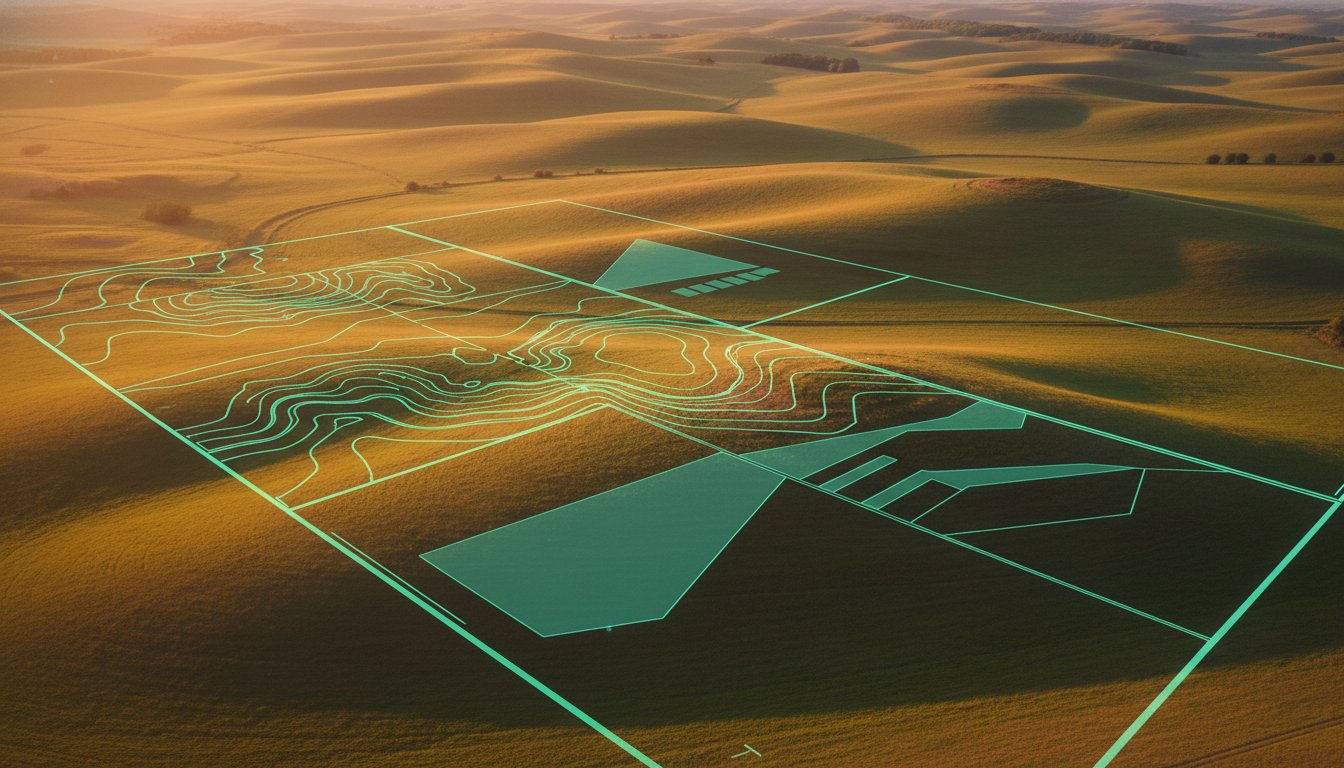
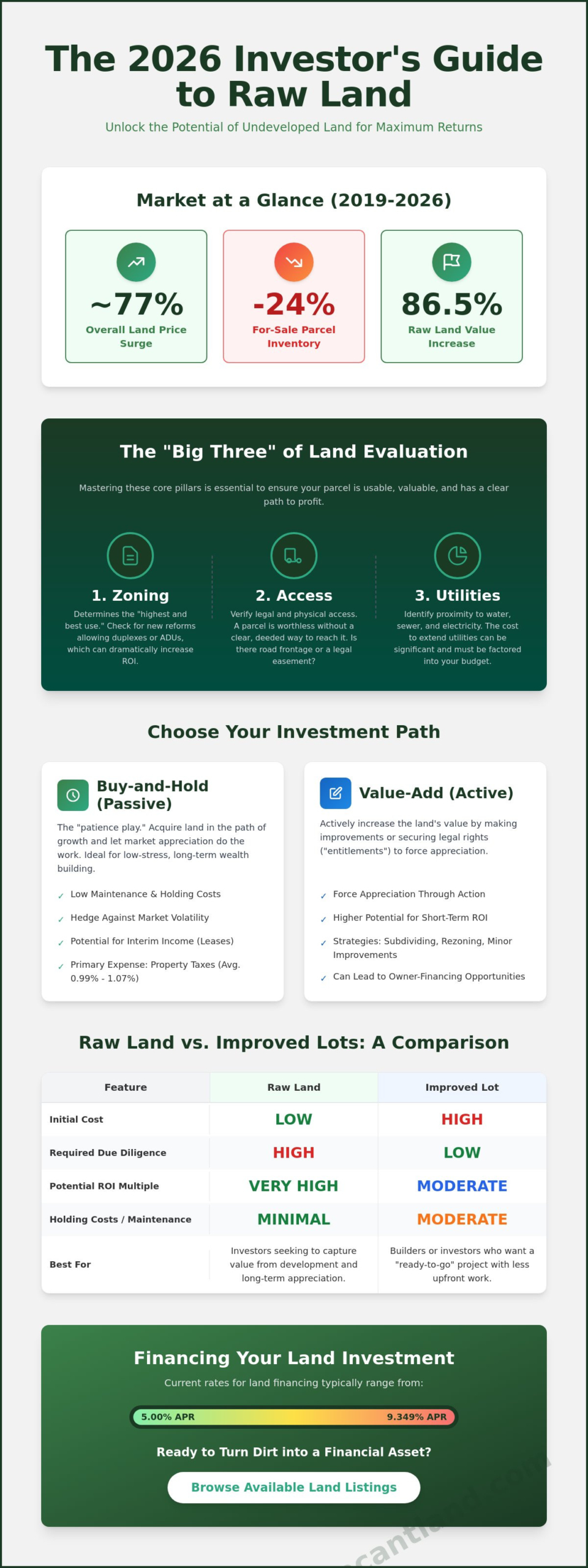
Land prices surged by roughly 77% between early 2019 and March 2026, while the inventory of for-sale parcels fell by 24%. Untouched raw land saw the most appreciation in that time, with median prices per acre jumping by 86.5%. You want a diversified portfolio but likely feel stuck behind the high barrier to entry in residential markets. You might worry about buying a parcel with no legal access or getting buried under confusing zoning laws. These fears are common, but they shouldn’t stop your progress.
Finding high-quality undeveloped land for investment doesn’t have to be a gamble. This guide provides the exact framework to identify, evaluate, and acquire raw land for maximum returns. You’ll learn how to navigate 2026 zoning reforms and understand financing realities, where rates currently range from 5.00% to 9.349% APR. We’ll also cover the due diligence steps needed to ensure a clear exit strategy and passive appreciation. Follow this streamlined path to turn raw dirt into a reliable financial asset without the traditional procedural hurdles.
Key Takeaways
- Define your asset type correctly by distinguishing between residential lots, farms, and commercial parcels.
- Analyze the impact of local growth paths to choose between a passive buy-and-hold model or strategic development.
- Master the “Big Three” of evaluation—zoning, access, and utilities—to ensure your parcel is actually usable.
- Execute a proven 5-step process for identifying and acquiring undeveloped land for investment through specialized marketplaces.
- Discover how to position your land for a quick sale to developers or end-users to secure your exit strategy.
What is Undeveloped Land for Investment?
Undeveloped land for investment is a raw asset. It contains no buildings, no utilities, and no man-made improvements. It’s the foundation of all real estate. You can acquire residential lots, agricultural acreage, or commercial parcels depending on your financial goals. In the 2026 market, success depends on identifying the “highest and best use.” This means determining which legal use of the land provides the highest financial return. Zoning reforms are sweeping the country. States like Massachusetts, Colorado, and Washington now allow for duplexes and Accessory Dwelling Units (ADUs) in areas once reserved for single-family homes. A simple lot might now support multiple units. This shift significantly increases your potential ROI. Raw land remains a low-entry-cost option across the United States. It allows you to enter the real estate market without the massive capital required for finished homes or commercial buildings.
Raw Land vs. Improved Lots
Improved lots come with a higher price tag. The heavy lifting is already done. Utilities like water, sewer, and electricity are at the curb. Raw acreage is significantly cheaper but requires more due diligence. Bringing utilities to a property involves costs and municipal approvals. However, the risk-reward ratio is often superior. If you buy raw land and successfully navigate the permitting process, you capture the value increase yourself. For many new investors, raw land is the preferred entry point. It keeps initial overhead low. It also removes the stress of managing existing structures or aging infrastructure. You don’t have to worry about property damage or maintenance during the holding period.
Why Land is a Strategic Asset in 2026
Land is a finite resource. The U.S. currently faces a housing shortage of approximately 2.8 million units according to recent housing data. This massive demand makes Land banking an effective strategy for long-term wealth. You buy the land today and hold it as the path of development moves toward your parcel. Unlike residential rentals, undeveloped land for investment requires almost zero maintenance. There are no tenants to manage. There are no roofs to leak. It serves as a powerful hedge against market volatility. While stocks and finished buildings may fluctuate, land provides a tangible, permanent asset. It historically appreciates as population density increases and inventory falls. In early 2026, inventory for-sale parcels fell by 24 percent. This scarcity drives value. You gain peace of mind knowing you own a piece of the earth that cannot be manufactured or replaced.
Investment Models: Buy-and-Hold vs. Strategic Development
Choosing the right model for undeveloped land for investment determines your daily workload and final profit. You have two primary paths. The first is passive. You buy and wait. The second is active. You improve the land to force appreciation. Both require a clear understanding of local growth paths. Watch where new highways, schools, and shopping centers are built. Land located in these paths appreciates faster than isolated parcels. Strategic investors look for areas where municipal infrastructure is expanding. This minimizes risk and ensures your exit strategy remains viable.
The Buy-and-Hold Strategy
This is the “patience play.” It’s ideal if you want a low-stress asset. Your main goal is to minimize holding costs while the market rises. Property taxes are your primary recurring expense. In 2026, the national average effective property tax rate sits between 0.99% and 1.07%. Keep this in mind when calculating your carrying costs. Look for market signals like decreasing inventory. As mentioned earlier, for-sale parcel inventory fell by 24% by early 2026. This scarcity makes investing in vacant land a reliable way to capture long-term value. You can also generate interim income by leasing your acreage for agricultural or recreational use. Hunting leases or small-scale farming can often cover your annual tax bill.
Value-Add and Development Strategies
Active investors use “entitlement” to skyrocket a parcel’s value. This involves securing legal rights for specific uses like residential subdivisions or commercial zoning. You don’t have to build a single structure. Simply obtaining the permits makes the land more attractive to developers. Small physical improvements also pay off. Clearing brush or adding a simple gravel road access can significantly increase the sale price. Some investors choose to sell their holdings as owner financed land. This strategy creates a monthly income stream and attracts a wider pool of buyers who can’t get traditional bank loans.
Liquidity timelines vary. Raw land isn’t as liquid as stocks. It takes time to find the right buyer. Expect a sales cycle of several months to a year for specialized parcels. However, high-demand residential lots often move faster. If you want to see what’s currently moving in your target area, you should browse available land listings to gauge market speed. Strategic planning ensures you aren’t forced to sell during a dip. Align your exit strategy with your financial needs and the local market cycle.
Critical Due Diligence: Evaluating Investment Potential
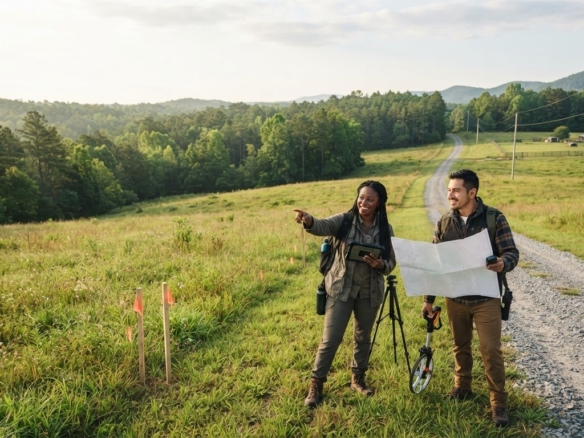
Successful due diligence removes the guesswork from asset ownership. You must evaluate the “Big Three” before committing capital: Zoning, Access, and Utilities. If any of these are missing or restrictive, the value of your undeveloped land for investment will suffer. Don’t rely on a seller’s word. Use GIS mapping and topographical data to assess the land remotely. These tools reveal steep slopes, rocky terrain, or hidden wetlands that make construction impossible. Look for environmental overlays. For example, New Jersey’s “Resilient Environments and Landscapes” (REAL) rules took effect on January 20, 2026. These rules strictly limit development in coastal flood hazard areas. One regulatory change can turn a high-potential parcel into a permanent nature preserve overnight.
Legal Access and Easements
A landlocked property has no legal way to enter or exit. Avoid these parcels at all costs. You must distinguish between physical access and legal access. A worn dirt path across a neighbor’s field is not legal access. You need a deeded easement or direct road frontage. Verify this by reviewing the plat map at the county recorder’s office. If a parcel is landlocked, you’ll have to negotiate an easement with an adjacent owner. This process is expensive, time-consuming, and often results in legal battles. Don’t buy a problem. Ensure your access is recorded and permanent before you close the deal.
Zoning and Land Use Restrictions
Zoning determines what you can do with your dirt. Residential zoning varies wildly between counties. Some allow for mobile homes and off-grid living; others require minimum square footage for stick-built houses. Be wary of Homeowners Associations (HOAs) or Property Owners Associations (POAs). These private entities often impose restrictive covenants that are stricter than county laws. They can ban certain animals, limit fence heights, or dictate building materials. Follow this checklist when contacting the county planning department:
- Ask for the current zoning designation and a list of “permitted uses.”
- Inquire about “setback” requirements that limit where you can place a structure.
- Check for recent zoning reforms that might allow for Accessory Dwelling Units (ADUs).
- Verify if the land is in a designated flood zone or protected wetland.
The fear of buying “unbuildable” land is a common barrier for new investors. This fear is easily managed with a systematic approach. If the Big Three check out and the environmental data is clear, you’ve found a viable asset. Use specialized marketplaces to find undeveloped land for sale that meets your specific criteria. Precise evaluation today prevents financial loss tomorrow.
The 5-Step Process to Acquiring Investment Land
Stop guessing and start executing. Follow this 5-step process to secure your next parcel of undeveloped land for investment. Precision matters more than speed in the beginning. Once you have a system, you can move with total confidence. This logical progression removes the stress of the unknown.
- Step 1: Define your investment criteria. Decide on your maximum budget. Pick a specific location type like residential lots or off-grid acreage. Set a realistic hold period based on your financial goals.
- Step 2: Source high-potential parcels. Use specialized marketplaces to find cheap land for sale. These platforms filter out the noise of residential home listings. You get direct access to the asset class you want.
- Step 3: Conduct remote due diligence. Use the GIS tools and topographical data mentioned earlier. Review county records for any outstanding liens or back taxes. Verify the “Big Three” of zoning, access, and utilities from your desk.
- Step 4: Submit a direct offer. Send your proposal through the listing platform or directly to the seller. Be direct. State your price and your closing timeline. Speed often wins the deal.
- Step 5: Execute a clean closing. Use a title company to ensure a clear transfer of ownership. Obtain title insurance and a professional survey. This final step secures your investment for the long term.
Financing vs. Cash Acquisitions
Cash is king. It simplifies the transaction. It gives you massive leverage with sellers who want a fast exit. If you don’t have the full cash amount, leverage owner financing. This allows you to secure the land with a down payment and monthly installments. You skip the bank. You skip the appraisal. You skip the loan origination fees. Traditional land loans in May 2026 show rates as high as 9.349% APR. Owner-financed deals often provide more flexible terms and a much faster path to ownership without traditional bank fees.
Closing the Deal Efficiently
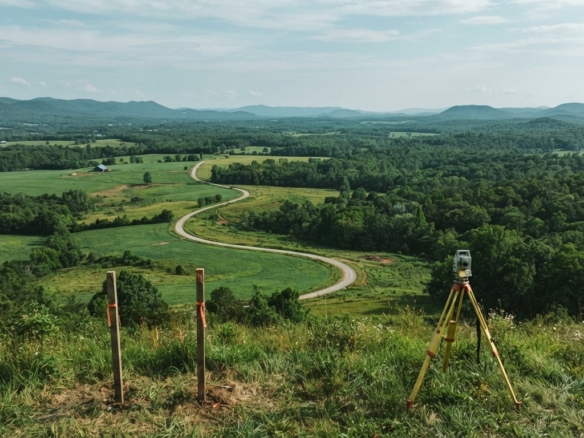
Title companies are your safety net. They verify the seller actually owns the dirt. They issue title insurance to protect you from future claims against the property. A professional survey is a non-negotiable cost. It defines exactly where your property ends and the neighbor’s begins. You can learn how do you buy land without a realtor. This direct approach removes middleman fees and puts you in total control of the negotiation. It’s a streamlined way to grow your portfolio.
Ready to put this process into action? You can browse available land parcels right now to find your next investment opportunity.
Maximizing ROI: Exit Strategies and Marketplaces
Tax strategy is a critical component of your final return. For assets held longer than one year, 2026 long-term capital gains tax rates are 0%, 15%, or 20% depending on your taxable income. You can defer these costs through a 1031 exchange. This allows you to reinvest the proceeds from your sale into a “like-kind” property. It keeps your capital working without immediate tax erosion. This is a common move for sophisticated investors who want to scale their portfolios into larger acreage or higher-value commercial vacant lots.
Finding Your Buyer
Identify your target audience before you list. Builders want proximity to utilities and clear zoning. Recreationalists look for privacy and natural features. High-quality drone photography and precise digital mapping are non-negotiable tools for attracting these buyers. They want to see the topography and access points from their phone. Utilizing specialized lands of america marketplaces ensures your property reaches a targeted national audience rather than just local browsers. These platforms connect you with people specifically looking for raw dirt, which shortens your time on market.
The BuyVacantLand.com Advantage
General real estate websites are cluttered with homes and rentals. This creates noise that hides your parcel. BuyVacantLand.com provides a streamlined alternative dedicated exclusively to vacant land. It removes the traditional procedural hurdles that slow down land sales. When you list here, you attract national cash buyers who understand the value of raw assets. The platform’s efficiency mirrors the simplified nature of the investment itself. There are no unnecessary fees or complex layers between you and your equitable financial proposal.
Don’t let your capital sit idle in an underperforming asset. If you’ve reached your target appreciation, it’s time to act. You can list your land for sale today to start the next phase of your investment journey. A clean, fast exit provides the liquidity you need for your next acquisition. Follow the logic: identify the burden, present the solution, and close the deal. This is how you build lasting wealth in the 2026 land market.
Secure Your Position in the 2026 Land Market
The path to building wealth through undeveloped land for investment is now clear. You have the framework to evaluate the “Big Three” and navigate the latest zoning reforms with confidence. You understand that market inventory has dropped by 24 percent; making your timing more critical than ever. Whether you choose a passive buy-and-hold strategy or active development, the logic remains the same. Identify the opportunity, verify the legal access, and secure the asset for your future.
You don’t need a realtor or complex bank loans to get started. Our national marketplace offers an exclusive focus on raw land with a simplified listing process. This focus removes the noise of traditional real estate and connects you directly with high-potential parcels. Take the next step toward a diversified portfolio and financial peace of mind. Browse current undeveloped land listings on BuyVacantLand.com to find your next opportunity. Success in land investing belongs to those who act with precision and speed. Start your journey today.
Frequently Asked Questions
Is undeveloped land a good investment in 2026?
Yes. Land prices surged by roughly 77 percent between early 2019 and March 2026. Inventory of for-sale parcels fell by 24 percent in that same period. These factors make undeveloped land for investment a strong hedge against market volatility. It remains a finite resource with high appreciation potential as housing shortages continue across the country.
How do I find undeveloped land for investment near me?
Utilize specialized marketplaces that focus exclusively on raw acreage. General real estate websites are often cluttered with residential homes and rental properties. Dedicated platforms like BuyVacantLand.com allow you to filter by specific categories like residential lots, off-grid land, or farms and ranches. This targeted approach saves time and connects you directly with sellers of empty parcels.
What are the holding costs for vacant land?
Property taxes are your primary recurring expense. The national average effective property tax rate for 2026 is approximately 0.99 percent to 1.07 percent. You won’t have to deal with utility bills, roof repairs, or tenant management. Some investors also choose to carry liability insurance. These low overhead costs make raw land an efficient asset to hold for long-term appreciation.
Can I get a loan for undeveloped land?
You can get a loan, but requirements are stricter than traditional mortgages. Expect down payments between 20 percent and 50 percent. Interest rates for land loans in May 2026 generally range from 5.00 percent to 9.349 percent APR. Many investors prefer owner financing to skip the bank entirely. This method often provides faster closings and more flexible terms for the buyer.
How do I verify if land is buildable?
Check the “Big Three”: Zoning, Access, and Utilities. Contact the county planning department to confirm permitted uses and setback requirements. Verify legal road frontage to ensure you aren’t buying a landlocked parcel. You should also check for environmental regulations, such as the 2026 REAL rules in New Jersey, which restrict development in coastal flood hazard areas to address sea-level rise.
What is the average ROI on raw land investment?
ROI varies by location, but untouched raw land has seen the most appreciation recently. Median per-acre prices surged by 86.5 percent since 2019. Your return depends on your exit strategy. Investors who buy in the path of development or successfully navigate the entitlement process often see higher returns than those who hold land in stagnant or declining markets.
How do I sell my vacant land fast?
What taxes do I pay on investment land?
You are responsible for annual property taxes and capital gains tax upon sale. For assets held over one year, 2026 long-term capital gains rates are 0 percent, 15 percent, or 20 percent based on your income. Short-term gains are taxed at ordinary income rates. Property tax rates vary significantly by state; New Jersey has the highest effective rate at 2.23 percent, while Hawaii is the lowest.


Join The Discussion