
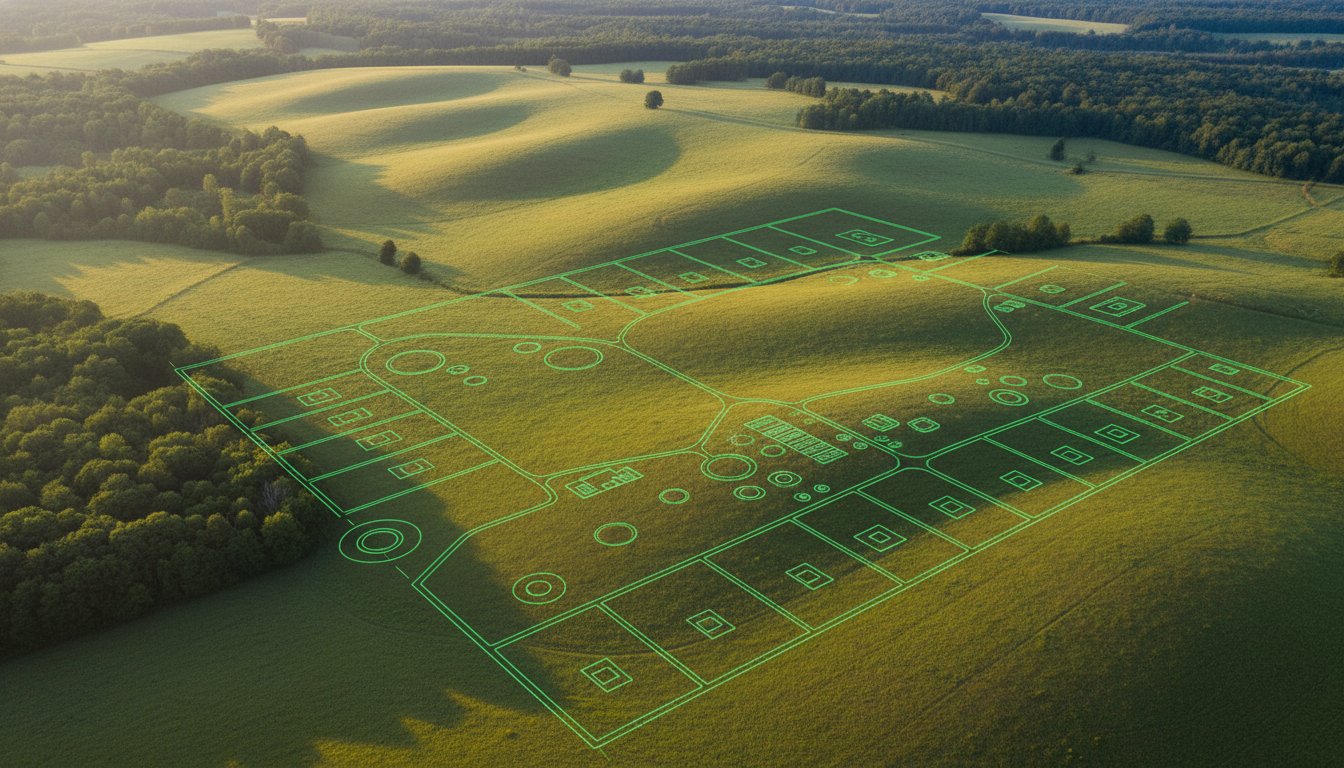
The most beautiful view in the world won’t save your project if the local zoning board says no. Most developers waste months chasing parcels that can’t support the density required for a profitable venture. You need a strategy that identifies land for a tiny home community based on legal feasibility and infrastructure costs first. The global tiny home market is reaching $8.7 billion in 2026. You can’t afford to get stuck in red tape while the demand for affordable, minimalist living surges.
Securing large, un-subdivided parcels is difficult. High utility installation costs can kill your margins before you break ground. We understand the stress of navigating these hurdles. This guide teaches you how to evaluate land for flexible zoning and source affordable acreage with high density potential. You’ll learn to leverage new laws like Texas Senate Bill 15 to bypass traditional lot size requirements and move your project from a plan to a reality quickly. We’ll show you how to find the right residential lots or undeveloped land to make your development work.
Key Takeaways
- Capitalize on the 2026 surge in demand for affordable housing by targeting markets primed for downsized living.
- Secure land for a tiny home community by prioritizing parcels with “unrestricted” zoning or cluster housing designations to bypass legal hurdles.
- Protect your development margins by calculating utility connection fees and evaluating topography before making an offer.
- Streamline your acquisition process by using specialized filters to find large acreage and owner-financed land opportunities.
- Access thousands of national listings for undeveloped vacant land to identify your next high-density project quickly and efficiently.
The Growing Demand for Tiny Home Community Land
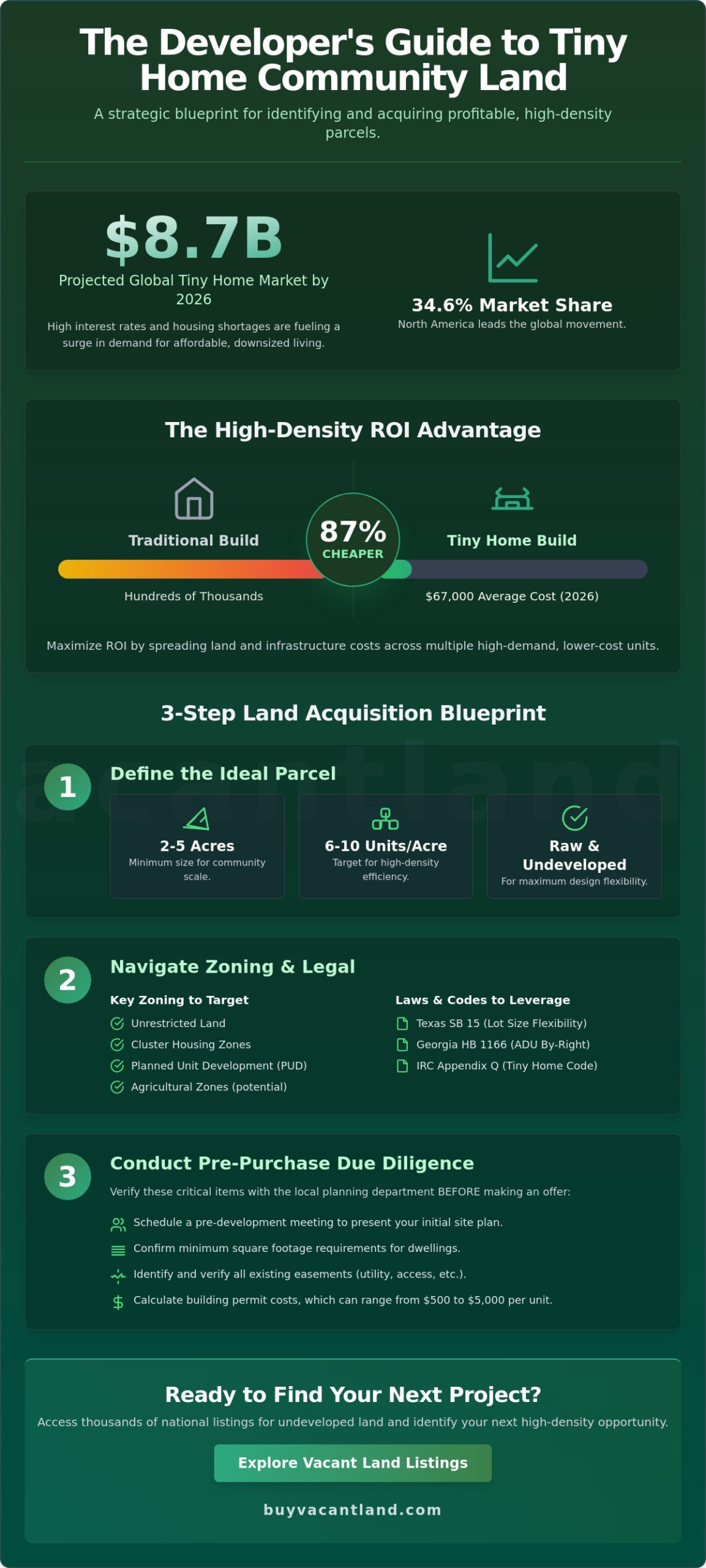
The housing market is broken. High interest rates and inventory shortages make traditional homeownership impossible for millions. Tiny home communities provide the only viable path forward. This isn’t a niche hobby anymore. The global tiny homes market is valued at $8.70 billion in 2026. Demand for downsized living is hitting an all-time high right now. Investors are aggressively pivoting toward high-density land opportunities to capture this growth. You need to identify parcels that support multiple units to make the numbers work. The housing crisis isn’t going away. People want smaller footprints and lower costs. You are providing the solution they need.
The Growing Demand for Tiny Home Community Land stems from a fundamental shift in how people value space and money. North America leads this movement with a 34.6% market share. You need to move quickly. Finding the right land for a tiny home community requires a different mindset than buying a single residential lot. You’re looking for a blank canvas where you can control the layout and maximize every square foot. Raw land offers the highest potential for unique, efficient layouts that attract modern tenants. Vacant land is your best asset for creating a custom community from scratch.
Defining a Tiny Home Community Site
Stop looking at individual residential lots. A community requires scale. You need acreage that allows for shared infrastructure and amenities like community gardens or central utility hubs. Most successful projects start with at least two to five acres of raw land. This size provides the necessary buffer for privacy while maintaining high-density efficiency. Focus on undeveloped vacant land. It gives you total design flexibility without the cost of tearing down existing structures. You want a parcel that allows for at least six to ten units per acre to maximize your investment. This scale supports the sense of community that buyers and renters currently crave.
The Investment Potential of Multi-Unit Land
The math favors high density. A standard house costs hundreds of thousands to build. A tiny home averages $67,000 in 2026, which is 87% cheaper than a traditional build. This price point opens your project to a massive demographic of millennials and retirees. By placing multiple units on a single large parcel, you spread your land and infrastructure costs across several doors. This strategy significantly boosts your ROI compared to traditional single-family developments. Look for cheap land for sale in emerging markets to keep your entry costs low. High-density small dwellings are the most efficient way to turn raw dirt into a cash-flowing asset. Focus on states like Texas or California where laws are becoming more favorable for these developments. Don’t overcomplicate the process. Buy vacant land where the density potential is high and the entry price is low.
Navigating Zoning and Legal Land Requirements
Zoning is the absolute filter for your project. Don’t look at aesthetics until you verify the legal use. Most developers fail because they ignore local density requirements. You need to target “unrestricted” land or specific “cluster housing” zones. In Texas, Senate Bill 15 prohibits the state’s largest cities from enforcing minimum lot sizes larger than 3,000 square feet in new subdivisions. This is a massive win for anyone seeking land for a tiny home community. It allows for much higher density than traditional residential zoning.
Building codes are your next hurdle. They change the moment you cross a county line. Many areas now use Appendix Q of the International Residential Code (IRC) to regulate tiny houses on permanent foundations. If you are implementing a tiny home community, you must know if your county recognizes this standard. Without it, you might be forced to build to full-sized residential specs. This can triple your costs instantly. Check the available residential lots in your target area to see what others have successfully permitted.
Key Zoning Classifications to Search
Start with agricultural zones. These often permit multiple dwellings for farm workers, which can sometimes be repurposed for tiny home use. Look for Planned Unit Development (PUD) opportunities. A PUD lets you propose a custom zoning plan for your specific parcel. This is the best way to bypass rigid local rules. Don’t overlook the Accessory Dwelling Unit (ADU) loophole. In Georgia, House Bill 1166 allows homeowners to add tiny homes under 400 square feet to residential properties by-right. Using these laws is the fastest way to secure land for a tiny home community without a lengthy rezoning battle.
Due Diligence: Before You Buy
Never buy land without a pre-development meeting. Take a rough site plan to the planning department. Ask about minimum square footage requirements. If the town requires 1,000 square feet, your tiny home project is dead on arrival. Verify existing easements immediately. Utility lines or access rights can cut through the center of your best building sites. Check the cost of building permits. These range from $500 to $5,000 in most regions. These fees add up quickly when you’re building ten or twenty units at once.
Evaluating Physical Land Features and Utilities
Access roads are another critical factor. Tiny homes on wheels or modular units require heavy equipment for delivery. Your road must support the weight of a 20,000-pound truck and trailer. Soil quality is equally important. If you’re building in a rural area, a “perc test” is non-negotiable. This test determines if the soil can absorb liquid from a septic system. Without good soil, you can’t build a community. Finding land for a tiny home community requires verifying these physical traits early in your due diligence process.
Utility Planning for Multiple Units
Environmental and Terrain Assessment
Flood zones are a deal-killer. They prevent permanent foundations and complicate insurance for tiny homes. Use FEMA maps to check every parcel before making an offer. Look for natural clearings in wooded areas. Removing trees is expensive and time-consuming. If you plan an off-grid community, assess sun exposure for solar arrays. South-facing slopes are ideal for maximizing power generation. Selecting undeveloped vacant land with the right environmental features reduces your total site prep costs significantly. Don’t fight the land. Work with its natural layout to save money and speed up your timeline.
Strategic Search: How to Source Community-Ready Land
Generic residential websites won’t help you find land for a tiny home community. You need to bypass the noise and use a specialized vacant land marketplace. Speed is your biggest advantage in 2026. High-potential parcels disappear in days. You must monitor new listings every 24 hours to catch undervalued opportunities. Focus your search on owner financed land. This strategy allows you to bypass traditional bank hurdles and secure acreage with a 20-30% down payment. It simplifies the transaction and keeps your capital liquid for development costs.
Target properties labeled as “unrestricted” or “off-grid.” These labels often signal more flexible zoning environments. In states like New Mexico or Wyoming, rural parcels are available for under $300 per acre. These low-cost regions are perfect for developers who want to scale quickly. Securing the right land for a tiny home community requires aggressive filtering and immediate action. Don’t wait for a realtor to call you back. Take control of the sourcing process yourself.
Filtering for High-Potential Parcels
Efficiency requires strict filters. Set your search alerts for a minimum of 5 acres. This size ensures you have enough room for units and shared amenities. Prioritize listings that already have road access. Building a new road is a massive expense you should avoid if possible. Look for keywords like “developer special” or “no restrictions.” These terms identify sellers who are ready to move quickly and understand the needs of multi-unit projects. Focus on parcels that offer the blank canvas you need for a high-density layout.
Negotiating the Deal for Large Tracts
Large parcels offer negotiation leverage. Always ask about bulk discounts when buying 10 or 20 acres at once. Verify that the seller has a clear title and a recent survey. A survey confirms property boundaries and identifies hidden easements. Understanding how do you buy land directly from the owner can save you thousands in broker fees. Direct transactions are faster and more transparent. You avoid the commissions that eat your profits. Browse our latest undeveloped vacant land listings to find your next community site today.
Find Your Next Project on BuyVacantLand.com
Stop wasting your time on traditional real estate websites. Those platforms clutter your search with houses and rental properties you don’t need. You need dirt, not drywall. BuyVacantLand.com is a specialized marketplace designed for developers who value efficiency. We focus exclusively on raw, undeveloped land. This targeted approach is the fastest way to find land for a tiny home community without the noise of the traditional market. You connect directly with land owners and sellers to secure the best price. Direct communication eliminates middleman delays and helps you close deals faster.
Our platform hosts thousands of national listings tailored for community projects. You can browse everything from Industrial Land to remote Off Grid Land in one place. We understand the urgency of the 2026 market. High-potential parcels are in high demand. Our streamlined system allows you to identify, evaluate, and move on a property with total confidence. You get the peace of mind that comes from a transparent and assured transaction. This is the professional tool you need to scale your development portfolio.
Why Developers Choose Our Marketplace
Developers need access to exclusive inventory. You will find listings on our site that never hit the traditional MLS. This gives you a competitive edge in finding affordable acreage for your next project. Our platform allows you to use detailed property descriptions to filter by zoning potential. You can specifically target “Owner Financed Land” to keep your capital liquid for infrastructure. We provide the practical language and data you need to assess a site’s viability instantly. Whether you are looking for small residential lots or massive undeveloped tracts, we have the inventory to support your tiny home startup.
Start Your Search Today
Your next project starts with a single search. Use our intuitive filters to sort by state, price, and acreage in seconds. You can review high-resolution photos and plat maps to verify the layout of the land before you even pick up the phone. Our database includes diverse options like Farms and Ranches or Commercial Vacant Lots that are perfect for high-density layouts. Secure the land for a tiny home community that fits your vision today. Don’t let procedural hurdles slow you down. Browse our listings, contact the seller directly, and start building your community now.
Secure Your Development Site Today
Success in the 2026 land market depends on speed and precision. You now have the roadmap to navigate complex zoning and infrastructure hurdles. Remember that density requirements are your most important filter. Don’t waste resources on parcels that can’t support your specific unit count. Infrastructure costs can make or break your ROI; always verify your water and septic options before you commit capital. The global tiny home market is hitting $8.7 billion this year. You’re positioned to provide the solution people want. Finding the right land for a tiny home community is no longer a guessing game when you use a targeted search strategy.
BuyVacantLand.com provides the specialized tools you need to move forward. Our national database focuses exclusively on raw, undeveloped parcels. You connect directly with sellers to eliminate middleman fees and speed up your closing timeline. This direct approach ensures transparency and gives you the peace of mind that comes from a swift, assured transaction. Take the first step toward your new project today. Your ideal development site is waiting for your vision.
Browse Land for Your Tiny Home Community
Frequently Asked Questions
How much land do I need for a tiny home community?
You typically need at least 2 to 5 acres to create a viable community with shared amenities. While tiny homes have a small footprint, you must account for setbacks, access roads, and drainage requirements. Most successful developers aim for a density of 6 to 10 units per acre. This scale allows you to distribute infrastructure costs across multiple doors while maintaining the open space tenants expect in a modern development.
What zoning is best for a tiny home community?
Look for “unrestricted” land or “Planned Unit Development” (PUD) designations. These classifications offer the most flexibility for non-traditional housing layouts. You should also search for “cluster housing” zones which permit higher density on smaller footprints. In states like Texas, new laws like Senate Bill 15 prevent large cities from enforcing minimum lot sizes above 3,000 square feet. This makes it easier to secure land for a tiny home community in growing suburban areas.
Is it cheaper to buy land with utilities already installed?
Buying land with existing utilities is rarely cheaper in purchase price, but it significantly reduces your development timeline and risk. Connecting raw land to water and sewer lines in 2026 costs between $2,500 and $11,700 per connection. If you buy undeveloped land, you must budget for these hookups plus the cost of a transformer or septic system. Weigh the higher purchase price of improved lots against the $25,000 to $50,000 average cost for raw land development.
Can I build a tiny home community on agricultural land?
You can build on agricultural land if the local county allows for secondary dwellings or farm worker housing. Some jurisdictions permit multiple small structures on large acreage without a full rezoning process. However, you must verify the specific density limits before buying. If the land is strictly zoned for one single-family home per 40 acres, you will need to apply for a zoning variance or a conditional use permit to proceed.
How do I find unrestricted land for sale?
Use specialized marketplaces like BuyVacantLand.com to filter specifically for Off Grid Land or Undeveloped Vacant Land. Traditional real estate sites don’t offer the granular filters needed to find raw parcels. Search for keywords like “no restrictions,” “no HOA,” or “out of city limits” in the property descriptions. Monitoring new listings daily is the best way to catch affordable acreage before other developers spot the potential.
Do I need a special permit for a tiny home community?
Most projects require a Conditional Use Permit (CUP) or a site plan approval from the local planning board. Even if your zoning is correct, the city needs to approve your layout for fire safety and environmental impact. Building permits for raw land development range from $500 to $5,000. Start this process early by presenting a rough site plan to the county to identify any potential deal-breakers before you close on the land.
What is the difference between a tiny home park and a community?
A tiny home park usually functions like an RV park where residents rent a pad for their Tiny Home on Wheels (THOW). A community typically involves permanent foundations and resident-owned lots or long-term leases. Communities often follow Appendix Q of the International Residential Code (IRC) for permanent dwellings. Parks are governed by different regulations and are often classified as recreational or commercial uses rather than residential.
How do I finance a large land purchase for a community?
Secure a land loan or target owner-financed land to bypass traditional mortgage hurdles. Land loans in 2026 typically require a 20% to 30% down payment with interest rates between 4% and 10%. If you’re a veteran in Texas, the VLB offers land loans at a 7.25% interest rate. Many sellers on our marketplace offer direct financing, which simplifies the transaction and requires less paperwork than a traditional bank.


Join The Discussion