
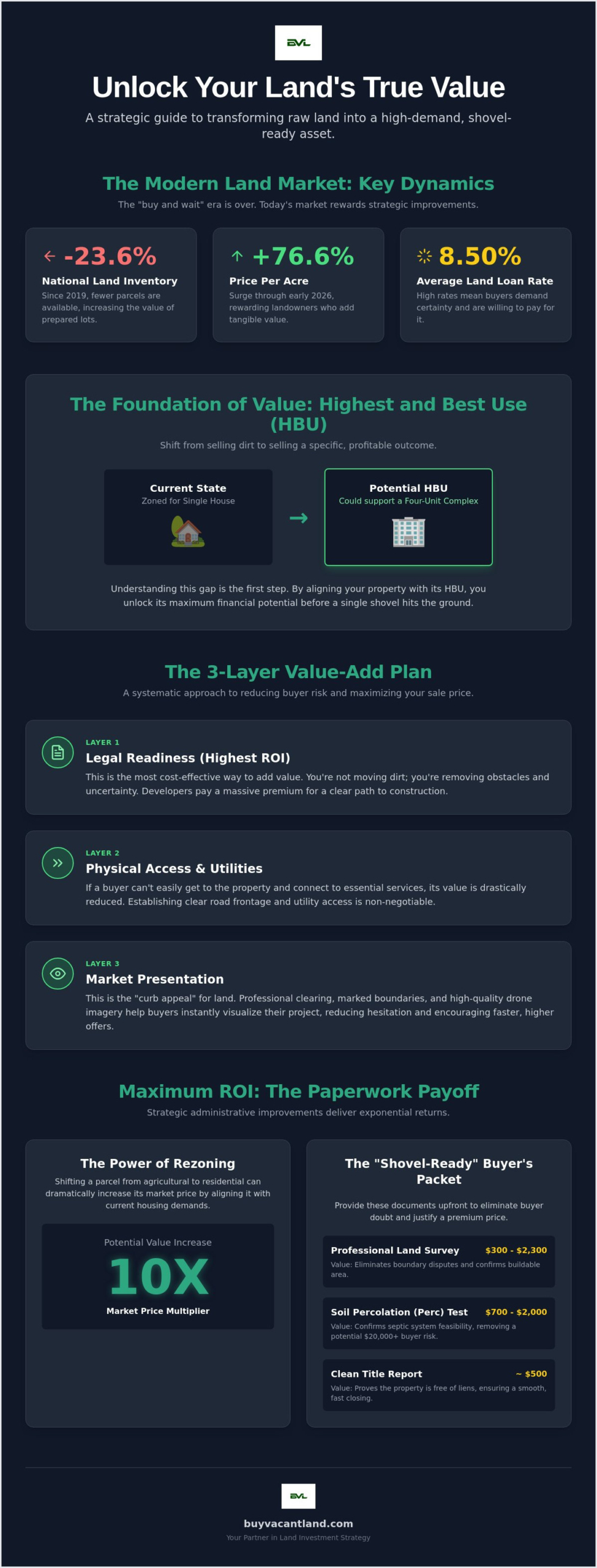
While national land inventory dropped 23.6% since 2019, prices per acre surged by 76.6% through early 2026. However, the “buy and wait” strategy no longer guarantees a windfall in today’s disciplined market. You might feel the frustration of holding a parcel that isn’t appreciating fast enough. It’s stressful to watch property taxes add up while you’re uncertain about which upgrades actually pay off. Learning how to improve raw land value is now the only way to secure a fast, profitable exit.
You want a clear path to higher appraisal values and serious buyer interest. This guide provides the most effective legal, physical, and strategic methods to increase your market price immediately. We’ll show you how to cut through the confusion of zoning requirements and navigate the high-interest environment where rates average 8.50% for land loans. It’s about reducing the next buyer’s risk to make your property the obvious choice.
Expect a no-nonsense checklist of value-add activities designed for maximum efficiency. We’ll preview the essential steps to achieve “shovel-ready” status, including the impact of 2026 zoning reforms and the specific utility installations that attract the best offers. You’ll gain the peace of mind that comes from a proven, multi-step plan to move your land from listed to sold.
Key Takeaways
- Identify your property’s “Highest and Best Use” to ensure every dollar spent on improvements yields the highest possible return.
- Learn how to improve raw land value by securing entitlements and updating zoning to remove development hurdles for future buyers.
- Prioritize “First Impression” site enhancements like professional lot clearing to help buyers visualize their future project immediately.
- Increase marketability by bringing essential utilities to the property line and verifying legal access via road frontage or easements.
- Position your parcel as a “shovel-ready” asset using professional drone imagery and direct, benefit-focused listing descriptions.
Understanding the Fundamentals of Raw Land Valuation
Land value is logic, not luck. Most investors see a vacant lot and see dirt; a professional investor sees a specific financial outcome. The core of this outcome is the principle of “Highest and Best Use” (HBU). This isn’t a vague suggestion. It’s a formal determination of the most profitable, legally permissible, and physically possible use for a parcel. If your land is zoned for a single house but could support a four-unit complex, its HBU is the multi-family option. Understanding this gap is the first step in learning how to improve raw land value.
Raw land often sits at a lower price point because buyers hate the unknown. Every “if” in a transaction costs you money. If a buyer doesn’t know if the soil will perk, if the title is clear, or if the county will allow a driveway, they’ll demand a steep discount. This is the “uncertainty tax.” By eliminating these questions, you capture the “risk premium” that developers are willing to pay for “shovel-ready” land. You aren’t just selling dirt; you’re selling a solved problem. The Fundamentals of Land Development show that value increases exponentially as you move a property through the entitlement process.
The Three Layers of Land Improvement
To maximize your return, you must address three distinct layers of improvement. You don’t have to do them all at once, but you must understand how they interact:
- Legal Readiness: This is the most cost-effective way to add value. It includes securing entitlements, clarifying zoning, and ensuring the title is “marketable” and free of surprise encumbrances.
- Physical Access: If a buyer can’t get their truck onto the site, they won’t buy it. Establishing clear road frontage or a recorded easement is non-negotiable for high-value listings.
- Market Presentation: This is the “curb appeal” of the land world. It involves professional data, clear boundaries, and visual evidence of the land’s potential.
Assessing Your Property’s Current Baseline
Before you spend a dollar on a bulldozer, audit what you already own. Start with the deed. Review existing restrictions or old easements that might limit building footprints. Next, look at the topography. A steep slope might offer a great view, but it also increases construction costs. You need to know these facts before your buyer does. Finally, analyze local demand. In 2026, the market for “off-grid” land differs significantly from the demand for residential lots. Tailoring your improvements to match what local buyers are actually searching for is the fastest way to see a return on your investment. Don’t guess. Use local data to drive your strategy for how to improve raw land value.
Administrative and Legal Improvements for Maximum ROI
Administrative improvements offer the highest return on investment. You aren’t moving dirt; you’re moving obstacles. If you want to know how to improve raw land value, start with the paperwork that proves the land is buildable. Developers pay a massive premium for certainty. They want to avoid the months of waiting and the thousands of dollars in fees associated with government approvals. By handling the “paper value” yourself, you capture the profit that others leave on the table.
A clear title is the foundation of any high-value transaction. Liens, old easements, or complex encumbrances will kill a deal during the closing process. Clear these issues now. It’s much cheaper to fix a title defect today than to lose a serious buyer tomorrow. Providing a clean preliminary title report shows you’re a professional who values the buyer’s time. This transparency builds trust and justifies a higher asking price.
The Power of Rezoning and Entitlements
Rezoning is a strategic move that can 10X your property’s market price. Shifting a parcel from agricultural use to residential or multi-family use aligns the land with 2026 market trends. Many local governments are currently reconsidering outdated codes to allow for higher density, including duplexes and accessory dwelling units (ADUs). You should also secure a preliminary plat map. This document visualizes the subdivision potential and establishes “Shovel-Ready” status. This status means a builder can move from purchase to construction without the usual administrative delays, making your land an elite asset.
Essential Technical Documentation
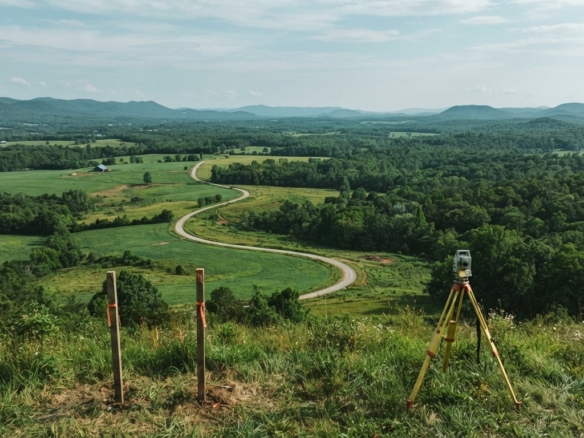
Technical documentation acts as a silent salesperson. A professional land survey for a residential property usually costs between $300 and $2,300. It provides immense value by eliminating boundary disputes and identifying exactly where a buyer can build. A modern topographic survey is even better; it shows elevation changes that help builders calculate excavation costs accurately. Providing this data upfront makes your land the path of least resistance for a fast sale.
Don’t overlook the soil percolation test. A Perc test determines if the site can support a septic system. These tests typically cost between $700 and $2,000. Since a new septic system can cost between $3,000 and $12,000, or even $20,000 for complex mound systems, buyers fear the unknown. A passed Perc test removes that fear entirely. Collect these documents into a “Buyer’s Due Diligence Packet.” When you list your vacant land with a complete packet, you attract serious investors who are ready to pay for certainty and speed.
Physical Site Enhancements and Curb Appeal
Physical improvements are the handshake of your property. While legal work happens in an office, site enhancements happen on the ground where the buyer stands. You must prioritize “First Impression” improvements that immediately impact listing photos. If a buyer sees a wall of tangled briars, they see work. If they see a clear path and a view, they see a home. This shift in perception is essential when considering how to improve raw land value.
Distinguish between basic maintenance and strategic clearing. Brush hogging is a temporary fix that cuts down weeds. Strategic clearing involves removing invasive species and undergrowth to reveal the “bones” of the land. It makes the parcel feel larger and more accessible. High-quality listing photos of a cleared site attract significantly more clicks than photos of overgrown brush. You want the buyer to feel like they can start building tomorrow.
Strategic Land Clearing
Don’t clear everything. Identify and preserve mature, high-value trees like oaks, maples, or walnuts. These add natural shade and character that takes decades to replace. Focus your clearing efforts on creating a visible building envelope or “house pad.” This is a designated area where a structure could sit. When a buyer can walk a clear path to a potential front porch location, the emotional connection to the land increases. You’re no longer selling a lot; you’re selling a vision.
Defining Boundaries and Security
Confusion kills deals. If a buyer isn’t sure where your property ends and the neighbor’s begins, they feel uneasy. Install professional-grade fencing to define the perimeter. This provides a clear visual boundary and serves a pragmatic purpose: it prevents trespassing and illegal dumping. In some regions, dumping is a major liability for vacant land owners. A sturdy fence mitigates this risk and signals that the property is actively managed.
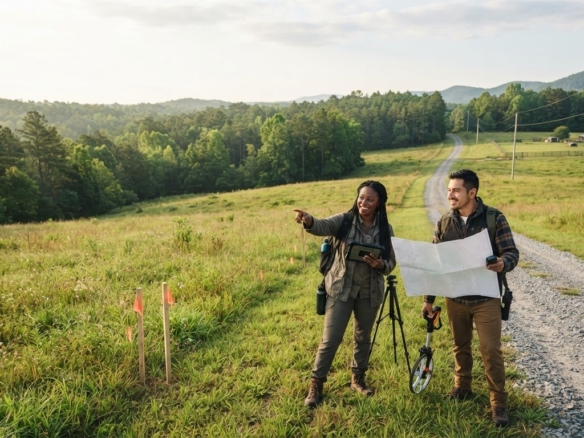
Mark every property corner clearly with bright stakes or permanent markers. This allows prospective buyers to walk the entire parcel with confidence. Finally, add a gated entrance. Even a simple, well-installed gate at the main access point signals exclusivity and pride of ownership. It tells the buyer that this land is a valuable asset worth protecting. These small physical details are a proven method for how to improve raw land value without the massive costs of full-scale development.
Infrastructure and Utility Readiness
Infrastructure is the bridge between a vacant parcel and a finished project. Buyers in 2026 are wary of hidden development costs. If they have to guess the cost of bringing power or water to the site, they’ll lower their offer to protect their margins. Taking the lead on utility readiness is the most direct way to understand how to improve raw land value. You’re removing the “unknown” factor that stalls transactions and kills deals during the due diligence period.
Legal access is the first hurdle. Physical access is the second. If a buyer can’t reach the property line in a standard vehicle, you’ve lost the majority of your market. Beyond roads, you must manage internal drainage. Standing water or “swampy” patches are red flags for inspectors and builders. Grade the land to ensure runoff moves away from the building envelope you established in the previous phase. Proper drainage prevents soil erosion and protects the long-term integrity of any future structures.
Securing Permanent Access
Upgrade your entry point now. A simple dirt two-track often washes out or becomes impassable in rain. Investing in a gravel driveway provides immediate utility and increases the property’s perceived value. Ensure the entrance is wide enough to accommodate heavy construction equipment and long trailers. If you currently rely on a “handshake” agreement with a neighbor, formalize it immediately. A recorded legal easement is a requirement for most land lenders, who are currently charging around 8.50% for 5-year terms. Without recorded access, your buyer won’t get financing, and your sale will collapse.
Utility Strategy for Sellers
Don’t just tell buyers utilities are “available.” Prove it. Get written quotes from local utility companies for the cost of bringing electricity to the property line. This documentation is a powerful selling tool that justifies a higher asking price. If your budget allows, install a temporary power pole. This allows builders to start work immediately without waiting on the grid. It’s a small upfront cost that signals the land is truly “ready to go.”
Water access is equally critical. For rural parcels, the average cost to drill a residential water well is between $5,500 and $9,000. If municipal water is nearby, identify the exact connection point and any associated tap-in fees. Map out the nearest sewer lines or confirm the septic viability discussed in the legal section. Providing this level of detail positions your land as an elite investment. When you are ready to sell, list your vacant land on a platform that values infrastructure and transparency as much as you do.
Realizing Value Through Strategic Market Placement
Strategic improvements only pay off when a buyer sees the results. You’ve cleared the brush, secured the zoning, and mapped the utilities. Now you must present that data effectively. Marketing is the final phase of understanding how to improve raw land value. If your listing looks like every other overgrown lot, you’ll get low-ball offers. You need to position your parcel as a solved problem. High-value buyers aren’t looking for a project; they’re looking for a result. Your marketing must reflect that your land is “Shovel-Ready,” perhaps by including an Airvestor report to highlight short-term rental potential.
A benefit-driven listing description is your most powerful tool. Avoid generic phrases like “nice lot.” Instead, list the concrete improvements you’ve made. Mention the passed Perc test, the gravel driveway, and the established electricity at the property line. These details justify your higher asking price and build immediate confidence. For those selling in Utah, using Pay It Forward Realty LLC for flat-fee MLS listings allows you to keep more of your equity by avoiding high commissions. You’re selling the relief and peace of mind that come from a property where the due diligence is already finished. This transparency leads to faster sales and higher appraisal values.
Visual Marketing and Drone Footage
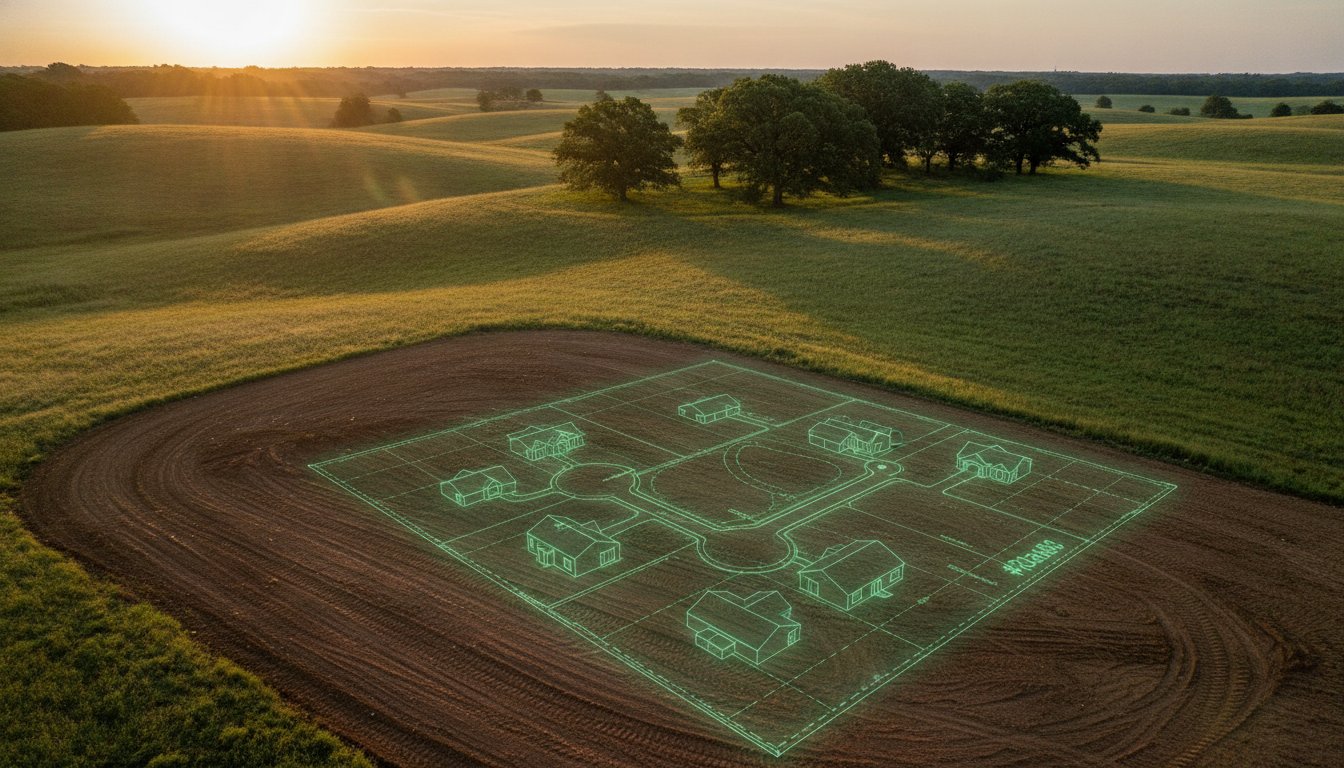
Aerial views are mandatory for land sales in 2026. Standard ground-level photos fail because they can’t capture the scale or layout of a parcel. They often look like a wall of trees. Professional drone photography allows you to use digital overlays to show property boundaries from the air. This eliminates confusion and helps buyers visualize how the land sits in relation to neighbors. Highlight nearby features like water access, paved roads, or mature timber stands from 100 feet up. This perspective proves that the building envelope is ready for construction and helps the buyer connect with the landscape.
Listing on the Right Platform
Don’t bury your improved land on general real estate sites. Those platforms are built for residential houses, and vacant lots often get lost in the noise. You need a specialized marketplace to reach buyers searching for cheap land for sale. These investors specifically look for parcels where the hard work is already done. They’re willing to pay more for a property that doesn’t require months of administrative or physical labor.
When you sell land, lead with your new “Shovel-Ready” status. This signals to developers and owner-builders that the risk has been removed. You’ve already navigated the zoning hurdles and the utility connections. This creates a sense of momentum that pushes the reader toward an offer. Your improvements have created a premium asset. Don’t let it sit on a general site. List your land on our marketplace today! and turn your strategic improvements into a closed transaction.
Turn Your Raw Land Into a High-Value Asset
Improving land value isn’t about guesswork. It’s a calculated process of removing risk for the next owner. You’ve learned how to identify the highest and best use and the specific steps to achieve shovel-ready status. Focus on the administrative wins like rezoning and the physical essentials like road access. These improvements transform a stagnant property into a premium financial opportunity. You’ve moved beyond owning dirt; you now own a strategic development solution.
Now that you understand how to improve raw land value, it’s time to capture your return. Don’t waste your effort on general real estate sites where vacant parcels are ignored. You need a platform built for your specific asset class. Whether you hold residential lots, farms, or ranches, your property deserves targeted exposure. Specialized buyers look for the exact improvements you’ve just made.
List your vacant land for sale on our specialized marketplace to reach a national audience of serious land investors. Our platform specializes in raw land and offers no listing fees for basic property discovery. It’s the most efficient path to a swift, assured transaction. You’ve done the work to increase your market price; now let us help you finalize the sale. Start your listing today and move toward a successful closing with confidence.
Frequently Asked Questions
What is the single best way to increase land value quickly?
Securing entitlements and clarifying zoning is the fastest way to add value. It moves the property from “raw dirt” to “shovel-ready” status. Developers pay a premium for land that already has county or city approvals for building. You remove months of waiting and thousands in administrative fees for the buyer. This certainty allows you to command a much higher price immediately without moving a single rock.
Does clearing land always increase its value?
Clearing land adds value when it improves sightlines and highlights building sites. However, over-clearing can destroy privacy and remove high-value mature timber. Focus on strategic clearing of invasive species and undergrowth. Creating a clear building envelope allows buyers to visualize the finished project. Always preserve healthy, mature trees that provide character and natural shade. These features take decades to replace and add significant aesthetic appeal.
How much does it cost to get a property rezoned?
Rezoning costs vary significantly by county and project complexity. You’ll face application fees, public hearing costs, and professional fees for planners or attorneys. While the upfront cost is a factor, the return on investment is often the highest in the industry. Shifting land from agricultural to residential use can increase the market price exponentially. It opens the property to a much wider pool of developers and builders.
Is it worth building a small structure like a shed to add value?
Building small structures like sheds rarely provides a positive return on investment for raw land. Most buyers have their own vision for the property and may view your structure as an obstacle to remove. Focus your capital on how to improve raw land value through infrastructure instead. Gravel driveways, utility connections, and passed soil tests offer much higher utility and appeal than a portable building.
How do I find out the “Highest and Best Use” of my land?
Determine the “Highest and Best Use” by analyzing local zoning codes and current market demand. Look at what’s being built successfully in the immediate area. A professional appraiser or land consultant can provide a formal analysis. They evaluate what’s physically possible, legally permissible, and maximally productive for your specific parcel. This foundation ensures you don’t overspend on improvements that don’t match the land’s ultimate purpose.
Will adding a well increase the property value more than it costs to drill?
Adding a well often increases value beyond the initial drilling cost. In 2026, the average cost to drill a residential well is between $5,500 and $9,000. For rural buyers, a functioning water source is a non-negotiable requirement for construction. By handling this installation yourself, you remove a major logistical hurdle. Buyers are willing to pay a premium for a property that is ready for immediate development and occupancy.
Can I increase land value without spending any money on physical work?
You can increase land value significantly through administrative improvements. Securing a professional survey, performing a Perc test, or clearing title defects adds massive “paper value” without moving dirt. These actions reduce the buyer’s risk and speed up their development timeline. Understanding how to improve raw land value through documentation is a pro-level strategy. Providing a complete due diligence packet justifies a higher asking price immediately.
How do I market my improved land to find the right buyer?
Market your land on specialized platforms that cater specifically to vacant land investors. General real estate sites often bury land listings under residential homes. Use professional drone photography with boundary overlays to showcase your improvements. Highlight your “Shovel-Ready” status in the listing description. This strategy ensures you reach buyers who understand the specific value of the infrastructure and legal work you’ve already completed.


Join The Discussion