

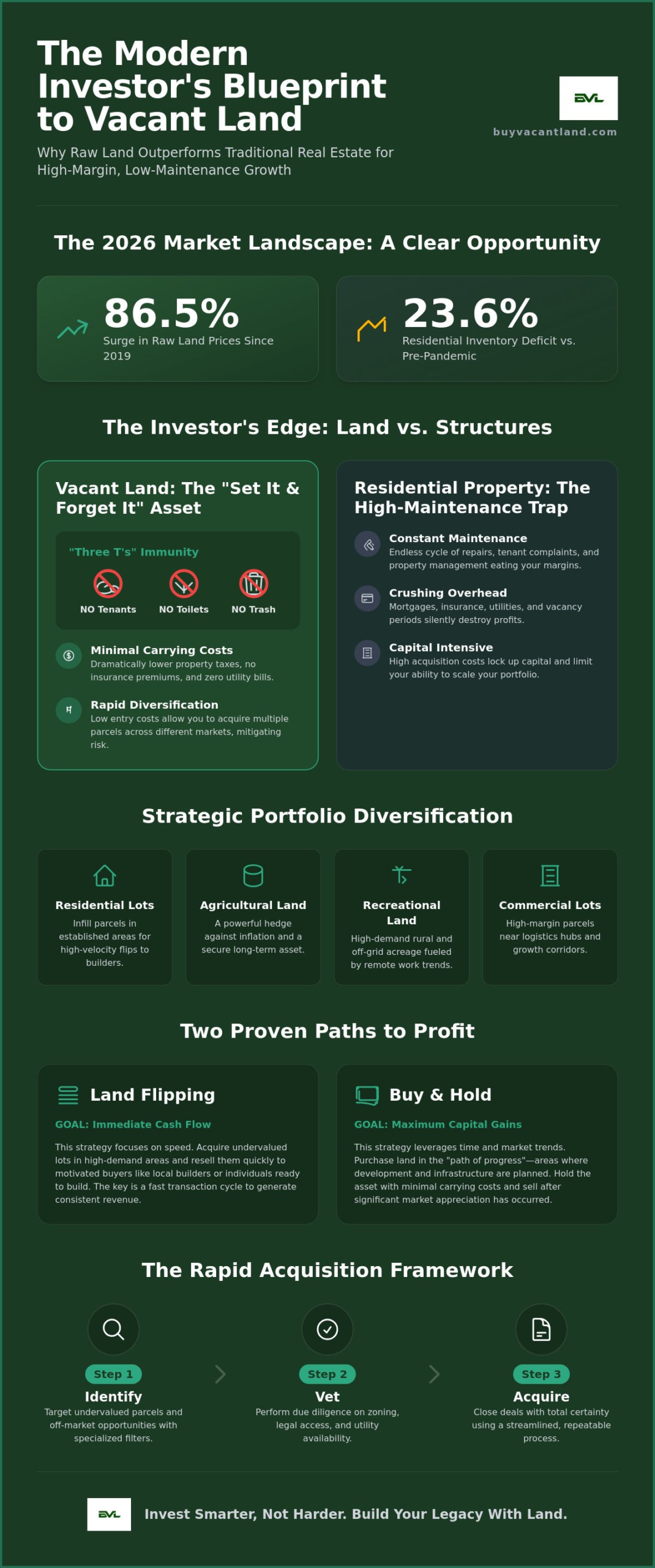
Stop waiting for a housing market crash to start your investment journey. While residential inventory remains 23.6% below pre-pandemic levels, raw land prices have surged 86.5% since 2019. Building a real estate portfolio with vacant land is currently the most efficient path to high-margin wealth without the crushing overhead of physical structures. It is the highest-velocity asset for investors who value their time as much as their capital.
You’re likely exhausted by high entry costs and the constant stress of tenant repairs. It’s frustrating to watch your margins disappear into property management fees and endless maintenance cycles. This guide delivers a pragmatic framework to acquire and scale a diversified land portfolio. You’ll learn how to secure undervalued parcels and generate appreciation with zero management fatigue and total peace of mind.
We will walk through the 2026 market landscape, from navigating 9.00% interest rates to vetting off-grid lots for maximum value. You’ll get a repeatable system for identifying high-quality land and closing deals with total certainty. This is your blueprint for a streamlined, low-maintenance path to financial independence.
Key Takeaways
- Eliminate management fatigue by removing tenants, toilets, and trash from your investment strategy. Raw land offers a lower entry price point that allows for faster diversification across multiple states.
- Master the process of building a real estate portfolio with vacant land by targeting a mix of residential lots, farms, and recreational parcels. This strategy balances immediate resale potential with long-term wealth appreciation.
- Implement a rapid acquisition framework to vet parcels based on zoning, legal access, and utility availability. A repeatable system ensures you only commit to deals that meet your specific growth criteria.
- Choose between land flipping for immediate cash flow or a buy-and-hold strategy for maximum capital gains. Aligning your exit strategy with market trends ensures you capture the highest possible ROI.
- Access a national inventory of undeveloped land to scale your holdings without the traditional hurdles of residential real estate. Use specialized filters to find off-market opportunities that fit your investment profile.
Why Vacant Land is the Foundation of a Scalable Real Estate Portfolio
Traditional real estate is heavy. It’s filled with leaky faucets, late rent payments, and expensive structural repairs. Building a real estate portfolio with vacant land removes these burdens entirely. You’re investing in the raw asset and securing an equitable financial proposal for your future wealth. There are no tenants to manage. No toilets to fix. No trash to haul away. This “Three Ts” immunity allows you to focus on acquisition and growth rather than maintenance and headaches. It’s the ultimate path to passive ownership.
Scaling a residential portfolio requires massive capital and constant oversight. Buying five houses might cost two million dollars. In contrast, you can acquire five strategic parcels by browsing cheap land for sale across various emerging markets. This lower entry price point is the engine of rapid diversification. When building a real estate portfolio with vacant land, you aren’t tied to one local market’s volatility. It’s about speed and efficiency. Scarcity is built into the asset class. Inventory in 2026 is 23.6% below pre-pandemic levels. They aren’t making any more land.
Carrying costs are the silent killer of real estate profits. With houses, a single month of vacancy can wipe out a year of gains. Land doesn’t have that problem. Your overhead is minimal. This allows you to wait for the right market conditions without the pressure of a monthly mortgage payment. You’re building wealth on your terms, not the bank’s. It’s a clean, efficient way to grow an asset base.
Land vs. Residential Property: A Cost-Benefit Analysis
Unimproved land is remarkably cheap to hold. Property tax rates for raw land are significantly lower than for improved lots with structures. You won’t pay for homeowner’s insurance. You won’t pay for heating, cooling, or water. It’s a “set it and forget it” investment. By understanding land lots and their legal distinctions, you can see how unimproved assets protect your cash flow. You own the equity without the monthly drain of utility bills or property management fees. This hands-off style is perfect for busy professionals who value their time.
The 2026 Appreciation Outlook for Raw Land
Urban sprawl is no longer just a city phenomenon. It’s pushing deep into the suburban fringe. Remote work has transformed rural acreage into prime residential territory. Path of progress investing in 2026 means buying land where infrastructure and high-speed internet are scheduled to arrive within thirty-six months. Demand for off-grid and recreational land is at an all-time high. People want space. Investors who secure that space now will capture the highest margins as development moves outward. Raw land prices have already surged 86.5% since 2019, and the trend shows no signs of stopping. Buy now and let the market do the heavy lifting for you.
For real estate agents looking to mirror this high-margin success in the residential sector, you can learn more about LuxeScale to discover how to break into the luxury market and connect with affluent homeowners.
Strategic Diversification: Types of Land to Include in Your Portfolio
Building a real estate portfolio with vacant land requires more than just buying the first cheap lot you find. You need a mix of assets to balance risk and liquidity. Successful investors don’t treat land as a single category. They see it as a collection of specialized opportunities. Diversification protects your capital from local market shifts. This strategy aligns with the investor’s guide to vacant land which highlights the necessity of matching land use to local market demand. You should aim for a blend of high-demand residential lots and high-appreciation rural acreage.
Industrial and commercial vacant lots serve as excellent long-term corporate plays. These parcels often sit near logistics hubs or growing retail corridors. While they may take longer to sell, the profit margins are typically much higher than residential flips. Agricultural land provides a different kind of security. It acts as a hedge against inflation and offers sustainability for buyers looking to secure food or water sources. Your portfolio should reflect a logical progression from quick cash-flow assets to long-term wealth generators.
Residential Lots and Infill Properties
Infill lots are the workhorses of a high-velocity portfolio. These are undeveloped parcels located within established neighborhoods. They’re valuable because they already have access to roads and municipal utilities. Builders love these lots because the infrastructure is ready for immediate construction. You can often buy these at a discount from tired owners and resell them to local developers within months. To master this, you must learn how do you buy land without getting stuck in complex zoning disputes. Identifying lots ready for immediate development is the fastest way to compound your initial investment.
Recreational, Hunting, and Off-Grid Land
The demand for “escape” properties has reached record levels in 2026. Remote work allows people to live anywhere, making off-grid land a primary residence option rather than just a vacation spot. Private hunting grounds also offer seasonal leasing opportunities that generate consistent cash flow. When evaluating these parcels, look for timber or mineral rights to boost your ROI. Restricted land comes with legal limitations on building size or style, while unrestricted land allows for total creative and functional freedom. You can find a wide variety of these specialized assets on BuyVacantLand.com to start diversifying today. This mix of utility and freedom is what drives rapid appreciation in the rural sector.
The Acquisition Framework: Vetting Parcels for Rapid Growth
Speed is your greatest advantage. Building a real estate portfolio with vacant land requires a rigorous, repeatable vetting process to filter out liabilities. You can’t afford to get bogged down in sentiment. You need a system that identifies high-margin opportunities with clinical precision. This framework ensures you only commit to parcels that offer a clear path to profit. Follow these five steps to secure your next asset.
- Step 1: Define Geography. Pick a growth corridor where infrastructure is expanding. Focus on a specific use-case like residential infill or raw recreational acreage.
- Step 2: Rapid Due Diligence. Check for legal access, zoning restrictions, and utility proximity. If the parcel lacks these, the price must reflect the cost of adding them.
- Step 3: Analyze Comps. Use a national land marketplace to find actual sold prices. Don’t rely on asking prices; they’re often inflated.
- Step 4: Secure the Property. Use a direct purchase for maximum discount or leverage owner financing to keep your cash liquid for more deals.
- Step 5: Verify Title. Never skip a title search. Ensure there are no hidden liens or environmental encumbrances that could kill a future sale.
This systematic approach is the core of any successful guide to investing in vacant land. It removes the guesswork and replaces it with data-driven certainty. You’re not just buying dirt. You’re acquiring a strategic position in a tightening market where inventory is 23.6% below pre-pandemic levels.
Essential Due Diligence for Land Investors
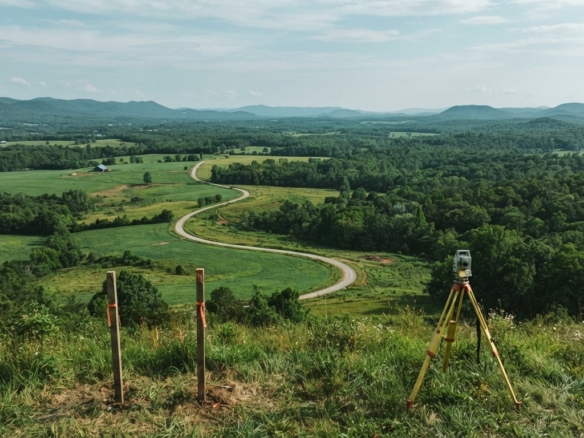
Legal access is non-negotiable. A landlocked parcel is a legal nightmare that can tie up your capital for years. Always verify that the property has a recorded easement or direct frontage on a public road. Zoning is equally critical. In Austin, TX, you’ll navigate 28 different classifications; in Houston, you’ll deal with complex ordinance codes instead of traditional zoning. You must know what you can build before you sign. Finally, check the topography. Steep slopes or wetlands can turn a “cheap” lot into an unbuildable money pit. Soil testing is a small upfront cost that prevents a massive downstream loss.
Leveraging Owner Financing to Scale Faster
Bank loans for land are difficult and expensive. With interest rates for vacant land often hitting 8.5% to 9.0% at credit unions, traditional financing eats your margins. Choosing owner financed land is a superior strategy for scaling. It preserves your capital. Instead of a 50% down payment required by many banks, sellers often accept much less. This leverage allows you to control a million dollars in land assets with only a fraction of that in cash. Focus on terms that offer low interest and no prepayment penalties. This flexibility is essential for building a real estate portfolio with vacant land at an accelerated pace. You control the asset, capture the appreciation, and keep your cash for the next acquisition.
Portfolio Management and Exit Strategies for Maximum ROI
Velocity is the secret to scaling. Most investors treat land as a static asset. They buy a parcel and wait decades for a payout. This is a mistake. Building a real estate portfolio with vacant land requires you to treat your holdings as a dynamic fund. You must move capital in and out of deals with speed. This creates a high-velocity engine that generates both immediate cash and long-term wealth. Don’t let your capital sit idle. Rotate your assets to maximize your internal rate of return.
Land flipping provides the fuel for your growth. You identify undervalued parcels, secure them at a discount, and resell them to the retail market. This creates the liquidity needed for larger, more complex acquisitions. For your long-term holdings, use a buy-and-hold strategy in growth corridors. This captures the massive appreciation seen in the current market. You can also offer an equitable financial proposal to future buyers by selling on terms. This allows you to exit the physical asset while maintaining a monthly income stream. It’s the most efficient way to scale without adding new management burdens.
Maximizing Value Through Entitlements
Entitlements are the most effective way to force appreciation. You increase the value of a parcel by changing its legal status or physical layout. Take a large forty-acre tract and subdivide it into smaller, more liquid five-acre lots. Smaller parcels attract a wider pool of buyers and command a higher price per acre. Securing a building permit or utility hookup before you sell can double your ROI. Highest and best use is the specific use of a property that is legally permissible, physically possible, and results in the highest financial value. Optimize your land for its most profitable purpose before you list it for sale. This simple step separates amateur buyers from professional investors.
Cash Flowing Your Land Portfolio
Land can generate cash flow today. You don’t have to wait for a sale to see a return. Lease your acreage for agricultural use, grazing, or seasonal hunting. These leases often cover your property taxes and provide a small surplus. If your parcel is near a major road, explore billboard contracts. If it’s on a high ridge, look into cell tower leases. These provide steady, hands-off revenue for decades. Managing your property tax obligations is the only “maintenance” required. Keep your overhead low to protect your margins. Creating passive income through seller financing is the final step in a sophisticated land strategy. You act as the lender. You collect the interest. You avoid the stress of property management entirely. Find your next investment parcel and start building your cash-flowing portfolio now.
Scaling Your Portfolio with BuyVacantLand.com
Execution is the final step. You have the framework and the strategy. Now you need the inventory. Building a real estate portfolio with vacant land requires a reliable stream of off-market and retail opportunities. BuyVacantLand.com provides direct access to a national inventory of cheap land for sale across the United States. You can bypass the noise of generic real estate sites and focus on pure land assets. This platform is built for investors who value efficiency and speed.
You can filter your search by specific land types to match your portfolio goals. Whether you need residential lots for immediate flipping or expansive farms and ranches for long-term holds, the tools are at your fingertips. You can also find specialized industrial parcels and off-grid acreage. The platform allows you to connect directly with sellers. This facilitates bank-free owner financing deals that preserve your cash. When you’re ready to exit a position, you can list your own parcels to reach a targeted audience of active buyers. It’s a complete ecosystem for land wealth.
Finding Undervalued Deals in a National Marketplace
Market conditions vary wildly by state. In 2026, you might find rural land in New Mexico for $2,200 per acre while Massachusetts hits $65,000. Specialized search filters allow you to identify these price discrepancies instantly. You can target unrestricted land for maximum flexibility or focus on high-growth regions. For example, comparing land for sale in florida against emerging markets in the Midwest helps you allocate capital where it appreciates fastest. A land-only platform removes the clutter of houses and rentals. You see the raw data you need to make an informed decision.
Streamlining the Buy-and-Sell Process
Middleman fees eat your ROI. BuyVacantLand.com eliminates this burden by enabling direct communication between buyers and sellers. You negotiate your own terms. You set your own pace. This transparency is the foundation of an equitable financial proposal for both parties. Building a real estate portfolio with vacant land becomes a simple, repeatable process. Use the “watchlist” feature to track price drops on prime parcels and monitor market trends in real-time. This ensures you never overpay for an asset. It’s time to stop browsing and start acquiring. Start your search today on BuyVacantLand.com and secure your first parcel with total confidence.
Secure Your Strategic Land Assets Today
Building a real estate portfolio with vacant land is the most efficient way to scale your wealth in today’s market. You’ve learned how to eliminate management fatigue and replace it with high-velocity assets. By applying the vetting framework and strategic exit plans discussed, you can control significant acreage with minimal overhead. The 2026 investor doesn’t wait for property management headaches. They secure raw equity and let the path of progress do the heavy lifting.
BuyVacantLand.com simplifies this entire journey. Our platform offers a national reach with an exclusive focus on raw land, farms, and ranches. You get a streamlined, direct connection to sellers without unnecessary middleman fees or procedural hurdles. This transparency ensures you move from search to ownership with total peace of mind. Your next high-margin deal is already listed on our marketplace.
Take the first step toward a diversified, low-maintenance future. Browse current vacant land listings and start building your portfolio today. Your path to efficient wealth starts with a single parcel.
Frequently Asked Questions
Is building a real estate portfolio with vacant land better than rental properties?
Yes, it’s superior for investors who value efficiency and low overhead. Building a real estate portfolio with vacant land eliminates the “Three Ts” of rental properties: tenants, toilets, and trash. You don’t deal with structural repairs or management fees. Land offers higher velocity and lower carrying costs. It’s a cleaner path to appreciation without the constant stress of physical property maintenance.
How much money do I need to start a land investment portfolio?
You can begin with much less capital than traditional residential real estate requires. Many rural parcels are available for small upfront costs. Utilizing owner financing allows you to control valuable assets with a minimal down payment. This flexibility is essential for building a real estate portfolio with vacant land without needing massive bank loans or deep liquid reserves from the start.
What are the biggest risks when buying raw land for investment?
Zoning restrictions and lack of legal access are the primary risks to your capital. A landlocked parcel has limited resale value and can lead to expensive legal battles. Environmental constraints like wetlands or protected habitats also hinder development. Always conduct thorough due diligence and verify title history to mitigate these liabilities before you commit to a purchase agreement.
Can I get a bank loan for vacant land purchases?
Yes, but bank loans for land are harder to obtain than conventional mortgages. In 2026, interest rates for land loans typically range from 8.5% to 9.0% at credit unions. Lenders often demand down payments between 20% and 50%. Many investors choose seller financing instead. This avoids strict bank hurdles and allows for faster scaling with less cash tied up in a single deal.
How do I know if a piece of land is buildable before I buy it?
Verify buildability by checking three critical factors: zoning, utilities, and soil. Contact the local planning department to confirm the land use code. Check for nearby water and power connections; bringing in utilities can be expensive. Finally, perform a percolation test for septic suitability. If these three elements align, the property is likely ready for construction and carries higher market value.
What is the best way to exit a land investment for maximum profit?
Subdividing larger parcels into smaller lots often yields the highest ROI. This entitlement process increases liquidity and the price per acre. Alternatively, offering owner financing to the next buyer creates a long-term interest-bearing asset. Both strategies maximize profit by catering to specific buyer needs in a low-inventory market. Choose the exit that matches your immediate cash flow or long-term growth requirements.
Do I need a real estate agent to buy vacant land on a marketplace?
No, an agent is not required for marketplace transactions. Direct platforms allow you to communicate with sellers and negotiate terms without middleman commissions. This transparency speeds up the process and ensures an equitable financial proposal for both parties. You can handle the transaction yourself or hire a title company to ensure a clean transfer of ownership and peace of mind.
How are property taxes calculated on vacant land parcels?
Property taxes are based on the assessed value of the unimproved land. Rates for raw land are significantly lower than for developed lots with homes. Assessments vary by county and are influenced by the land’s designated use, such as agricultural or residential. This low tax burden is a major benefit for long-term holders. It prevents your margins from eroding while you wait for market appreciation.



Join The Discussion