
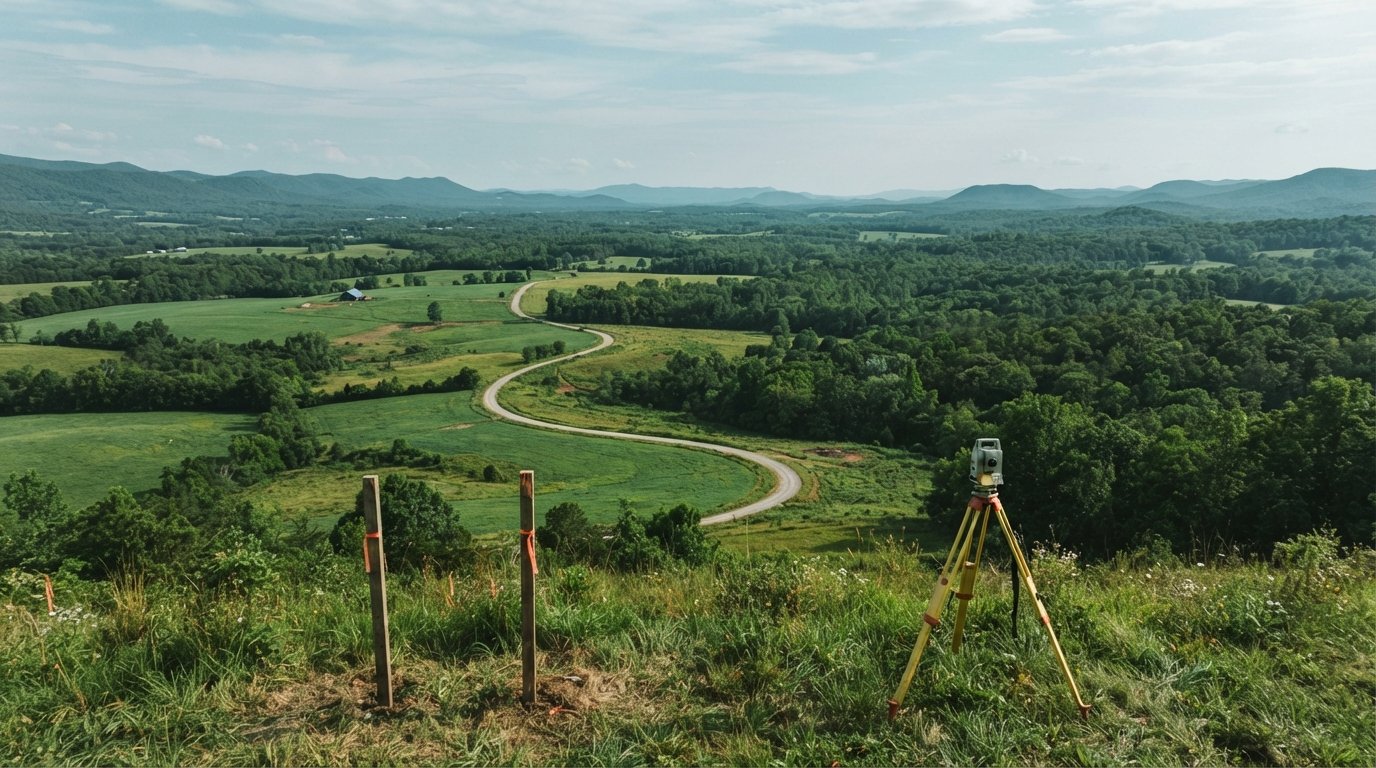
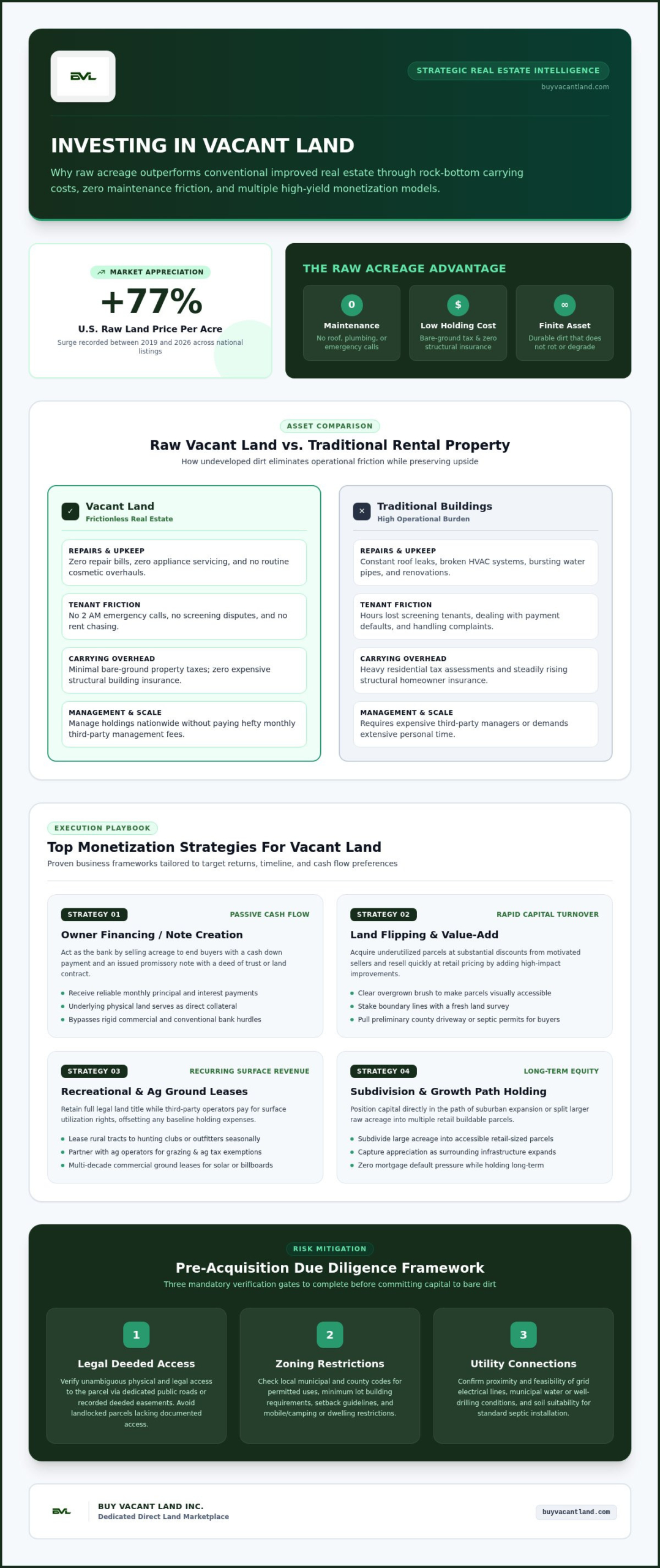
The most profitable real estate asset you can own has no roof, no leaky plumbing, and zero 2 AM emergency calls. If you’re exhausted by residential rental headaches or sidelined by rigid commercial bank mortgages, you’re not alone. Investing in vacant land cuts straight through that traditional friction. According to national real estate listing data, the average price per acre of raw U.S. land climbed roughly 77% between 2019 and 2026. That sharp growth proves quiet dirt can outpace complex buildings without the constant maintenance drain.
You don’t need a massive balance sheet, a general contractor, or conventional bank approval to build lasting wealth here. In this complete guide, you’ll discover how to secure high-potential parcels with rock-bottom holding costs, turn empty acreage into passive monthly cash flow through seller financing, and capitalize on long-term appreciation. We’ll also give you a clear, repeatable due diligence framework to confidently vet legal access, zoning codes, and utility lines before you spend a single dollar.
Key Takeaways
- Learn how investing in vacant land eliminates tenant disputes, physical maintenance, and structural repairs while keeping your ongoing carrying costs near zero.
- Discover high-return monetization strategies, from rapid parcel flipping and long-term appreciation to generating reliable cash flow through seller financing.
- Master a step-by-step due diligence framework to verify deeded legal access, zoning restrictions, and utility connection feasibility before making an offer.
- Bypass rigid commercial bank lending requirements by leveraging cash terms and direct owner financing to secure prime acreage.
- Source high-potential parcels faster by bypassing residential real estate clutter and focusing exclusively on dedicated vacant land marketplaces.
Why Investing in Vacant Land Outperforms Traditional Real Estate
Raw land investment is the direct acquisition of undeveloped property to build equity, generate recurring cash flow, or secure profitable resale without structural improvements. While conventional rentals demand massive capital reserves for down payments, inspection fees, and renovations, raw acreage offers a straightforward entry point. You can acquire high-potential lots for a fraction of the cash required for single-family homes. Dirt does not rot, wear down, or depreciate physically. It is a durable, finite asset that stands strong against inflation. For buyers seeking reliable financial growth without active operational burdens, investing in vacant land delivers unmatched structural advantages.
The Freedom of Zero Property Maintenance
Owning physical buildings brings constant operational friction. Roofs leak, heating systems break, and water pipes burst unexpectedly. Residential landlords spend valuable hours screening tenants, chasing down rent payments, and managing expensive contractor repairs.
Empty acreage strips away this operational drag entirely:
- Eliminate repair bills, appliance servicing, and routine cosmetic overhauls.
- Eliminate late-night emergency calls from dissatisfied tenants.
- Manage long-distance holdings across the nation without hiring third-party property managers who charge hefty monthly fees.
You maintain full ownership of physical real estate without sacrificing your personal schedule or peace of mind.
Low Ongoing Carrying Costs and Overhead
Ongoing carrying costs determine your staying power during changing economic climates. Improved properties come with heavy property tax burdens and expensive homeowner insurance premiums that climb each year. Raw land operates on a much leaner cost structure.
Baseline property taxes on undeveloped acreage remain exceptionally low because local assessors base valuations strictly on bare ground. Without a home or commercial building on the lot, you never have to purchase expensive structural property insurance policies.
This minimal overhead lets you hold assets debt-free or with negligible yearly expenses:
- Protect your balance sheet from sudden capital calls or surprise repair bills.
- Wait out market corrections patiently without mortgage default pressures.
- Preserve your cash reserves instead of bleeding funds on continuous property upkeep.
Investing in vacant land means your assets work for you on your terms, allowing you to maximize profits on your chosen timeline.
Top 5 Vacant Land Investment Strategies for Consistent Returns
Successful real estate investors don’t rely on luck. They use clear monetization frameworks tailored to specific property profiles. When you approach investing in vacant land with a defined business model, you eliminate guesswork and generate predictable cash flow. You can target long-term appreciation in the direct path of suburban expansion, subdivide larger acreage into buildable retail parcels, flip wholesale contracts, create owner-financed notes, or negotiate recurring ground leases. Each model offers distinct holding periods and capital requirements.
Creating Passive Income Through Owner Financing
Owner financing transforms you from a traditional landlord into the bank. You sell a parcel to an end buyer, collect a cash down payment, and issue a promissory note alongside a deed of trust or land contract. The buyer sends you monthly principal and interest payments for a set number of years.
This structure delivers three immediate benefits:
- Secure regular passive cash flow without maintaining roofs, electrical systems, or plumbing.
- Protect your capital because the underlying physical land serves as direct collateral.
- Accelerate buyer acquisition since purchasing owner financed land bypasses conventional bank hurdles.
Land Flipping and Value-Add Opportunities
Land flipping focuses on rapid capital turnover. You locate motivated sellers with underutilized parcels, purchase at a substantial discount, and resell quickly to retail buyers. Adding simple improvements creates outsized equity fast.
Simple value-add tasks include clearing overgrown brush, staking boundary lines with a fresh survey, and pulling preliminary county driveway or septic permits. Retail buyers pay a premium for shovel-ready building sites that save them administrative headaches. If you want to accelerate your deal flow, you can source vacant land opportunities directly from sellers eager to liquidate.
Recreational and Agricultural Ground Leases
Ground leases generate steady income while your acreage matures in value. You retain full legal ownership of the dirt while external operators pay you for surface use rights:
- Lease rural recreational tracts to hunting clubs or outdoor outfitters for seasonal cash payments.
- Partner with local agricultural operators for grazing or row-crop production, which often secures valuable agricultural property tax exemptions.
- Establish multi-decade commercial ground leases for solar installations, communication towers, or billboard easements along high-traffic transit corridors.
These commercial arrangements cover any baseline holding expenses while you wait for surrounding infrastructure to drive land values higher.
Essential Due Diligence Checklist Before Buying Vacant Land
A parcel that looks pristine on paper can become a costly headache without systematic due diligence. Investing in vacant land requires verifying physical access, county regulations, and title records before you transfer funds. Always run a comprehensive title search through an established title agency or real estate attorney. This simple verification step flags delinquent property taxes, unrecorded judgment liens, and conflicting ownership claims before you commit your capital.
Confirming Legal Access and Boundary Lines
Never buy landlocked property. Physical dirt has little value if you don’t hold the legal right to drive onto it:
- Public Road Frontage: The property borders a government-maintained road. This offers direct ingress, egress, and straightforward building approval.
- Deeded Easements: The parcel relies on a path crossing an adjoining owner’s property. Verify that this easement is officially recorded on the deed rather than relying on a verbal agreement.
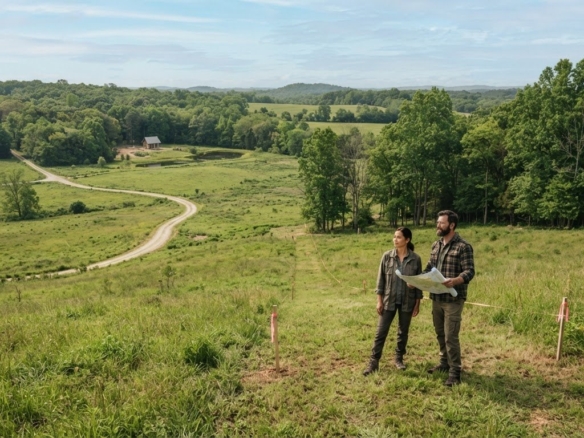
- Boundary Surveys: Order a recent professional boundary survey to locate exact corner pins and identify neighbor fence encroachments early.
Zoning Restrictions and Building Feasibility
Local planning departments dictate exactly how you can use a parcel. Call county officials directly to review permitted uses, minimum dwelling square footage limits, and rules regarding temporary structures, tiny homes, or mobile homes. Check for restrictive covenants or homeowner association (HOA) rules that limit off-grid setups or impose strict architectural standards. To master these zoning checkpoints, read our practical guide on how do you buy land cleanly.
Utilities, Environmental Factors, and Soil Quality
Bringing infrastructure to raw acreage requires practical budgeting and physical verification:
- Grid Electric: Check the distance to the nearest existing power pole. Extending transmission lines over long distances requires serious upfront capital.
- Soil Perc Testing: Rural acreage usually requires private septic systems. Ensure the soil passes a standard percolation test before buying, or you won’t be able to pull a residential building permit.
- Flood and Wetland Hazards: Review official federal flood maps to confirm the property sits outside high-risk flood zones and designated wetland areas.
How to Finance and Acquire Vacant Land Investments
Securing capital for raw acreage requires a different playbook than financing a single-family home. Commercial banks view bare earth as speculative collateral. They routinely demand 30% to 50% down payments, impose strict liquidity requirements, and charge higher interest rates. When investing in vacant land, disciplined buyers bypass traditional bank hurdles entirely. They deploy cash, negotiate creative financing terms, and use alternative capital vehicles to close transactions quickly.
Navigating Bank Loans vs. Cash Purchases
Conventional mortgage desks often decline raw property loans because bare acreage doesn’t fit standard secondary market formulas. If you must use traditional debt, turn to local credit unions or farm credit associations. These regional institutions understand agricultural and rural land values, making them far more willing to write loans on undeveloped lots.
Cash purchases remain the sharpest tool in your arsenal. An all-cash offer compresses the closing timeline from two months down to several days. Motivated sellers accept significant wholesale discounts when you remove loan processing delays, property appraisals, and financing contingencies. Targeting affordable opportunities through cheap land for sale lets you buy outright with your existing cash reserves, eliminating debt service expenses entirely.
Unlocking Deals with Seller and Alternative Financing
Owner financing removes institutional gatekeepers from the equation. You negotiate terms directly with the seller instead of submitting endless tax returns to a bank underwriter. Most seller-financed contracts require modest down payments averaging 10% to 25%, allowing you to preserve working capital while locking in predictable monthly terms without balloon payment traps.
You can also access alternative funding sources to accelerate your acquisitions:
- Draw against personal lines of credit or established home equity lines to submit cash-equivalent offers.
- Deploy a self-directed individual retirement account (SDIRA) to acquire parcels, allowing profits to compound inside a tax-sheltered vehicle.
- Execute Section 1031 like-kind exchanges to roll proceeds from previous property sales into replacement acreage within strict federal timelines.
Ready to deploy your capital? Browse available vacant land listings right now to evaluate owner-financed parcels and secure high-yield property directly from sellers.
Sourcing Profitable Vacant Land Deals on Dedicated Marketplaces
Finding lucrative parcels starts with looking in the right places. Most mainstream real estate platforms focus entirely on residential houses, burying undeveloped acreage under thousands of suburban home listings. Standard Multiple Listing Services push raw dirt to the margins because traditional agents prioritize high commission checks on existing dwellings. Investors who succeed at investing in vacant land don’t waste time scrolling through residential housing feeds. They turn directly to specialized land marketplaces that aggregate rural tracts, residential lots, commercial parcels, and hunting acreage across the United States. Connecting straight to owners and specialized land sellers cuts out expensive intermediary fees and accelerates your acquisition speed.
Why Dedicated Land Marketplaces Deliver Better Deals
Dedicated platforms strip away residential distractions. Instead of fighting clunky search filters designed for bedroom counts and garage sizes, you evaluate acreage using metrics that actually drive land value:
- Filter inventory instantly by parcel type, whether you’re seeking off grid land, farms and ranches, or commercial vacant lots.
- Isolate properties offering direct seller financing to acquire assets without commercial bank underwriting friction.
- Review parcel data, road frontage specifications, and acreage dimensions without sifting through irrelevant home disclosures.
Navigating these platforms efficiently allows you to deploy capital across high-growth national corridors. Consult our comprehensive guide to lands of america to sharpen your nationwide property search tactics.
Taking Action: Finding Your Next Investment Parcel
Execution separates successful investors from spectators. Follow a straightforward, three-step routine to secure your next acquisition:
- Establish your criteria: Define your capital allocation, desired holding timeline, and exit strategy before browsing listings.
- Analyze the data: Examine GIS parcel maps, verify legal access, and cross-reference county zoning codes directly from the listing details.
- Submit direct offers: Contact sellers directly to negotiate terms, verify property details, and move straight toward closing.
Ready to build your portfolio? Explore current national listings on BuyVacantLand.com today to secure high-yield acreage without costly broker markups or transactional red tape.
Start Building Your Land Wealth
Real estate wealth doesn’t require midnight tenant emergencies, contractor markups, or unpredictable repair budgets. By investing in vacant land, you eliminate the operational stress of traditional rentals while acquiring tangible, finite assets with exceptionally low carrying costs. Whether you generate immediate cash by flipping discounted acreage, create steady monthly income through seller financing, or hold strategic parcels in growing corridors, you control the investment on your terms.
Success starts with focused deal sourcing. Don’t waste valuable hours digging through residential housing websites that bury undeveloped property under suburban home listings. When you’re ready to deploy your capital efficiently, find your next high-yield investment property on BuyVacantLand.com. As a specialized nationwide marketplace dedicated exclusively to empty parcels, the platform gives you direct access to motivated sellers, discounted acreage, and flexible owner-financed inventory with zero residential distractions. Take the first step and secure your parcel today.
Frequently Asked Questions
Is investing in vacant land a good strategy for beginners?
Yes, investing in vacant land is one of the most accessible strategies for beginner real estate investors. Entry prices are substantially lower than single-family homes, and you don’t face the operational complexity of managing tenants, building inspections, or unexpected plumbing failures. Beginners can purchase affordable rural parcels or residential infill lots outright, build equity steadily, and learn basic title and zoning due diligence without risking enormous amounts of upfront capital.
How does an investor generate cash flow from undeveloped raw land?
Investors generate steady cash flow primarily through owner financing, ground leasing, and resource rights. Selling a parcel on an owner-financed contract lets you collect an immediate down payment followed by regular monthly principal and interest payments. Alternatively, you can lease rural acreage to agricultural producers for cattle grazing, license hunting rights to sportsmen, or establish long-term ground leases for commercial storage and utility infrastructure.
What are the main risks associated with buying vacant parcels?
The primary risks include purchasing landlocked property, discovering unrecorded environmental hazards, and encountering zoning restrictions that prohibit your intended development. Without deeded physical access, a parcel cannot be legally reached or developed, ruining resale value. Unfavorable soil percolation results can also prevent septic installations, leaving acreage unbuildable. You can eliminate these risks by running complete title searches, verifying county ordinances, and inspecting flood maps beforehand.
How much are property taxes typically on raw, unimproved land?
Property taxes on raw, unimproved land are generally low, often amounting to just a fraction of the taxes assessed on residential buildings. Because county tax assessors calculate liability based strictly on bare dirt without structural valuations, annual tax bills remain minimal. Rural tracts enrolled in agricultural, timber, or wildlife management programs often receive additional assessment discounts, keeping ongoing holding costs low during extended market cycles.
Can I buy investment land using owner financing instead of a bank?
Yes, you can acquire investment acreage directly from sellers using owner financing without dealing with commercial bank underwriting. When investing in vacant land, seller financing is a widespread acquisition method across the country. Sellers agree to accept a down payment followed by scheduled monthly installments under a promissory note. This arrangement lets you bypass conventional mortgage requirements, lengthy credit approvals, and rigid lending guidelines entirely.
What is the difference between raw land and an improved vacant lot?
Raw land is completely undeveloped ground lacking utilities, road infrastructure, or grading, while an improved lot has critical utilities already installed. Improved parcels typically feature paved street frontage, municipal water or sewer connections, and electric service stubs at the property line. Because improved lots require less site preparation before construction, they command higher prices. Raw acreage requires lower initial capital, giving investors wider margins to add value.
What happens if a vacant parcel does not have recorded legal road access?
A parcel without recorded legal road access is considered landlocked, meaning you cannot legally cross neighboring private property to enter your land. Landlocked parcels cannot qualify for standard residential building permits, are ineligible for conventional title insurance, and prove difficult to resell. Correcting this issue requires negotiating an express deeded easement with adjacent landowners or obtaining a legal easement by necessity through court action.



Join The Discussion