

Buying the wrong plot of land isn’t just a setback. It’s a financial trap that can cost you over $30,000 in infrastructure before you even break ground. You want the freedom of self-sufficiency, but the fear of unbuildable soil or restrictive zoning is a heavy burden. It’s a valid concern. With the average value of U.S. farmland hitting $4,350 per acre in 2025, the stakes for your investment have never been higher. This raw land to homestead checklist eliminates the guesswork and cuts through the procedural hurdles.
You deserve a straightforward path to property ownership without the stress of hidden money pits. We promise to give you the exact verification steps needed to evaluate water rights, soil quality, and utility access with professional precision. We will walk you through a simplified, numbered sequence to verify every legal and physical limit of a parcel. This includes assessing the $5,000 to $18,000 cost of a well system and the $3,000 to $8,000 cost of a septic system before you sign a contract. By the end of this guide, you’ll have the confidence to secure your land and start building your future immediately.
Key Takeaways
- Confirm zoning classifications and building codes to ensure your homestead vision is legally permissible on your chosen parcel.
- Execute a non-negotiable “Perc Test” and evaluate private well options to avoid thousands in unexpected infrastructure costs.
- Master the raw land to homestead checklist to distinguish between a productive asset and an environmental money pit.
- Analyze topography and soil stability to secure a site that supports both structural integrity and agricultural viability.
- Streamline your search using specialized marketplaces for undeveloped parcels and owner-financed opportunities to simplify the acquisition process.
Why Every Homesteader Needs a Raw Land Checklist
Raw land is the ultimate blank slate. It is undeveloped property without existing utilities, structures, or paved access. In 2026, the demand for self-sufficiency is higher than ever. More people are seeking independence from urban systems. This shift makes a raw land to homestead checklist your most valuable tool. You are not just purchasing a plot of dirt. You are investing in an ecosystem that must support your survival. In this competitive market, land prices are climbing and inventory is tight. You cannot afford to make a mistake. A single oversight in your due diligence can wipe out your savings and stall your project for years.
Standard residential buying focuses on finished assets. You inspect the roof, the furnace, and the foundation. Homesteading due diligence is fundamentally different. You must evaluate the raw potential of the earth itself. A property might look like a paradise on a sunny afternoon but hide severe physical or legal flaws. Many buyers discover too late that their “perfect” lot has soil that won’t drain or zoning that forbids small homes. These “unbuildable” lots are common. Wetlands, steep grades, and protected habitats can all render a lot useless for building. You must identify these hurdles before the closing date. They become permanent financial burdens rather than productive assets.
The Cost of Skipping Due Diligence
Moving too fast leads to expensive traps. Utility hookup fees are a primary concern. If the nearest power line is a half-mile away, the cost to bring it to your site can exceed the price of the land itself. Restrictive covenants are another dream-killer. Some rural areas have hidden rules that ban chickens, solar panels, or even composting toilets. Due diligence is the disciplined process of verifying every seller claim and legal restriction before you sign a contract. It replaces hope with hard data. It ensures your investment is secure and your land is actually functional.
Setting Your Homesteading Goals First
Your verification process must align with your specific needs. Define your scale before you start your search. Are you looking for a quiet spot for a small garden, or do you plan to raise large livestock? modern homesteading practices vary wildly in their land requirements. A property that works for a greenhouse might fail for a cattle ranch. This clarity helps you understand how do you buy land that serves your long-term vision. Identify your must-haves, such as south-facing slopes or existing timber. Establishing these goals ensures you don’t waste time on parcels that cannot fulfill your purpose. You need a site that matches your ambition, not a compromise that limits your growth.
Legal and Zoning Restrictions: Can You Actually Live Here?
Zoning is the invisible wall that can stop your project before it begins. It is the first critical item on your raw land to homestead checklist. Do not assume a rural address guarantees total freedom. Local governments use zoning classifications to dictate how you use your property. Agricultural zoning typically allows for farming and livestock. Residential zoning often restricts these activities. Unrestricted land offers the most flexibility for off-grid living. You must verify these classifications at the county planning office. Never rely on a seller’s verbal assurance. Get the facts in writing.
Building codes are equally restrictive. Many jurisdictions enforce minimum square footage requirements for primary dwellings. This can kill your plan for a tiny home or a simple cabin. While Accessory Dwelling Units (ADUs) are legal in all 50 states as of 2026, local regulations on their size and utility connections vary significantly. Some areas demand a connection to the public grid even if you want to go solar. Review the CC&Rs (Covenants, Conditions, and Restrictions) tied to the deed. These private rules can ban specific livestock, solar arrays, or alternative building materials. Failing to verify these details is the most common mistake on a raw land to homestead checklist. Use a farmland assessment checklist to cross-reference legal requirements with the physical capabilities of the site.
Zoning for Livestock and Structures
Look for “Right to Farm” laws in your specific county. These laws protect you from nuisance lawsuits related to agricultural odors or noise. Verify if you can build essential structures like greenhouses, barns, or solar arrays without expensive permits. Some zones allow these as accessory structures but only after a primary residence is built. Check for restrictions on specific animals. Many areas allow hens but strictly ban roosters. Large livestock like cows or horses often require a minimum acreage per animal. Confirm these numbers to ensure your land can support your herd. If you need a parcel that already fits these criteria, you can browse available off-grid land listings to save time.
Access and Easements
Legal access is not the same as physical access. A landlocked parcel has no direct connection to a public road. You must have deeded access to ensure you can legally enter and exit your property. Identify any utility easements that cross the land. These are strips of land where you cannot build permanent structures. A professional land survey is non-negotiable. It confirms your boundaries and identifies any encroachments from neighbors. This survey protects your investment and prevents future legal battles over fence lines or driveways. Secure your boundaries early to avoid costly disputes later.
Infrastructure and Utilities: The Cost of Going Off-Grid
Infrastructure is the backbone of your survival. It represents your largest post-purchase expense. You must verify these costs before you close on a parcel. Adding infrastructure to a raw land to homestead checklist prevents financial ruin. Municipal hookups are rare for undeveloped land. You will likely need to build your own systems from scratch. In 2026, a complete residential well system costs between $5,000 and $18,000. Drilling rates currently range from $25 to $65 per foot. These numbers can double if you hit bedrock or need a deep well. Get estimates from local drillers before you commit to the purchase.
Power and connectivity are your next priorities. Assess your energy needs early. A grid-tie connection offers reliability but carries high installation fees for remote lots. Solar is the 2026 standard for off-grid living. A typical 8-kilowatt solar system costs between $18,400 and $28,800 before tax credits. Don’t overlook communication. Test cell signal strength on-site with multiple carriers. Confirm high-speed satellite internet availability to maintain your remote income. A beautiful view is worthless if you cannot power your tools or connect to the world.
Water Rights and Availability
Check your water rights immediately. Owning the surface land doesn’t always mean you own the water beneath it. Some states have strict “prior appropriation” laws that limit your usage. Research local well depths and average flow rates in the area. Ask neighbors about their experiences with seasonal dry spells. Rainwater harvesting is an excellent secondary option. However, some jurisdictions have regulations that make it challenging. Verify these laws at the state level to ensure your water supply is secure and legal.
Waste Management and the Perc Test
You cannot build a permanent home without a waste plan. The percolation (perc) test is non-negotiable. It measures how fast the soil absorbs water. If the land fails this test, you cannot install a standard septic system. In 2026, a conventional septic system costs between $3,000 and $8,000. If your soil is poor, you may need an aerobic treatment unit costing up to $20,000. Some counties prohibit building entirely if a standard septic fails. Consider composting toilets as a backup, but always verify they meet local building codes first. This step is a critical part of your raw land to homestead checklist to avoid buying a “money pit” parcel.
Land Quality and Agricultural Viability
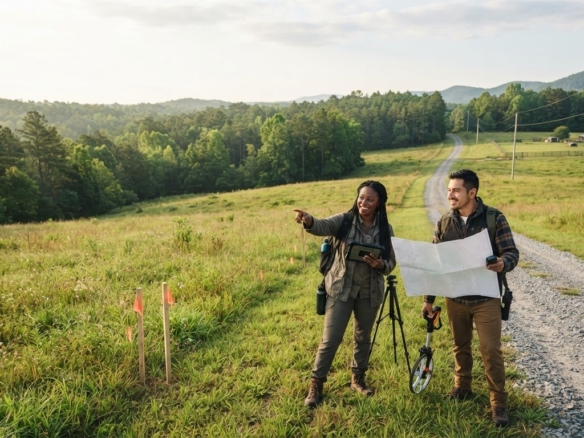
The physical health of your land determines your daily workload and long-term success. A beautiful view cannot compensate for poor soil or a flood-prone building site. You must analyze the topography before you commit. Flat land is ideal for building foundations and large gardens. Sloped land provides natural drainage but can lead to erosion and higher construction costs. Use your raw land to homestead checklist to identify seasonal wetlands or flood zones. These areas are often unbuildable and can carry heavy environmental restrictions. Observe the property during a heavy rain event if possible. You need to see where the water sits before you plan your home site.
Sun exposure is a non-negotiable factor for modern homesteaders. You need a clear path for solar energy and garden growth. Calculate the hours of direct sunlight the property receives, especially during winter months. A site shaded by a mountain or dense forest will limit your power production and crop yields. This data is essential for positioning your solar arrays and greenhouse. If you are looking for parcels with diverse terrain or specific sun exposure, you can find cheap land for sale that fits your budget and your goals.
Soil Health and Foundation Stability
Don’t guess about what’s under your feet. Professional soil testing is a mandatory step in your raw land to homestead checklist. Test for pH levels and nutrient density to ensure your garden will thrive. You must also screen for heavy metals, especially if the land has an industrial history. Historical land use can reveal hidden contaminants from former factories or intensive commercial farming. Beyond agriculture, soil composition affects your building budget. Expansive clay requires specialized foundations that can add thousands to your costs. Sandy soil might be easy to dig but offers poor stability for heavy structures. Get a geotechnical report to confirm the ground can support your vision.
Topography and Microclimates
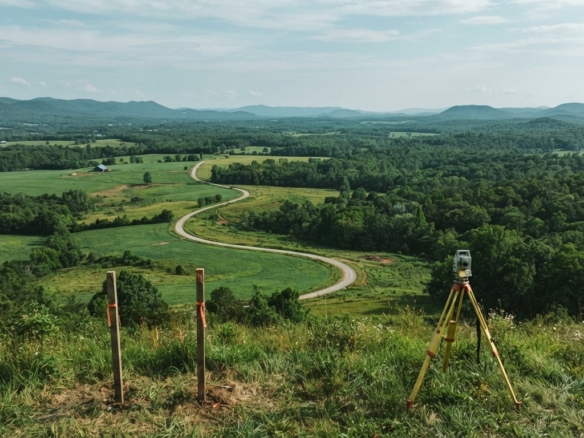
Identify the microclimates on your property. Look for natural windbreaks like tree lines or ridges that protect your home from harsh weather. Avoid frost pockets in low-lying areas that can kill your crops early in the season. You must define your “building envelope.” This is the specific area where topography, soil, and setbacks allow for construction. A 40-acre parcel might only have two acres of truly buildable ground. Assess these features early to ensure you aren’t paying for land you can’t use. If you are ready to start your search for the perfect site, browse our current farms and ranches for sale to find high-quality agricultural land today.
Finding and Securing Your Homestead Land
Finding the right parcel requires a strategic search. You have your raw land to homestead checklist ready. Now you need a marketplace that specializes in undeveloped property. Standard real estate sites focus on houses. They often miss the nuances of vacant lots. Focus your search on platforms that list off-grid land and residential lots directly. Negotiating for raw land offers more flexibility than residential deals. You are often dealing with individual owners rather than corporate entities. This creates room for creative terms and direct seller proposals. You can often negotiate lower down payments or longer closing periods to finalize your infrastructure plans.
Financing Raw Land
Traditional banks often avoid raw land loans. They see undeveloped property as a high-risk asset without immediate collateral. This barrier shouldn’t stop your project. Many homesteaders turn to owner financed land to bypass bank-free hurdles. Seller financing allows for lower down payments and flexible terms. It’s a pragmatic solution for those with lower capital. Always keep a reserve fund. Your purchase price is only the beginning. You need liquid cash for the infrastructure costs discussed earlier. This includes drilling your well or installing solar arrays. A healthy reserve fund ensures you don’t stall out after the purchase.
Using BuyVacantLand.com to Start Your Journey
Our marketplace connects you directly with land sellers nationwide. You can find everything from small residential lots to massive off-grid acreage. Use our specific filters to find “unrestricted” land that fits your raw land to homestead checklist. This saves you hours of manual research. You can view property details, topography, and owner terms in one streamlined interface. We cut through traditional procedural hurdles to get you on your land faster. Our platform is built for efficiency and transparency. It’s the most direct route to finding land that meets your specific agricultural and residential needs. Browse our national land listings to find your homestead today.
Start Your Homesteading Journey with Confidence
Success on raw land requires more than just a vision. It demands a disciplined approach to verification. You now have the raw land to homestead checklist to navigate 2026 zoning laws and infrastructure expenses with total precision. A failed perc test or a missing water right can end your project instantly. Verify soil stability and calculate your solar potential before you commit your capital. This diligence transforms a risky purchase into a secure, productive asset. You are now equipped to avoid the common money pits that trap unprepared buyers.
Stop wasting time on generic real estate sites that prioritize houses over land. Our marketplace provides a national reach across all 50 states with a platform exclusively focused on vacant land listings. We facilitate a direct connection between buyers and land owners to cut through traditional procedural hurdles. This streamlined approach saves you time and reduces transactional stress. Find your perfect homesteading lot on BuyVacantLand.com. Secure your property today and build the self-sufficient life you deserve with absolute certainty.
Frequently Asked Questions
What is the first thing I should check when buying raw land for a homestead?
Zoning is the first priority for any buyer. It dictates if your homestead vision is legally permissible. Visit the county planning office to check classifications like Agricultural or Residential. This step must be at the top of your raw land to homestead checklist. Verify if the land allows for the specific livestock or structures you plan to build. Don’t rely on the seller’s verbal description because zoning laws can change frequently.
Can I live in an RV on raw land while I build my homestead?
RV living depends entirely on local zoning and health codes. Many counties prohibit long-term RV residency on vacant land without a primary structure or a permitted septic system. Some areas allow it for a limited time if you have an active building permit. Check for “temporary occupancy” rules at the local building department. Ignoring these regulations can lead to expensive fines or immediate eviction from your own property.
How much does a perc test usually cost in 2026?
A perc test fee typically ranges from several hundred to over a thousand dollars depending on soil complexity. This cost covers the site visit and the official report required for septic permits. It is a necessary expense compared to the $3,000 to $8,000 cost of a conventional septic system. Failing this test can make the land unbuildable for a permanent residence. Always hire a licensed professional to ensure the results are legally valid.
What is the difference between raw land and unimproved land?
Raw land is completely undeveloped property with no utilities, structures, or paved access. Unimproved land may have some basic features like a rough road or be part of a recorded subdivision, but it still lacks active utility connections. Both require significant investment to become habitable. Use your raw land to homestead checklist to identify exactly which infrastructure components are missing before you commit to a purchase.
Do I need a lawyer to buy raw land directly from a seller?
You should use a title company or real estate attorney for any land purchase. While not always legally required for direct seller deals, they provide essential protection. They verify the deed is clean and ensure there are no hidden liens or encumbrances on the property. This step guarantees a secure transaction and prevents future legal disputes over ownership. It is a small price to pay for long-term peace of mind.
How do I find out if a piece of land has water rights?
Water rights are verified through the property deed and the state department of water resources. Just because a stream or aquifer exists on the property doesn’t mean you have the legal right to use it. Search for “adjudicated water rights” in the public record. This search confirms your legal access to water for domestic or agricultural use. Verify these rights during your due diligence period to avoid buying a dry parcel.
Is it cheaper to buy raw land or a lot with existing utilities?
Raw land is cheaper to purchase but often more expensive to develop. Bringing in power, drilling a well, and installing septic can easily exceed $30,000 in total costs. A lot with existing utilities has a higher upfront price but offers immediate buildability and predictable expenses. Evaluate your total budget rather than just the initial land price. Factor in the time and labor required to manage a raw land project.
What does “unrestricted land” actually mean for a homesteader?
Unrestricted land usually means the property is free from private CC&Rs or HOA rules. You have more freedom to choose building materials and livestock. However, you are still subject to state health codes and county building regulations. No land is truly “unrestricted” in a legal sense because you must still meet safety and environmental standards. Always check with the county to see which codes still apply to your land.


Join The Discussion