
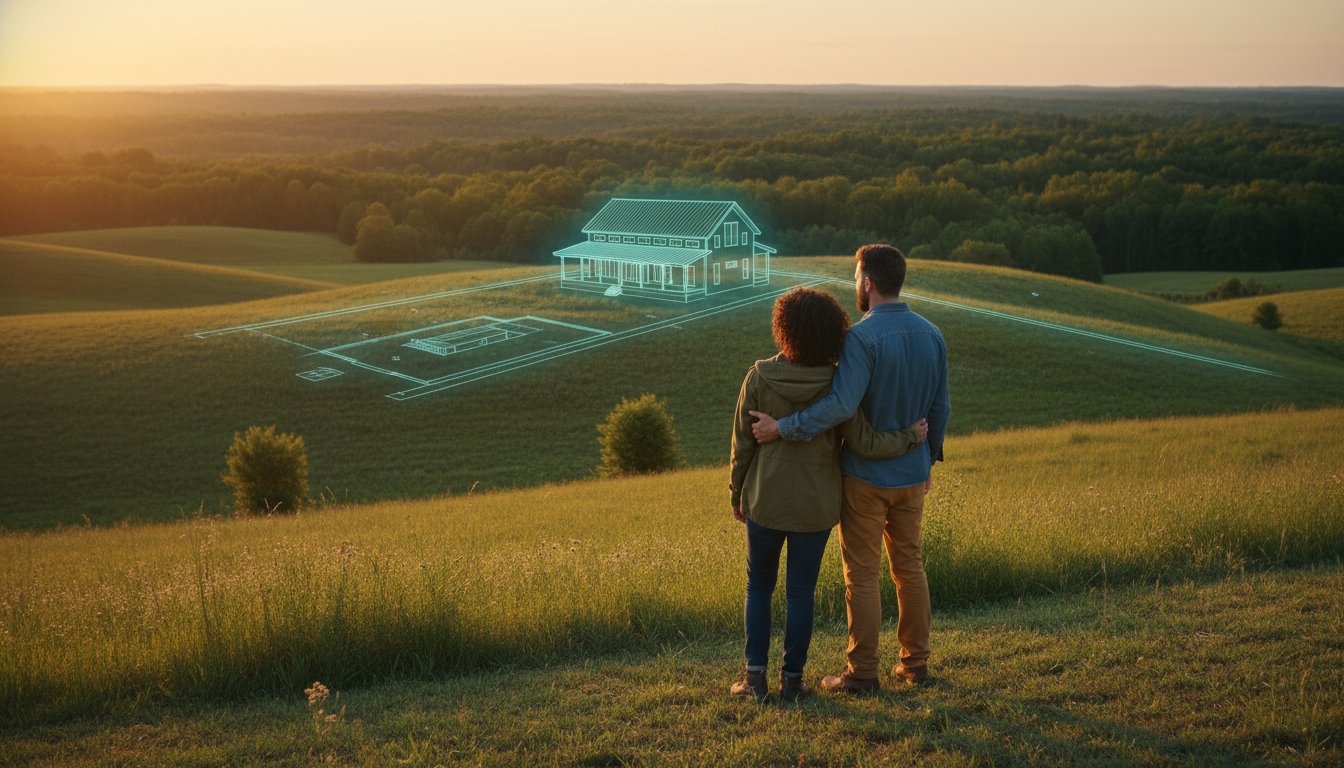
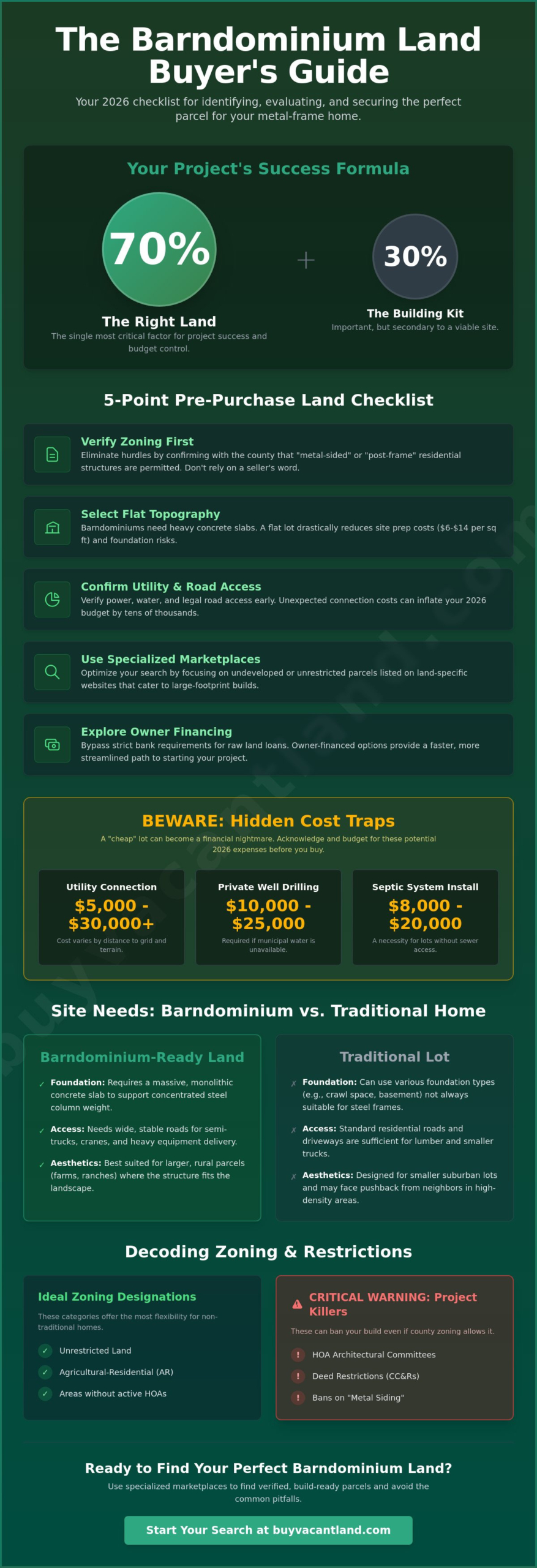
Your barndominium project’s success depends 70% on the land you choose and only 30% on the kit you buy. It’s a hard truth that many buyers learn too late while searching for lots for building a barndominium. You might find a beautiful acre only to discover local zoning laws ban metal-frame residences entirely. Or, you could face $30,000 in unexpected utility connection costs because the lot was too far from the grid. These burdens turn a dream home into a financial trap.
You need certainty before you sign a contract. This 2026 guide provides a clear path to identify and secure land that actually works for steel construction. We will show you how to verify zoning, evaluate soil for heavy foundations, and estimate site prep costs like the $14 per square foot slab average. Follow this sequence to move from a vacant lot to a finished build with total confidence. Learn how to identify, evaluate, and secure the perfect parcel of land for your metal-frame dream home today.
Key Takeaways
- Eliminate zoning hurdles by verifying “metal-sided” residential status before you commit to a purchase.
- Reduce foundation expenses by selecting flat topography. These parcels support the heavy concrete slabs necessary for steel-frame structures.
- Optimize your search for lots for building a barndominium with specialized land marketplaces. Focus on undeveloped parcels that allow for large-footprint builds.
- Verify utility availability and legal road access early. This prevents unexpected costs from inflating your 2026 construction budget.
- Explore owner-financed land options to bypass strict bank requirements. This provides a faster, more streamlined path to starting your project.
What Makes a Lot Suitable for a Barndominium?
A barndominium is a steel-framed or post-frame residential structure. It’s more than a trend; it’s a structural choice that demands specific land conditions. People often ask, What is a barndominium? At its core, it combines the durability of an industrial building with the comfort of a modern home. You can’t just drop a massive steel frame on any piece of dirt. Not every vacant lot can support these large-footprint buildings. You need specific land characteristics to avoid a financial disaster during the build process.
Finding the right lots for building a barndominium requires a shift in mindset. Traditional residential lots in strictly zoned suburbs often ban metal siding or post-frame construction. You’re looking for a specialized niche. This usually means targeting undeveloped vacant land or unrestricted parcels where the building code accommodates non-traditional materials. Identifying the difference between a standard suburban plot and a barndo-ready parcel is your first step toward a successful project.
The Rise of Metal-Frame Living in 2026
Metal homes dominate the 2026 market for three reasons: durability, cost, and speed. These structures withstand harsh weather better than wood. Owners save significantly on long-term maintenance and insurance. The open-concept design is a major draw. Because the steel frame carries the weight, you don’t need interior load-bearing walls. This allows for massive, customizable floor plans that traditional framing can’t easily match. Construction is fast. While a standard home takes months to frame, a barndominium shell can go up in a fraction of that time.
Barndominium vs. Traditional Home Sites
The primary difference lies in the foundation. Barndominiums usually require a massive, continuous concrete slab. This slab must handle the concentrated weight of steel columns. In 2026, concrete slab costs range from $6 to $14 per square foot. If your lot isn’t flat, your site prep costs will skyrocket. You’ll spend thousands more on grading and fill dirt just to get a level surface for the pour.
Access is another critical factor. You aren’t just bringing in a few pickup trucks of lumber. You’re bringing in semi-trucks loaded with heavy metal components and cranes for assembly. Your lot needs wide, stable access roads. A narrow, winding driveway meant for a small cottage won’t work. Finally, consider the aesthetic. A barn-style home looks best on larger parcels like farms and ranches. A 2,000 square foot barndominium on a tiny quarter-acre lot often looks out of place. It may also face pushback from neighbors in high-density areas.
Essential Land Criteria: Zoning, Restrictions, and Utilities
Zoning laws are the primary reason barndominium projects fail. You can’t rely on a seller’s word; you must verify the local building codes yourself. Many counties enforce minimum square footage requirements. If your kit is 1,200 square feet but the county requires 1,500, you’re stuck before you start. Always check for specific bans on metal-sided residences. These regulations are often buried in dense legal text, but finding them early saves you from a total loss on your investment.
Utility access is the second major hurdle for lots for building a barndominium. A low-cost lot becomes a liability if it’s miles from the nearest power line. Verified 2026 data shows utility connection costs range from $5,000 to $30,000 depending on distance and terrain. If municipal water is unavailable, expect to pay $10,000 to $25,000 for a private well. Septic systems add another $8,000 to $20,000 to your bill. You must calculate these burdens before you commit to a purchase.
Navigating Zoning Ordinances
Distinguish between “Residential” and “Agricultural-Residential” (AR) zoning. AR designations are typically more lenient regarding post-frame construction and metal siding. When you call the county planning department, ask specifically about “accessory dwellings” or “non-traditional residential structures.” If you want maximum freedom, search for land labeled as “Unrestricted.” This designation allows you to build without the typical aesthetic hurdles found in developed areas.
HOAs and Deed Restrictions
Homeowners Associations (HOAs) are often the enemy of the barndominium aesthetic. Their architectural committees frequently reject metal siding to maintain a traditional neighborhood look. Don’t just look at the zoning; read the property deed for Covenants, Conditions, and Restrictions (CC&Rs). These private agreements can ban metal buildings even if the county allows them. Finding cheap land for sale in rural areas without active HOAs is the most reliable way to avoid these project-killing rules.
Before you sign any papers, ensure you have a clear, legal path to the property. Landlocked parcels are common in rural markets and require expensive legal battles to resolve. You can find verified residential lots that already have road access and clear titles through specialized marketplaces. This eliminates the guesswork and keeps your project on schedule.
Evaluating Topography and Soil for Metal Structures
Steel-framed homes rely on a monolithic concrete slab to distribute massive weight. If the ground shifts, the slab cracks. If the slab cracks, your entire metal frame can twist. This engineering reality makes soil quality and land slope your two biggest technical hurdles. Evaluating lots for building a barndominium requires looking beneath the surface. You aren’t just buying a view; you’re buying a structural base. You need stability and superior drainage to protect your investment for the next fifty years.
Proper drainage is the only way to prevent slab failure. Water must flow away from the foundation at all times. If water pools against the concrete, it erodes the sub-base. This leads to “slab heave” or settling, which causes doors to jam and metal panels to buckle. You must confirm the lot has a natural slope for runoff or budget for professional grading. A flat lot is ideal, but it still requires a slight crown to shed water effectively.
Why Level Land Matters for Your Budget
Sloped lots are budget killers for steel construction. You will face “cut and fill” operations where heavy machinery moves dirt from high points to low points. This process is slow and expensive. Site preparation on difficult terrain often exceeds $20,000 before you even pour a yard of concrete. You should prioritize parcels that are already cleared and graded. This helps you avoid the $1,398 to $6,176 average cost of initial land clearing. Every degree of slope adds to your foundation bill. Stick to level ground to keep your 2026 build costs within the $6 to $14 per square foot range for the slab itself.
Soil Testing and Perk Tests
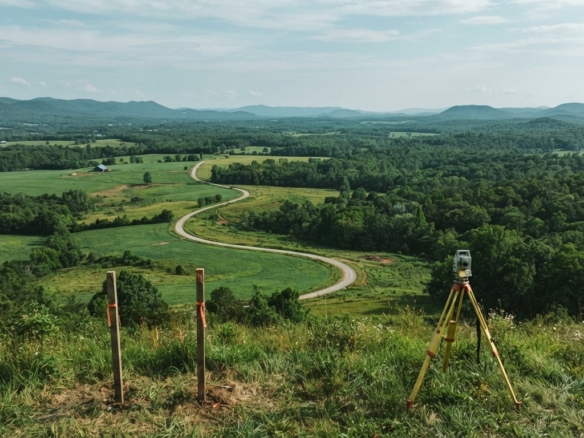
Expansive clay soil is a primary risk for heavy metal buildings. This type of soil grows when wet and shrinks when dry. This constant movement destroys concrete foundations over time. You need a professional soil test to confirm the ground can support the concentrated load of steel columns. Additionally, you must perform a “perk test” if the lot lacks city sewer access. This test determines if the soil absorbs water fast enough for a septic system. Without a passing perk test, the county will not issue a building permit for a residence. Don’t close on a deal until you have these results in hand. A professional survey is also mandatory to identify flood zones or hidden underground obstacles that could halt your construction.
How to Verify a Lot Before You Buy: A Checklist
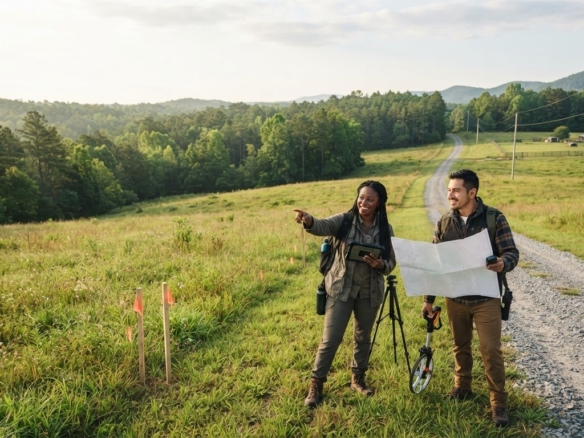
Verification is your final defense against a failed project. Many buyers rush into contracts for lots for building a barndominium only to discover hidden easements that block construction. You must verify every claim made by a seller or agent. Start with legal access. A property without a deeded easement or direct frontage on a public road is a legal nightmare. You can’t secure a construction loan without proven, permanent access. Next, order a formal land survey. This identifies property boundaries and any existing utility easements that could interfere with your building’s footprint.
Consult the 2026 beginner’s guide to buying land for a foundational due diligence checklist. These steps ensure you don’t miss standard checks like title insurance and back taxes. Once you have the basics, move to barndominium-specific verification. Confirm the lot explicitly allows “metal-sided” or “post-frame” residences. Don’t take a verbal “yes” from a neighbor. Get the confirmation in writing from the county records department to protect your investment.
Contacting the County Authorities
Call the Building Inspector directly. Ask if a barndominium requires a residential or commercial permit in their specific jurisdiction. Some counties classify steel buildings differently based on their primary frame. Verify the requirements for a “Certificate of Occupancy” for metal homes. You need this document to convert your construction loan into a permanent mortgage. If the county doesn’t recognize these structures as permanent dwellings, your financing will collapse at the end of the build.
Estimating Development Costs
Heavy construction equipment requires a stable driveway. Calculate the cost of a reinforced gravel or culvert entrance that won’t wash out under a crane’s weight. If city water isn’t at the road, estimate well-drilling costs based on local depth averages. Power is the final piece of the puzzle. Check the distance to the nearest electrical grid connection point. Many cooperatives charge by the foot to extend lines. These infrastructure costs can easily rival the price of the land itself.
Secure your build site today. Browse our verified undeveloped vacant land listings to find a lot that meets these strict criteria.
Finding and Buying Barndominium Lots Online
Stop searching for lots for building a barndominium on traditional home-focused websites. These platforms prioritize existing houses and rental properties. They rarely provide the granular data you need for raw land. You need a specialized marketplace that filters for “Residential” or “Unrestricted” vacant land parcels. This focus eliminates the noise of suburban developments where metal buildings are banned. Working directly with land owners and sellers allows you to bypass traditional procedural hurdles and negotiate better terms on undeveloped lots.
Specialized marketplaces offer access to owner financed land options. This is a critical advantage in 2026. Traditional construction loan rates for builders currently hover between 6.5% and 9.5%. Bank financing for raw land is notoriously difficult to secure. Owner financing simplifies the transaction. It removes the stress of strict credit checks and massive down payments. You get an equitable financial proposal directly from the seller. This speed allows you to secure high-demand parcels before competitors even finish their bank applications.
Using BuyVacantLand.com for Your Search
Our marketplace focuses exclusively on vacant land. We don’t list homes. This specialization ensures every listing is relevant to your search for lots for building a barndominium. You can browse a variety of land types, from off-grid acreage to residential lots ready for a slab. The platform connects you directly with the owner. This transparency cuts out the middleman and ensures a total absence of common transactional costs and service fees. It is a streamlined, no-nonsense path to land ownership.
Finalizing Your Purchase
The process is simple. Identify your specific burden, select a parcel that solves it, and move to completion. Buying land through our platform follows a clear, simplified sequence designed for speed. Use the savings from purchasing cheap land to fund your 2026 build. Remember that site preparation and utilities can add $30,000 to $100,000 to your total project cost. Secure your site immediately. High-demand barndominium locations sell fast. Take the multi-step path to ownership today and start your construction with total peace of mind.
Secure Your Barndominium Site Today
Building a barndominium requires more than just a vision. It requires a parcel that passes strict zoning and supports a heavy slab foundation. You now have the tools to verify soil stability and avoid the high costs of sloped topography. Success comes from identifying these technical requirements before you sign a contract. Finding the right lots for building a barndominium is the most critical step in your 2026 construction plan.
Skip the traditional real estate hurdles and go straight to the source. Find your perfect barndominium lot on BuyVacantLand.com today! Our platform offers exclusively vacant land listings and a direct connection to sellers. We ensure a transparent process with a total absence of hidden service fees. Your dream home starts with the right dirt. Take the first step toward your metal-frame future now.
Frequently Asked Questions
Can you build a barndominium on any piece of land?
No, you cannot build a metal-frame home on every parcel. Local zoning ordinances and private deed restrictions often dictate the types of materials allowed for residential use. Many suburban developments require traditional wood framing and brick or stone exteriors. You must confirm that the land is specifically zoned for post-frame construction or metal-sided residences before you commit to a purchase.
How much land do I need for a 2,000-square-foot barndominium?
You should aim for at least one acre when searching for lots for building a barndominium. While the structure itself occupies a small footprint, you need additional space for a massive concrete slab, a septic drain field, and proper drainage. Smaller parcels may struggle to meet the required setbacks between the heavy steel structure and the property lines.
Is it cheaper to buy land and build a barndominium than a house?
It is generally more cost-effective than traditional construction. Steel kits currently range from $30 to $50 per square foot for the shell and assembly. However, you must account for site preparation and utility costs which can quickly erase these savings. Total turnkey costs in 2026 vary by region, but the speed of construction usually reduces overall labor expenses.
What zoning allows barndominiums?
Agricultural-Residential (AR) and Unrestricted zones are the most suitable for these projects. These designations are more lenient regarding building materials and large-footprint structures. Always ask the county planning department if they issue residential permits for “post-frame” or “pole barn” homes to ensure your build is legal and eligible for a certificate of occupancy.
Can I get a construction loan for a barndominium lot?
Yes, specialized financing is available for these builds. As of May 2026, the one-time close construction loan rate is 6.625%. You will need a comprehensive build plan and a licensed contractor to satisfy bank requirements. Some traditional lenders may still hesitate, so focusing on rural-friendly banks or credit unions often yields faster results.
Do barndominiums need a special foundation?
Yes, they require a reinforced monolithic concrete slab. This foundation is designed to handle the concentrated weight of steel columns rather than the distributed weight of wood walls. Costs for these foundations in 2026 range from $6 to $14 per square foot. You must ensure the slab is professionally engineered to prevent cracking under the weight of the metal frame.
What is the best type of soil for a metal building?
Well-draining, sandy, or loamy soil provides the most stable base. You should avoid expansive clay which expands and contracts with moisture levels. Because steel frames are rigid, any significant soil movement can cause structural misalignment or slab failure. Conduct a professional soil test during your due diligence period to confirm the ground can support a heavy load.
How do I find out if a lot has deed restrictions against metal homes?
Review the Covenants, Conditions, and Restrictions (CC&Rs) in the property’s title report. These private agreements can ban metal siding even if the county zoning allows it. You can obtain these documents from the county clerk or a title company. Check for specific language regarding “architectural committees” or “minimum masonry requirements” that might block your project.


Join The Discussion